drawing, pencil, charcoal
tree
drawing
ink painting
landscape
etching
forest
plant
romanticism
pencil
line
charcoal
realism
Dimensions: 33 x 51 cm
Copyright: Public domain
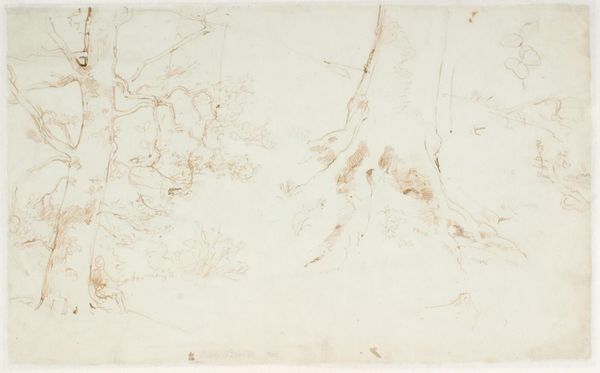
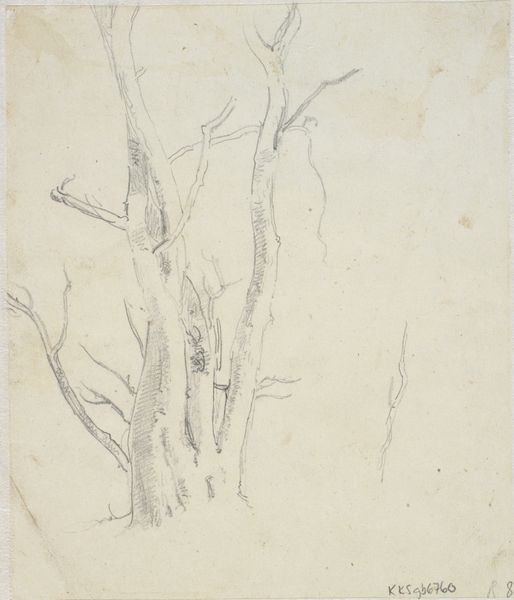
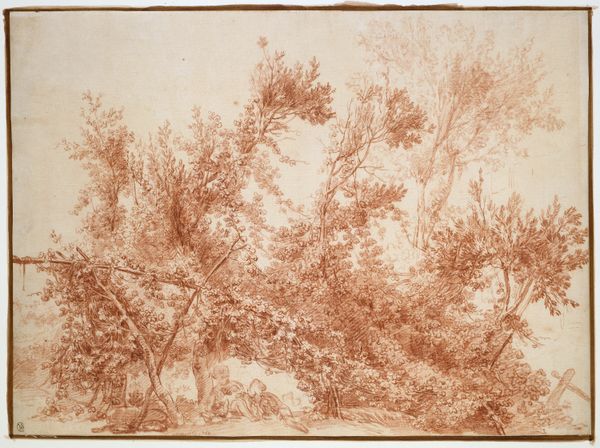
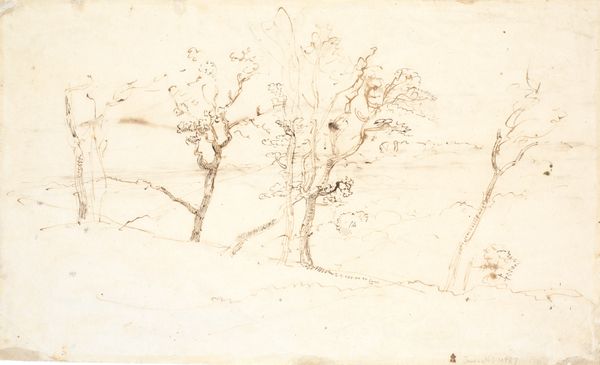
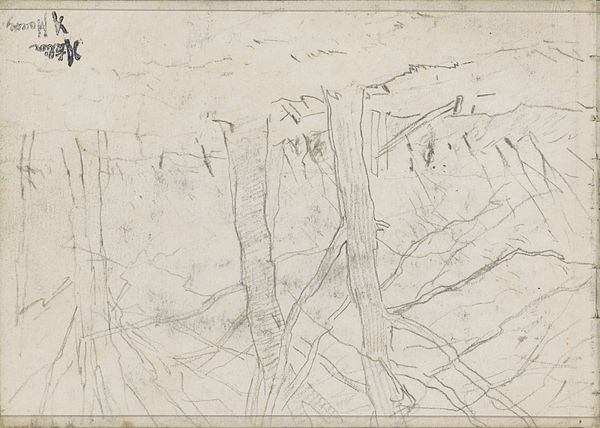
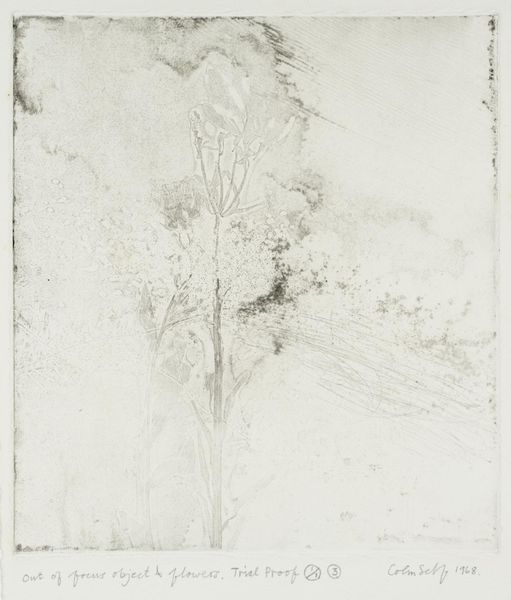
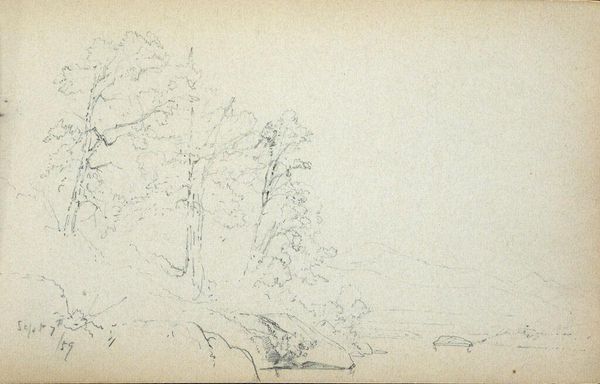
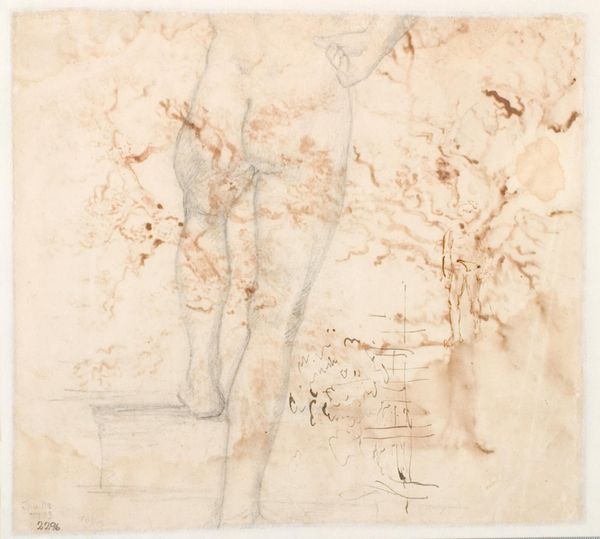
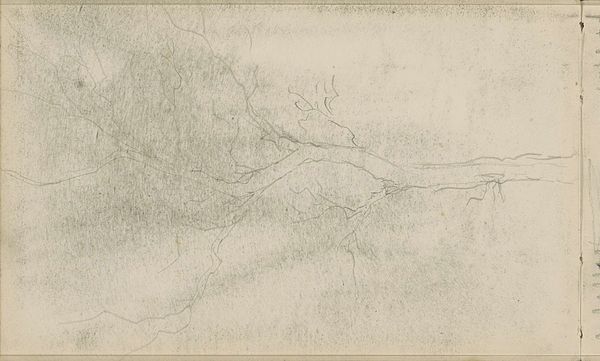
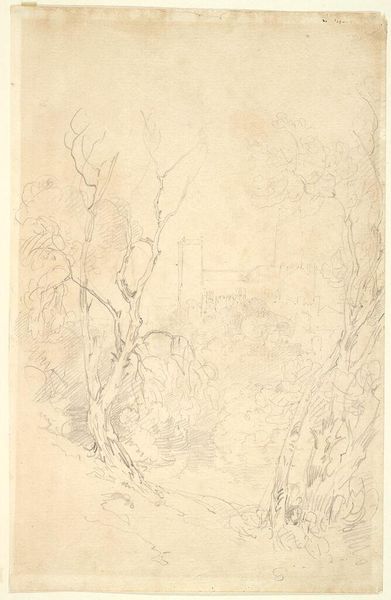
Curator: We're looking at "The Promenade du Poussin (Roman Campagna)", a drawing by Camille Corot from 1828, rendered in pencil and charcoal. Editor: It feels so light, ephemeral almost. A quick sketch, catching a fleeting impression of a landscape. There’s a romantic haze to the scene. Curator: Indeed. Corot's early work, including this drawing, represents an interesting point of access when thinking about plein air painting's status within 19th century art markets. We should take into consideration how the mass production of pencils and accessible charcoal sticks fostered new kinds of art practices across Europe. Editor: How would you say those materials contributed to the image? The paper almost becomes part of the scene. Curator: Precisely! The immediacy and relative cheapness allowed artists a newfound freedom in terms of working. Cheaper art meant the rise of accessible aesthetics. Consider what it means that the art-going public suddenly have access to "art for art's sake." Editor: This drawing does feel like a sketch for his own pleasure. I'm fascinated by how these wispy trees frame the composition, pushing your eye back into a hazy, distant view. Curator: This landscape style connects back to a Classical tradition, a type of scene popular with affluent patrons during the Grand Tour. We might think about how Corot invokes and reworks those landscape conventions here. His subtle use of shadow, in charcoal, adds depth. Editor: It also emphasizes a different social layer that is implied with every artist decision that Corot took when choosing subject and technique: He knew about traditions, but tried something different! Curator: Right, it points toward shifting aesthetic tastes and cultural identities within the rising merchant classes who engaged with museums, and with which Corot developed as a contemporary, an identity both empowered and confined by social expectation. Editor: Thanks for shedding light on the social circumstances surrounding the work's production! I see so much more than the scene itself. Curator: Of course. Viewing it through both lenses adds to the overall complexity and meaning that an artwork conveys.
Comments
No comments
Be the first to comment and join the conversation on the ultimate creative platform.
 React
React Comment