About this artwork
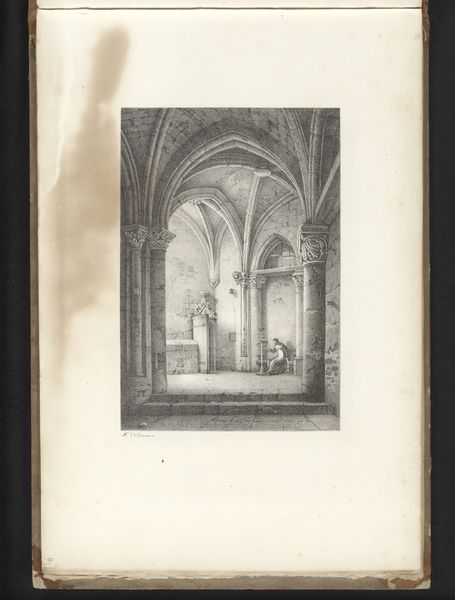
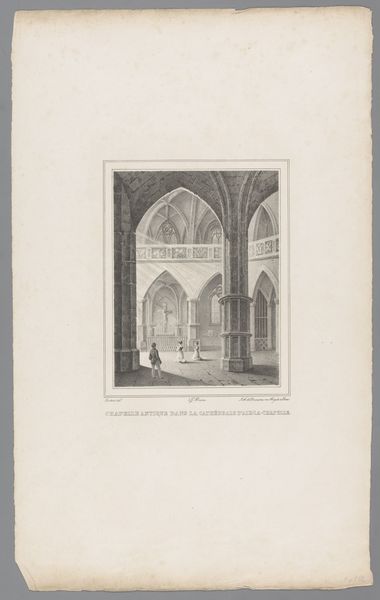
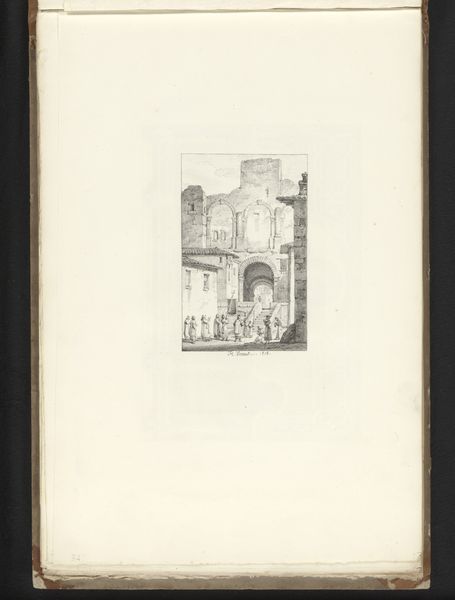
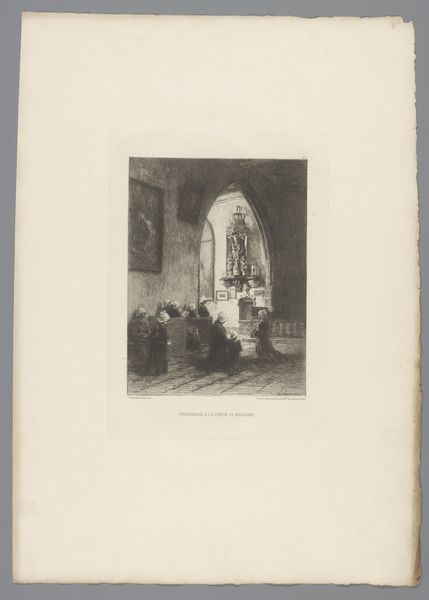
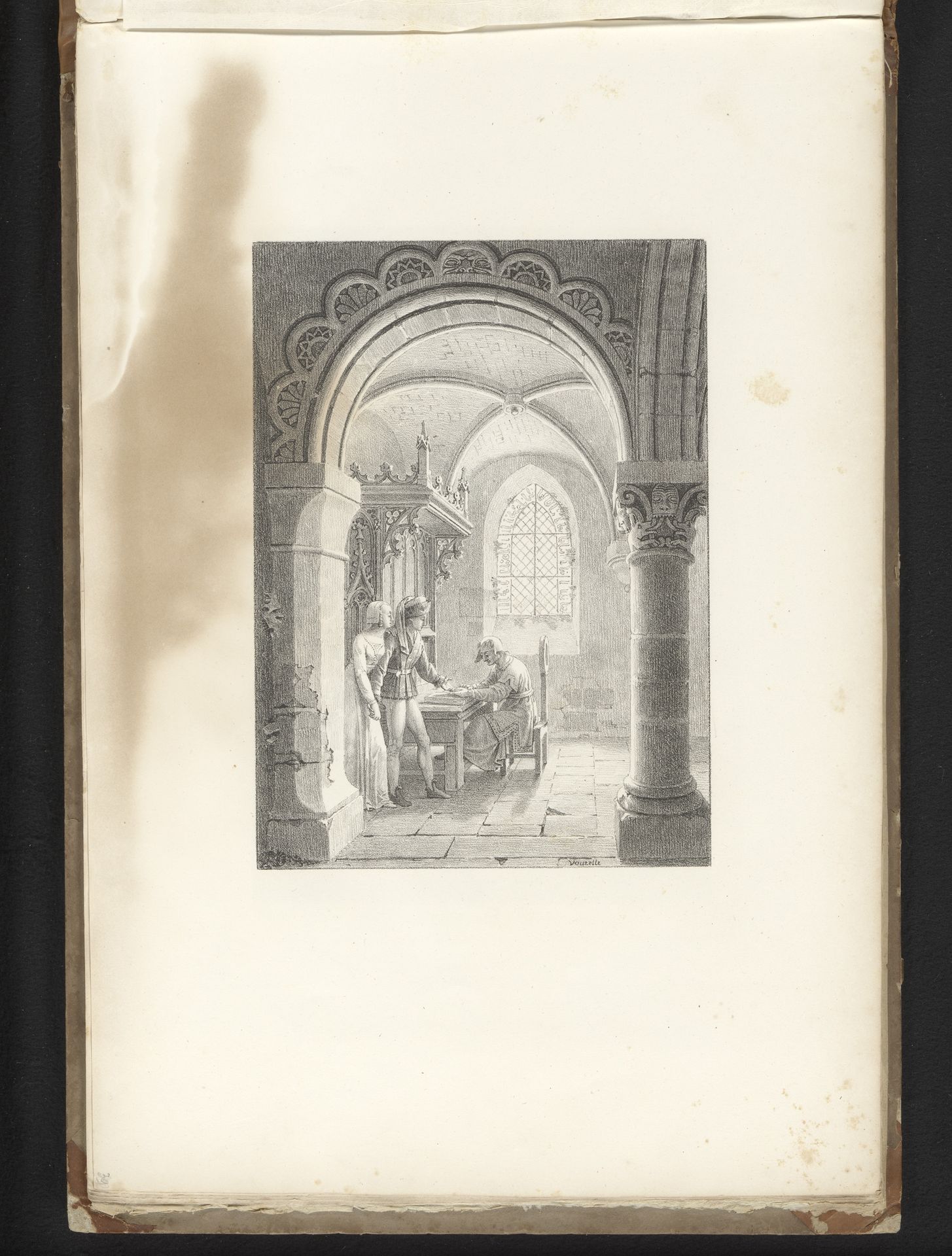
Jean Lubin Vauzelle produced this print of a chapel scene in the early 19th century. The interior, marked by Romanesque arches and stained glass, frames a moment of legal or religious significance, with a clerk or priest seated at a table before a standing couple. Vauzelle lived through the French Revolution, a period that radically reshaped the relationship between church and state. This print invites consideration of the church’s role in society following those dramatic transformations. The setting implies tradition and authority, yet the act taking place suggests the negotiation of social contracts. Was this an ecclesiastical or civil legal process? To explore this question further, one might delve into the legal and religious customs of the period. By examining archival records and cultural histories, we can understand this artwork as a reflection of the changing social landscape of post-Revolutionary France. Art, after all, is always contingent on its historical moment.
Kapel met een man en een vrouw voor een geestelijke
1818 - 1819

Artwork details
- Medium
- drawing, paper, pencil
- Dimensions
- height 299 mm, width 440 mm
- Copyright
- Rijks Museum: Open Domain
Tags
portrait
drawing
neoclacissism
narrative-art
figuration
paper
pencil
genre-painting
Comments
Be the first to share your thoughts about this work.
About this artwork
Jean Lubin Vauzelle produced this print of a chapel scene in the early 19th century. The interior, marked by Romanesque arches and stained glass, frames a moment of legal or religious significance, with a clerk or priest seated at a table before a standing couple. Vauzelle lived through the French Revolution, a period that radically reshaped the relationship between church and state. This print invites consideration of the church’s role in society following those dramatic transformations. The setting implies tradition and authority, yet the act taking place suggests the negotiation of social contracts. Was this an ecclesiastical or civil legal process? To explore this question further, one might delve into the legal and religious customs of the period. By examining archival records and cultural histories, we can understand this artwork as a reflection of the changing social landscape of post-Revolutionary France. Art, after all, is always contingent on its historical moment.
Comments
Be the first to share your thoughts about this work.