graphic-art, lithograph, print
#
graphic-art
#
lithograph
# print
#
traditional media
#
folk-art
#
orientalism
#
genre-painting
Dimensions: height 378 mm, width 460 mm
Copyright: Rijks Museum: Open Domain
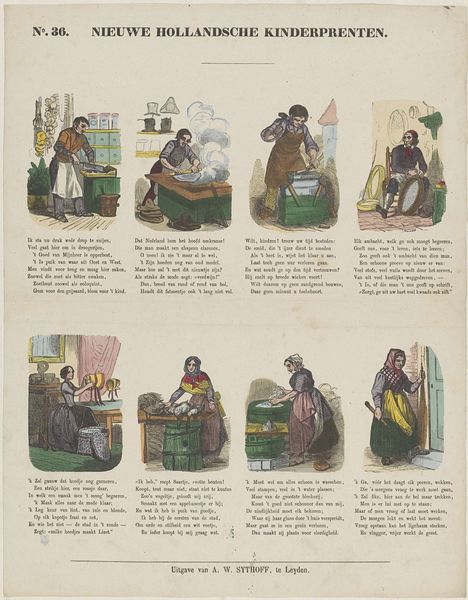
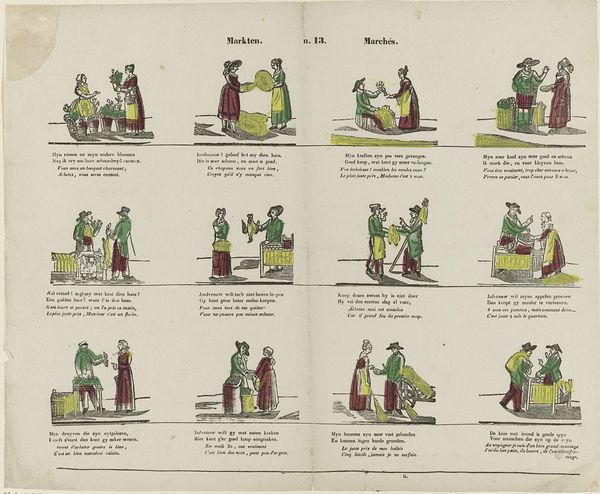
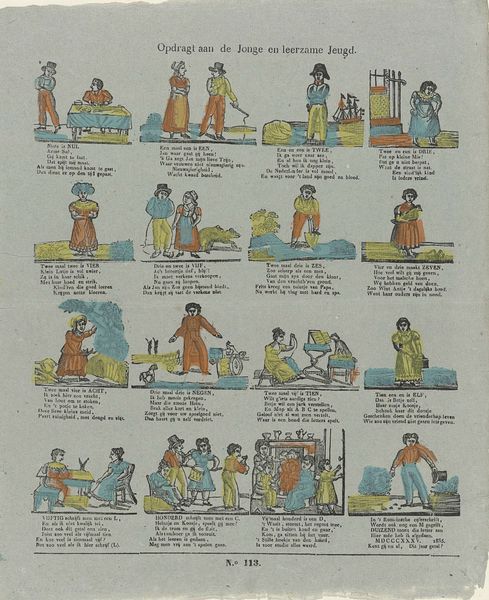
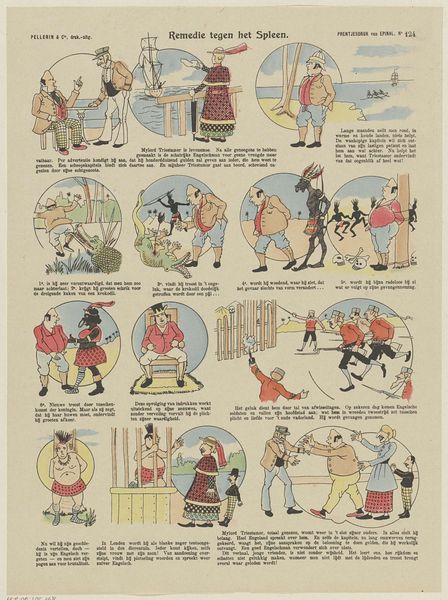
Curator: Gualtherus Kolff's lithograph, "Beroepen en figuren," dating roughly between 1868 and 1881, presents a collection of scenes depicting various trades and figures in the Dutch East Indies. Editor: My first impression is of a series of carefully composed vignettes. The artist has a keen eye for balance within each little frame, a harmony in how they all fit together. The colors are muted, soft almost. Curator: Absolutely. And what's fascinating here is Kolff’s employment of a kind of comparative approach. Notice how each scene highlights the distinct gestures and postures associated with each profession? It almost reads as a visual catalog of colonial labor. Editor: Yes, there’s definitely a cataloging impulse at play. Beyond just the literal depictions of work, each panel contains so much deeper symbolic meaning related to the specific culture and societal position being represented. For example, observe how in some scenarios, people interact almost shyly, whereas other scenes communicate intimacy between family members. Curator: A careful semiotic reading would highlight the recurrent motif of carrying. Shouldered poles appear in several frames: burdens, sustenance, trade... There's a direct visual correlation between the tool, trade, and personal identity within this visual field. Editor: I'd also suggest we analyze the subtle differences in how people of varying professions are portrayed, from the street vendor carrying pails of water, with prominent arm muscles exposed to the woman sitting on the floor in front of a cradle; what do these postures imply about power or class distinctions? Curator: The formal arrangement of the subjects and their occupations reveals underlying cultural structures through pictorial strategies. The scenes almost have the effect of miniature stage sets. Editor: Looking closely at the objects each individual uses really gives insight into what was deemed essential and valuable. Kolff gives us visual clues into daily routines and what constituted 'work' for each represented character. Curator: Well, Kolff provides not just observation, but insight into this particular society's structural frameworks of that era. Editor: An effective convergence of symbolic action with visually rich presentation. It presents various strata in colonial society and allows each section to function almost as its own visual microcosm.
Comments
No comments
Be the first to comment and join the conversation on the ultimate creative platform.
 Collect
 React
React Comment
More like this