Copyright: Public Domain: Artvee
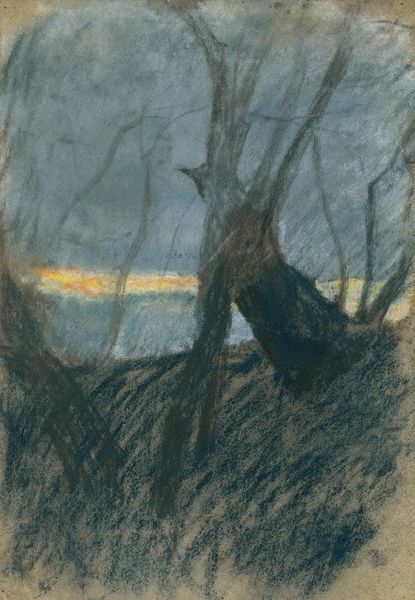
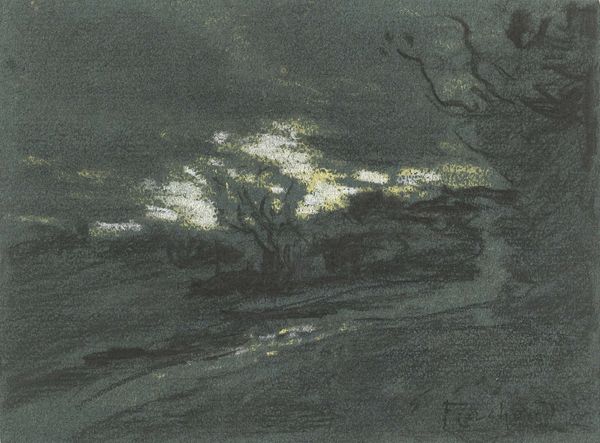
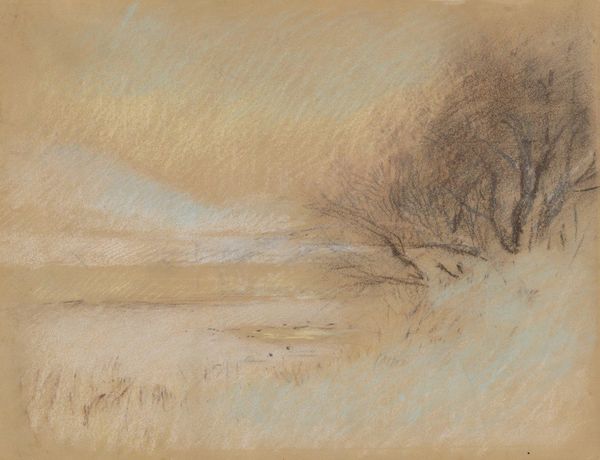
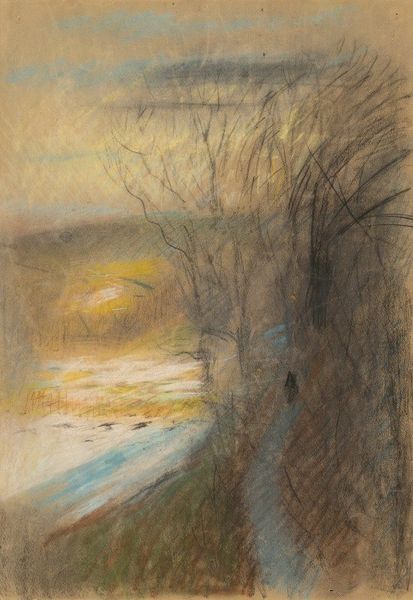
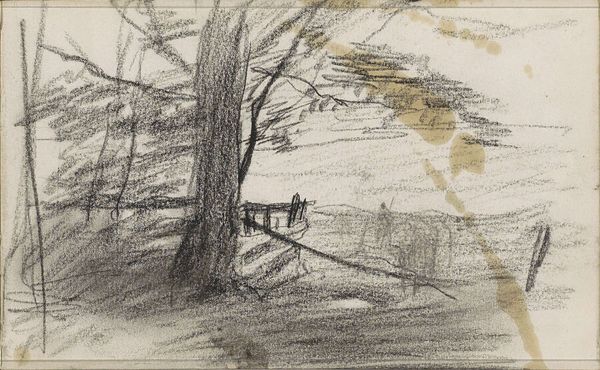
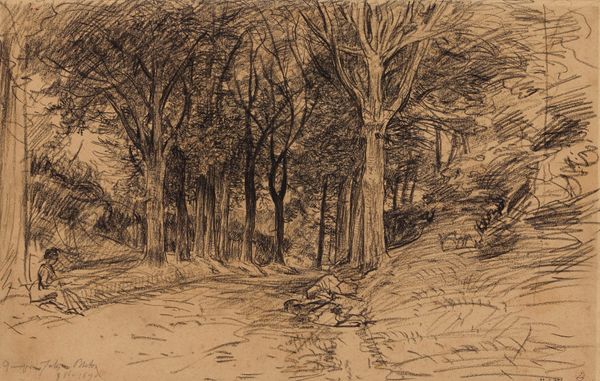
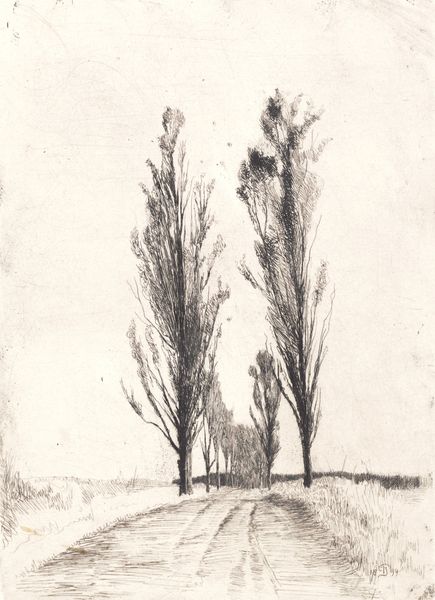
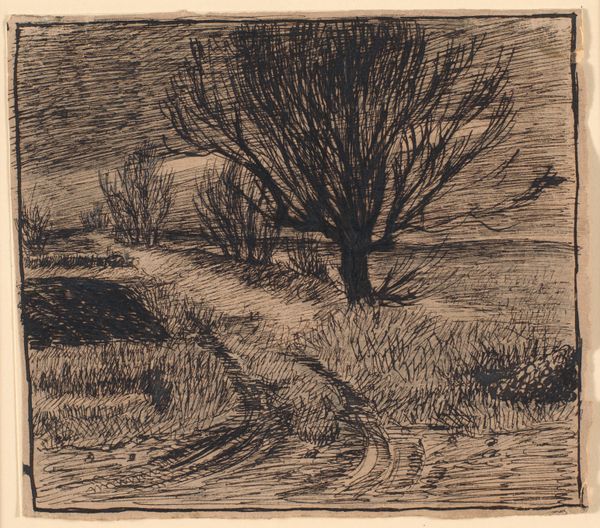
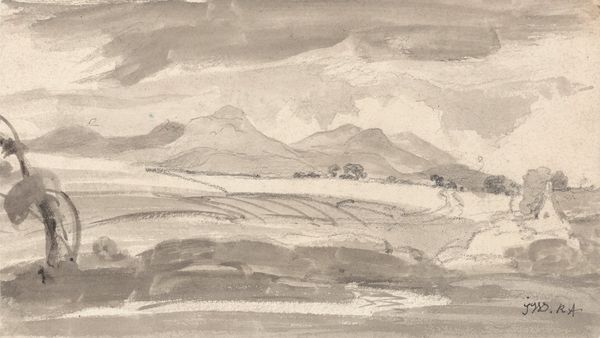
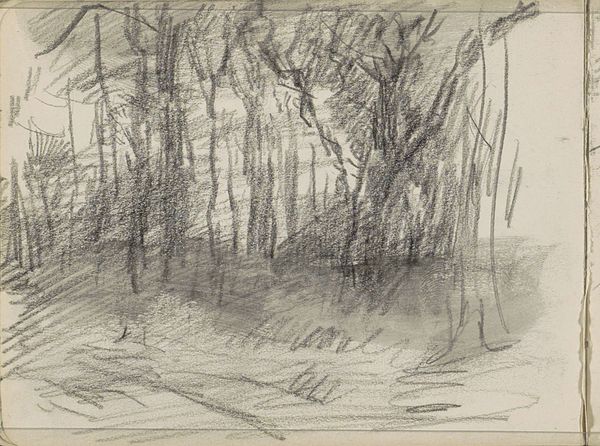
Editor: This is "Road in Winter" by Ladislav Mednyánszky, created sometime between 1905 and 1910 using pencil and graphite on paper. I find it really somber, the way the colors are muted, and there is something haunting about that lone path. What do you see in this piece? Curator: It evokes a powerful sense of isolation, doesn’t it? Think about winter roads – what do they often signify? The starkness isn't just about the season. The road, etched with those suggestive lines of movement, is almost like a pathway through the self, the soul perhaps. Notice how the minimal use of color amplifies the emotional impact, emphasizing the grey of the snow, which acts as a canvas for inner reflection and the journey into the unknown, using familiar signs that feel both melancholic and profound. Editor: So the road becomes less about a physical place and more about a kind of... internal landscape? Curator: Precisely. Mednyánszky often explored themes of transience and the human condition. Do you think that this ties into that motif? Editor: Definitely. It’s like the barren trees symbolize a stripping away, a confrontation with vulnerability. The road sort of dares you to confront this raw reality. Curator: Absolutely. Roads frequently function as allegories of choices, directions, and ultimate destinations. We find it across different religions, myths and popular stories. The winter adds a layer of difficulty but what else does it hint at? Editor: Maybe the need to accept a difficult time to reach personal destinations or perhaps to recognize where one is and find comfort or knowledge in the current moment. Thanks, I didn't consider how charged such a seemingly simple image could be! Curator: The beauty of art is often in what it silently conveys. It's in exploring how common imagery carries collective experience.
Comments
No comments
Be the first to comment and join the conversation on the ultimate creative platform.
 React
React Comment