About this artwork
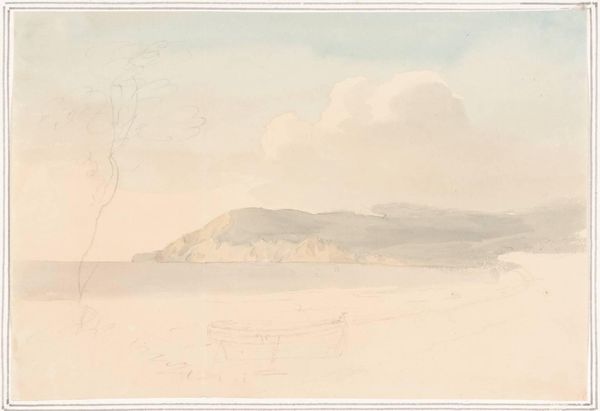
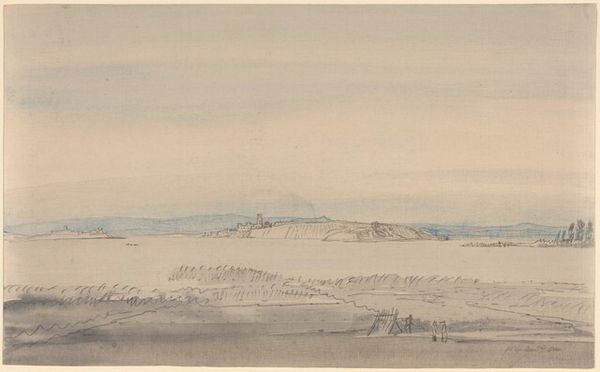
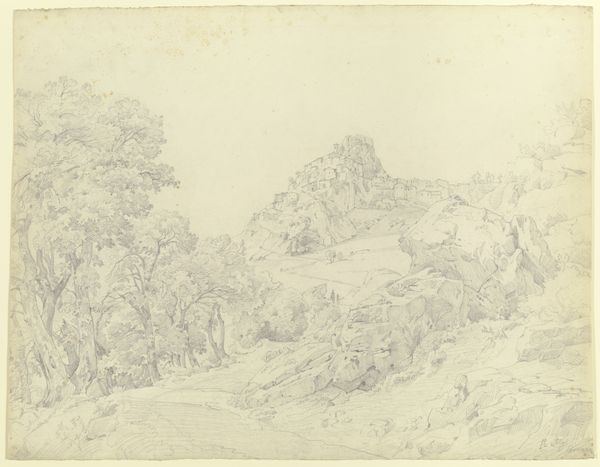
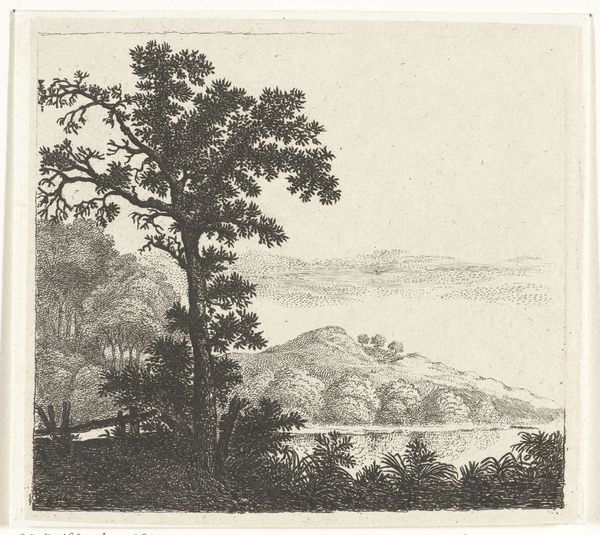
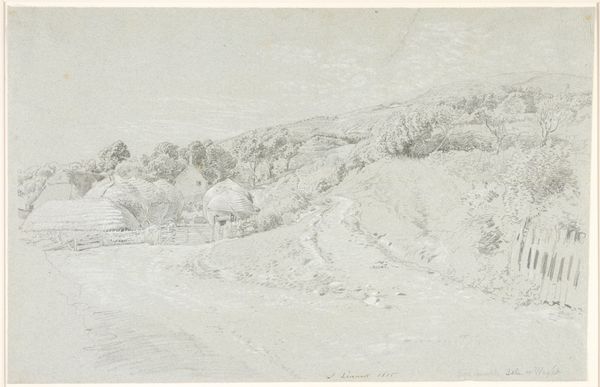
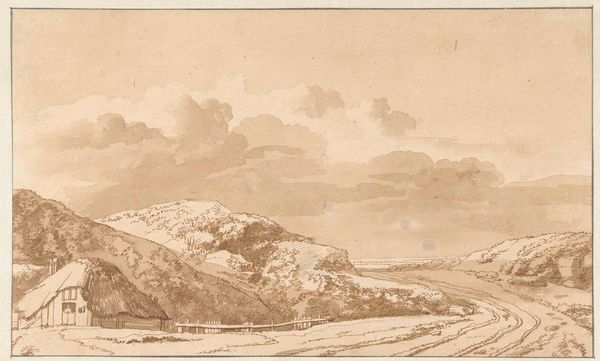
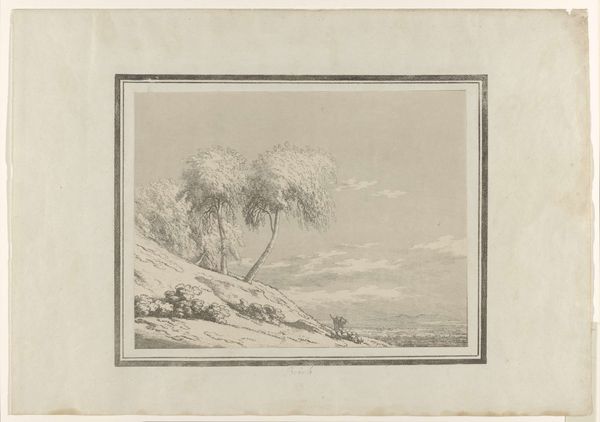
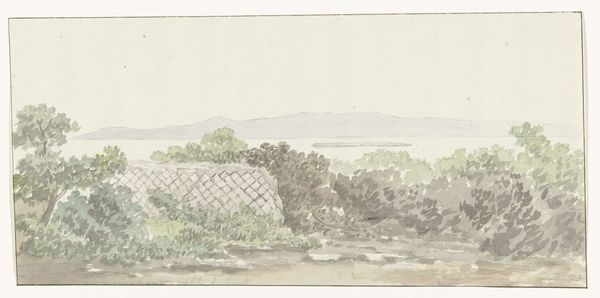
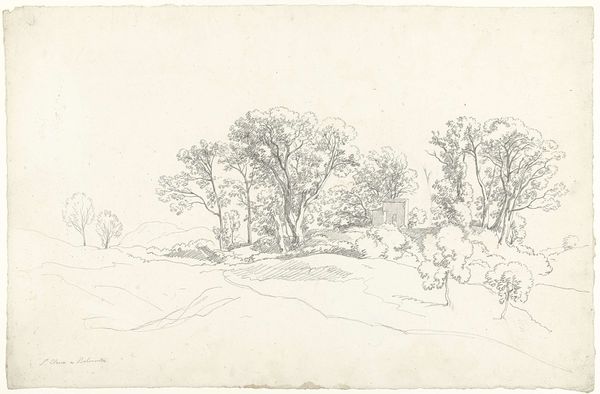
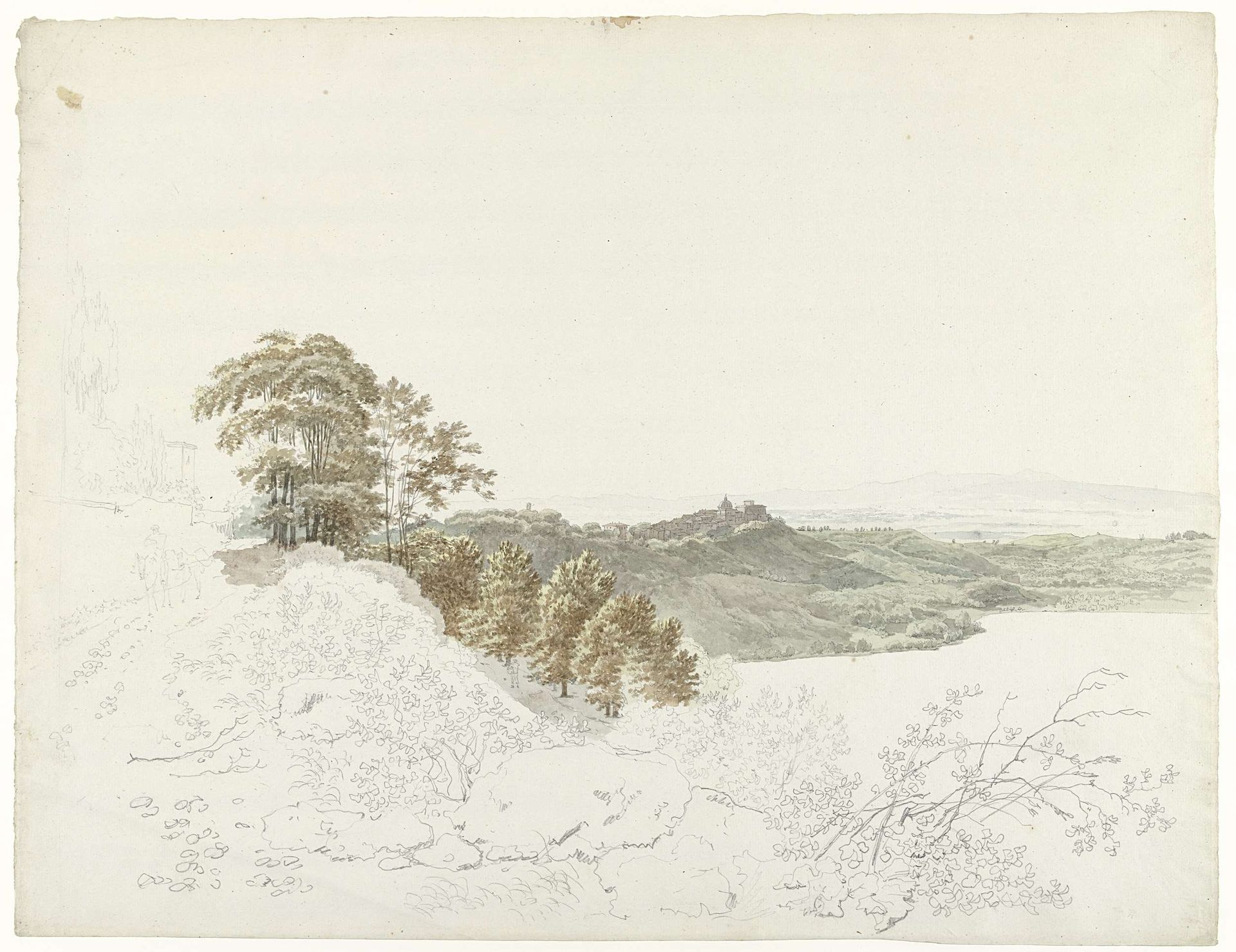
Hendrik Voogd made this drawing of Castel Gandolfo from the shore of the lake with pen in brown and black, brush in brown and gray, and black chalk. Voogd, a Dutchman, spent much of his career in Rome, a popular destination for Northern European artists seeking classical inspiration and Italian light. This landscape presents us with an interesting tension: on one hand, it embodies the Romantic era's emphasis on nature and the picturesque, yet it also hints at the power structures inherent in landscape art. Who has the privilege to leisurely view this vista? Whose labor sustains the idyllic scene? It invites us to consider whose stories are told, and whose are left out of this seemingly tranquil depiction of the Italian countryside. The focus is on the aesthetic experience of the landscape, which potentially obscures the complex social and economic realities of the time.
Gezicht op Castel Gandolfo vanaf de oever van het meer
1788 - 1839

Hendrik Voogd
1768 - 1839Location
RijksmuseumArtwork details
- Medium
- drawing, plein-air, watercolor, pencil
- Dimensions
- height 435 mm, width 585 mm
- Location
- Rijksmuseum
- Copyright
- Rijks Museum: Open Domain
Tags
Comments
Share your thoughts
About this artwork
Hendrik Voogd made this drawing of Castel Gandolfo from the shore of the lake with pen in brown and black, brush in brown and gray, and black chalk. Voogd, a Dutchman, spent much of his career in Rome, a popular destination for Northern European artists seeking classical inspiration and Italian light. This landscape presents us with an interesting tension: on one hand, it embodies the Romantic era's emphasis on nature and the picturesque, yet it also hints at the power structures inherent in landscape art. Who has the privilege to leisurely view this vista? Whose labor sustains the idyllic scene? It invites us to consider whose stories are told, and whose are left out of this seemingly tranquil depiction of the Italian countryside. The focus is on the aesthetic experience of the landscape, which potentially obscures the complex social and economic realities of the time.
Comments
Share your thoughts