drawing, ink, pen
#
portrait
#
drawing
#
light pencil work
#
quirky sketch
#
caricature
#
pencil sketch
#
figuration
#
personal sketchbook
#
ink
#
idea generation sketch
#
ink drawing experimentation
#
pen-ink sketch
#
sketchbook drawing
#
pen
#
genre-painting
#
storyboard and sketchbook work
#
sketchbook art
Dimensions: height 510 mm, width 346 mm
Copyright: Rijks Museum: Open Domain
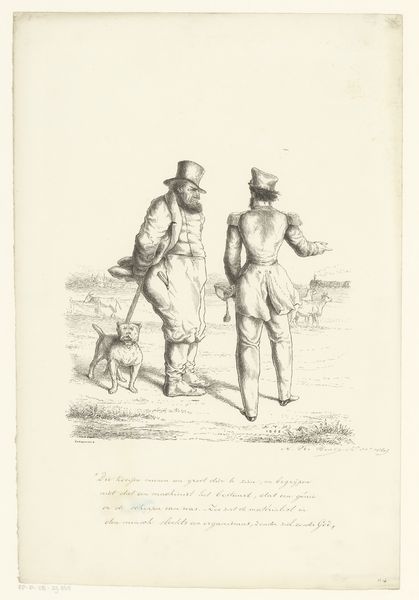
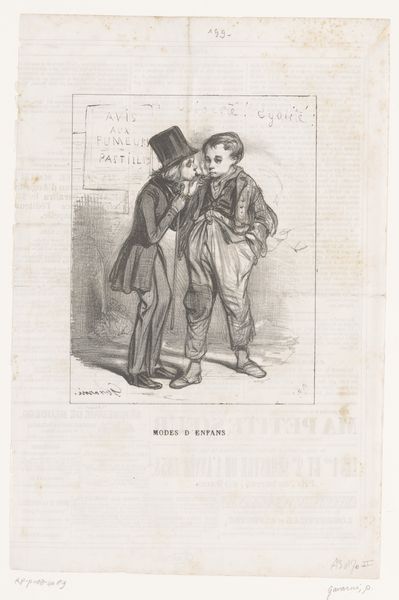
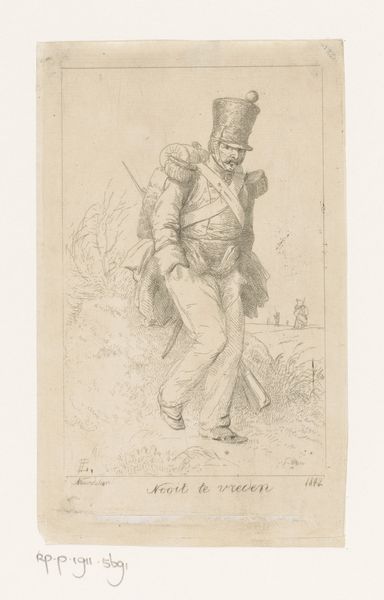
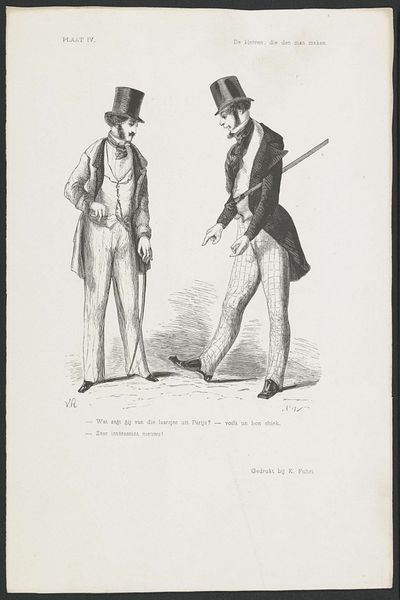
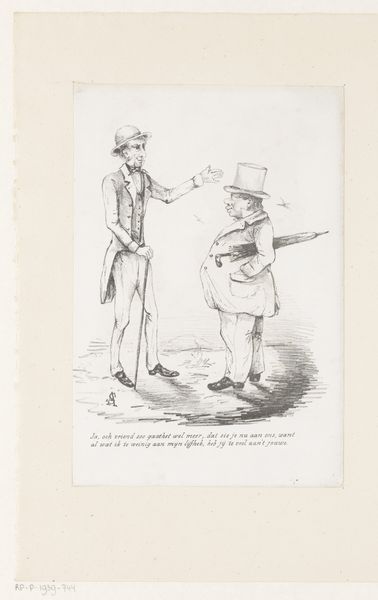
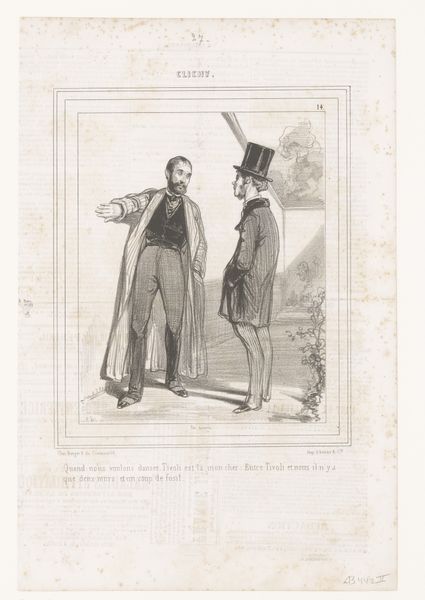
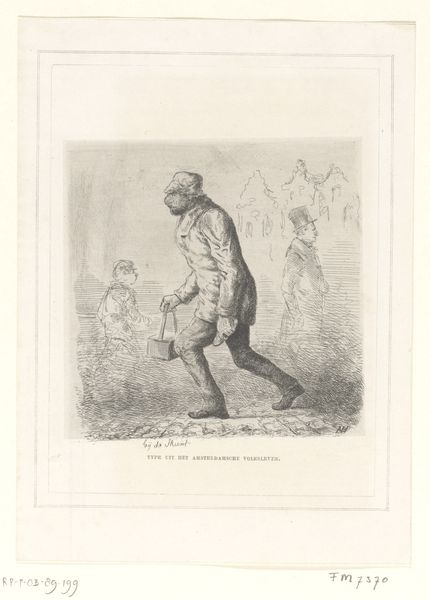
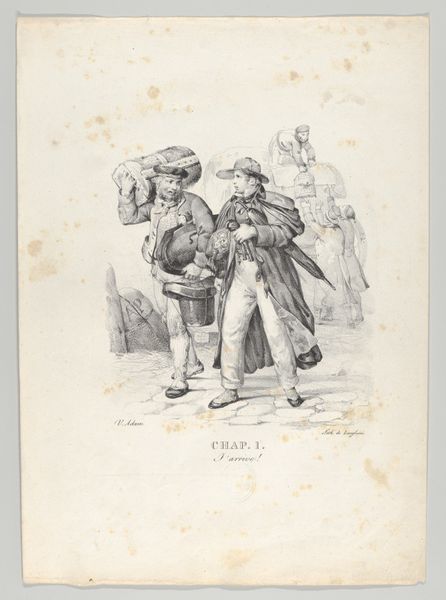
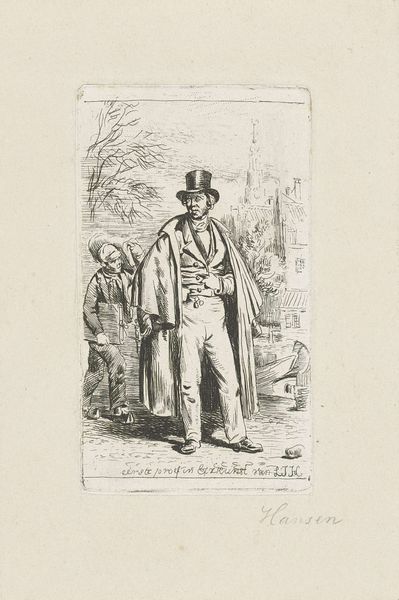
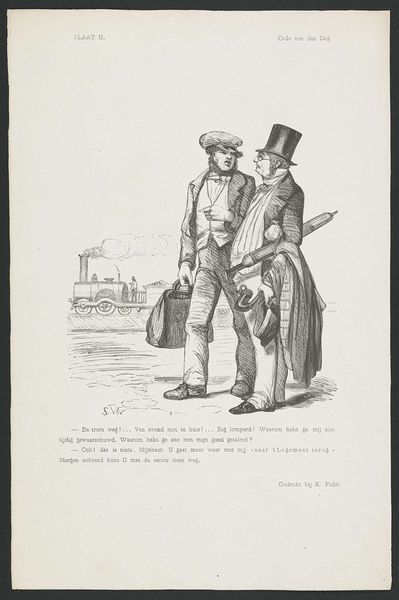
Curator: The drawing here, by Alexander Ver Huell, from about 1864 to 1866, is called *Two Laughing Men*. It’s an ink and pen sketch housed at the Rijksmuseum. I’m immediately struck by its almost…casual nature. It feels like we’re looking at a page torn straight from the artist's personal sketchbook. What jumps out at you? Editor: I agree, it does have that intimate feel! The figures seem caught in a moment of pure joy, maybe even a bit of revelry. But I'm curious – what do you make of the visible process? Curator: It's vital. Note how Ver Huell doesn't try to conceal the materials and the work that’s gone into this. Look closely at the pen strokes: their deliberate application brings the image to life, showing us the labor and production behind the seemingly simple drawing. Do you think the clothing conveys a message? Editor: Yes! One man sports a top hat and the other a more casual cap, indicating their different social standing, perhaps? How would you consider their material circumstances and how this piece plays with notions of labor? Curator: Exactly. While ostensibly capturing joy, the piece engages with ideas about social class and its trappings. It almost satirizes bourgeois enjoyment. The method – drawing itself – challenges traditional, elevated forms of artistic production and hints at its inherent value regardless of its subject matter. The sketch questions high art by immortalizing an ordinary occurrence. Editor: I hadn't considered the class element so directly. Viewing the materials themselves as a comment on broader themes makes the piece more compelling! Thank you. Curator: It showcases the artist's decisions regarding material use while reminding us of social strata, and their intrinsic link with consumption and art's production. I'm glad you found the discussion insightful!
Comments
No comments
Be the first to comment and join the conversation on the ultimate creative platform.
 Collect
 React
React Comment
More like this