
Curatorial notes
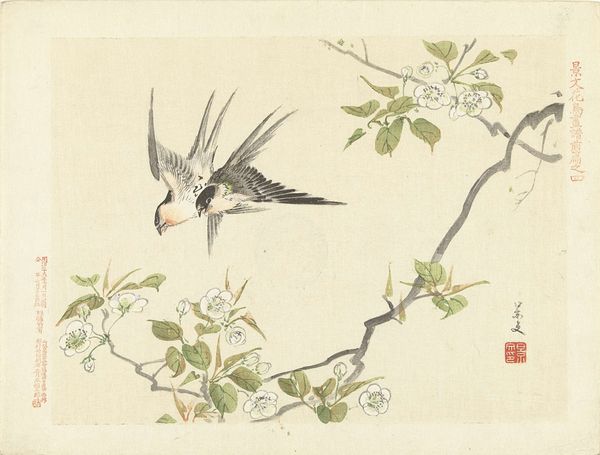
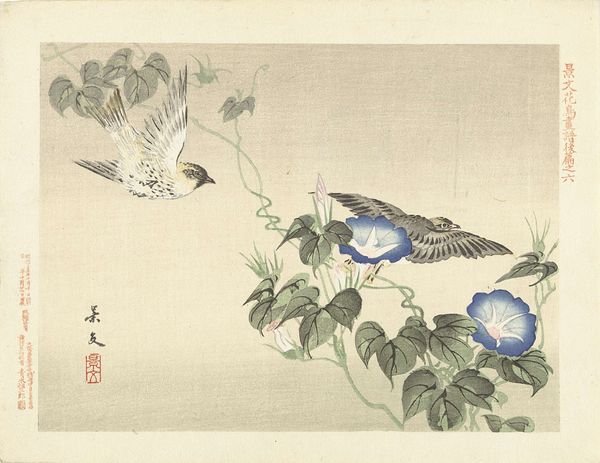
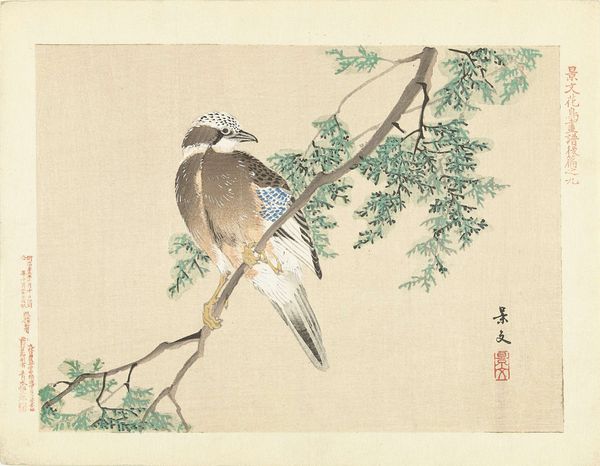
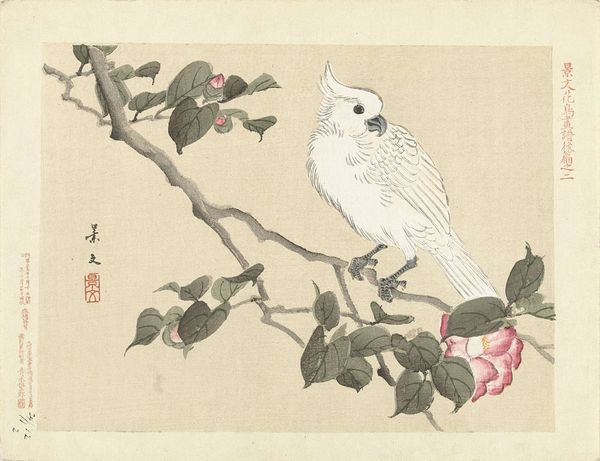
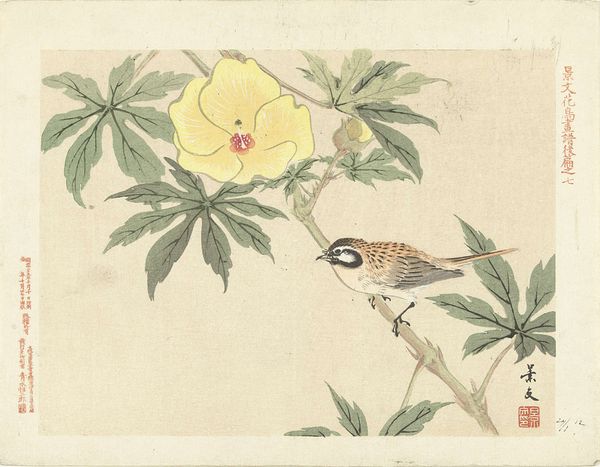
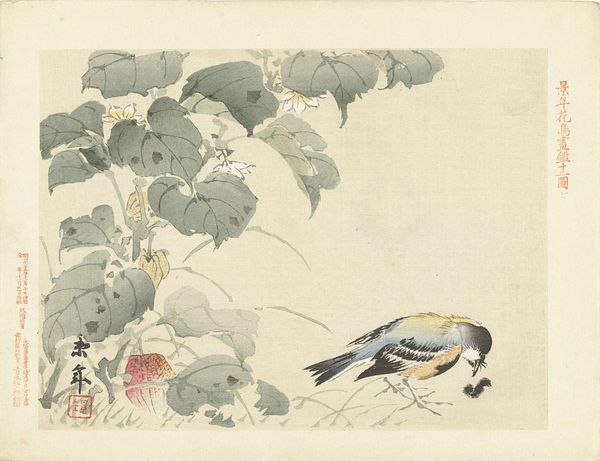
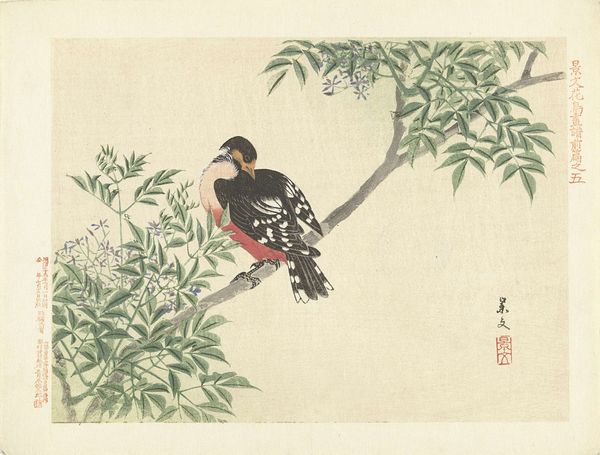
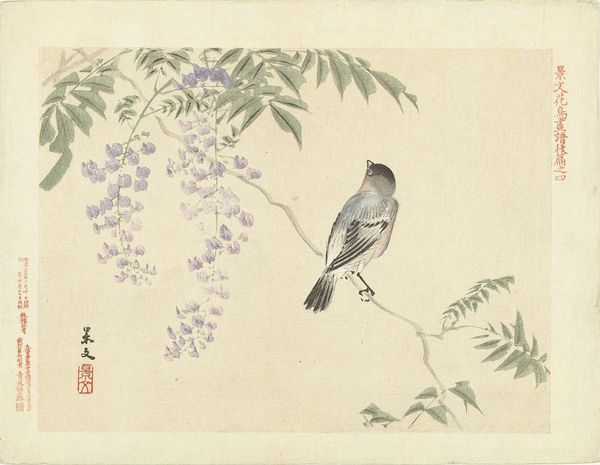
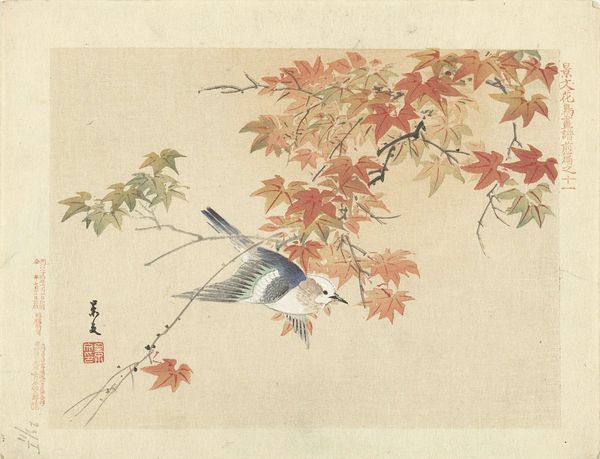
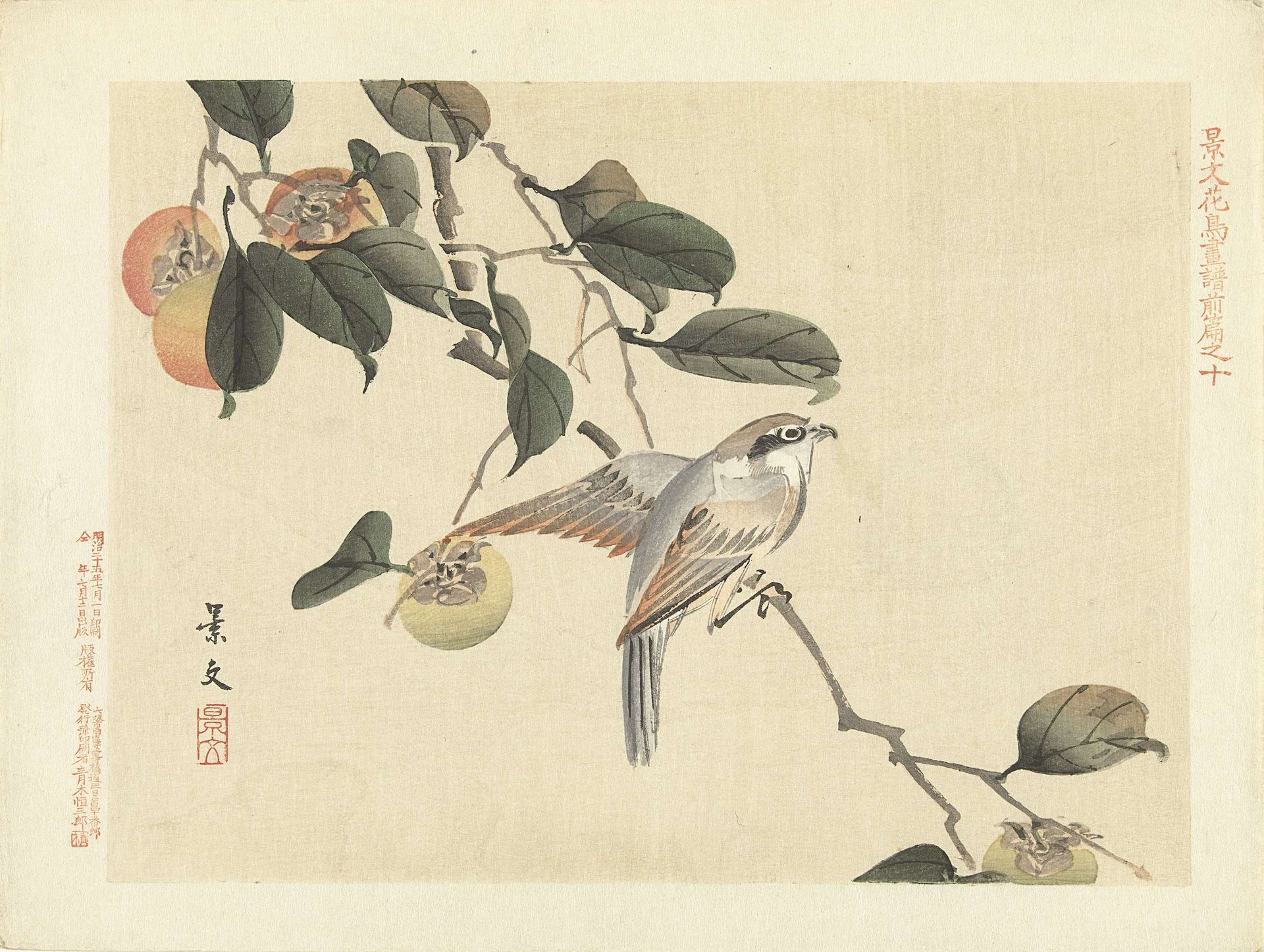
Editor: This watercolor print, "Bird and Persimmon," by Matsumura Keibun, created sometime between 1892 and 1897, presents a very serene image of a bird perched on a persimmon tree branch. What is most striking to you about this piece? Curator: What interests me is how Keibun uses traditional materials—paper, watercolor—to engage with a changing social landscape. We see a shift in artistic patronage during this period, with artists increasingly reliant on commercial opportunities rather than solely on aristocratic commissions. Consider the mass production of prints like this. Editor: So, the 'means of production' heavily influenced the shift from aristocratic patrons to a commercial audience? Curator: Precisely. This print wouldn’t exist in the same form without a market eager for affordable art. Look at the 'ukiyo-e' style influence—it democratized art, bringing beauty into more homes. How does the composition influence the experience of consumption in your opinion? Editor: I can see that with the composition, it is made with techniques for multiple viewing experiences; the lines are delicate, but also easy to replicate. The content of nature makes it palatable for any viewer from different levels of understanding about Japanese Art. Curator: Exactly. This represents not only nature, but access. Labor is inherent. And don't forget the materials. The aging, toned paper is critical - are we meant to reflect on consumption and decay, perhaps even mortality, given that pairing? Editor: I hadn’t considered that angle. It adds another layer of depth to a seemingly simple composition. I will definitely be considering these elements in my research. Thank you! Curator: Of course. Thinking about art this way, focused on the context of materials and their social and economic journey, opens up endless avenues of interpretation.