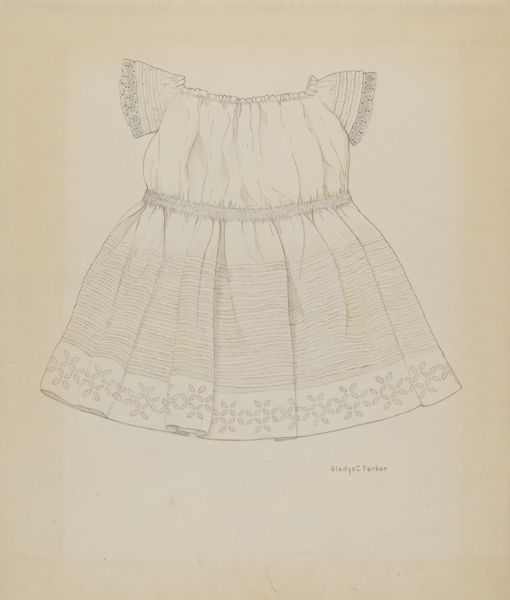
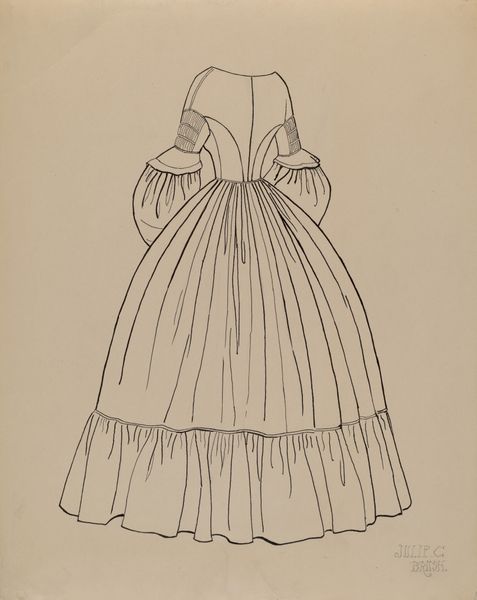
drawing, pencil
#
drawing
#
figuration
#
pencil
#
academic-art
Dimensions: overall: 51.2 x 38.4 cm (20 3/16 x 15 1/8 in.)
Copyright: National Gallery of Art: CC0 1.0
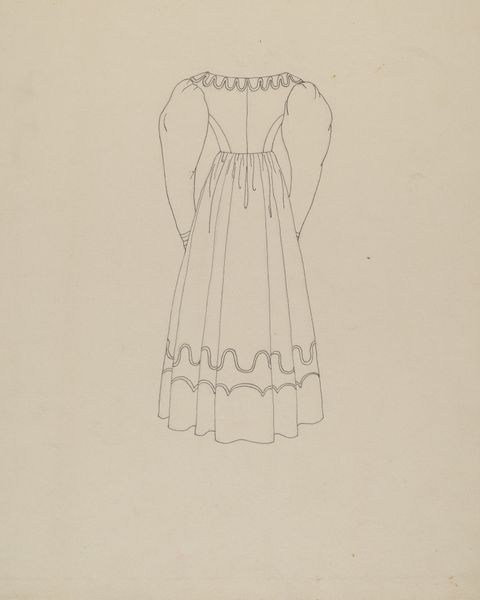
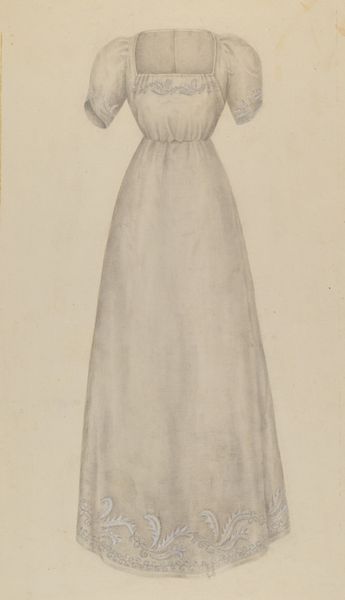
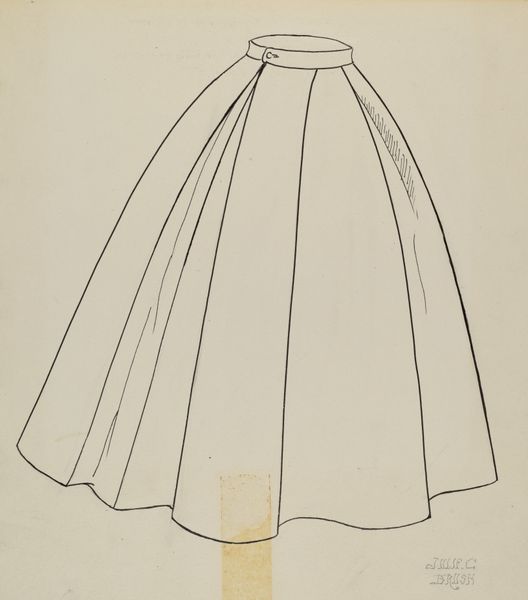
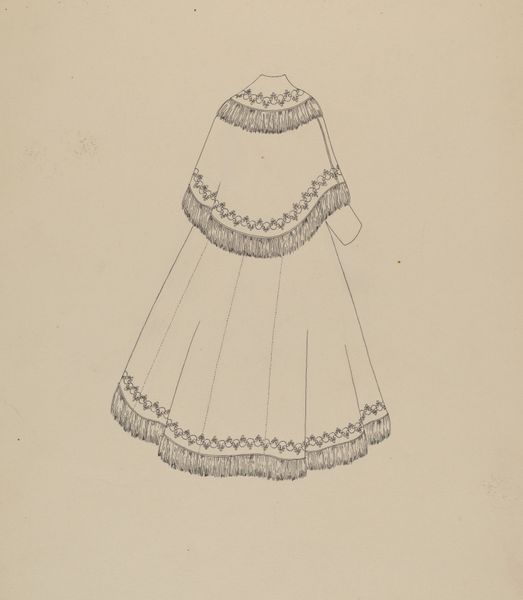
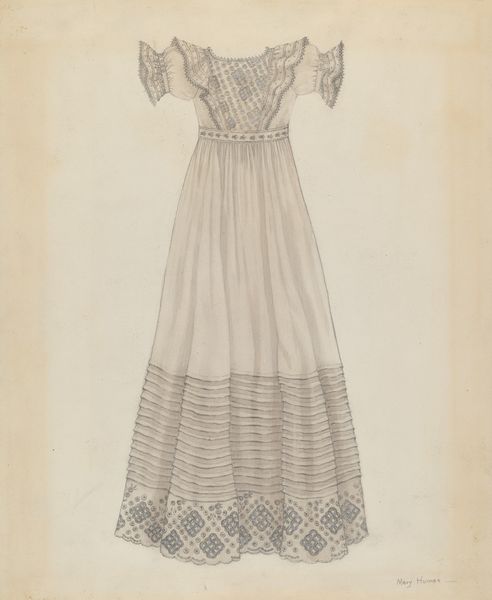
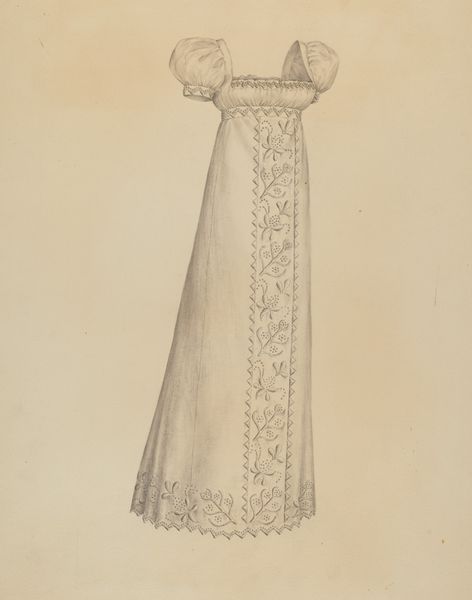
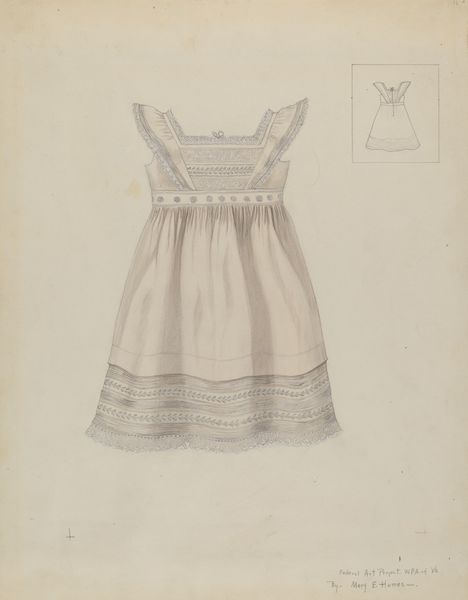
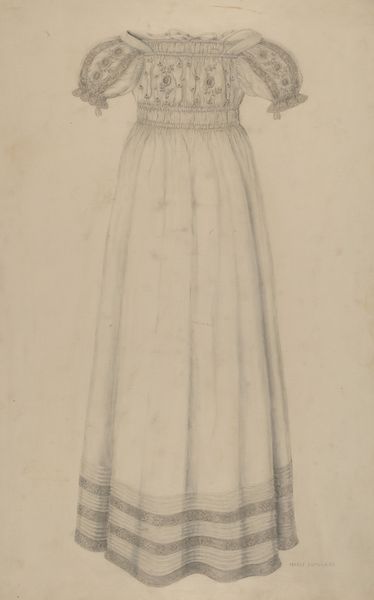
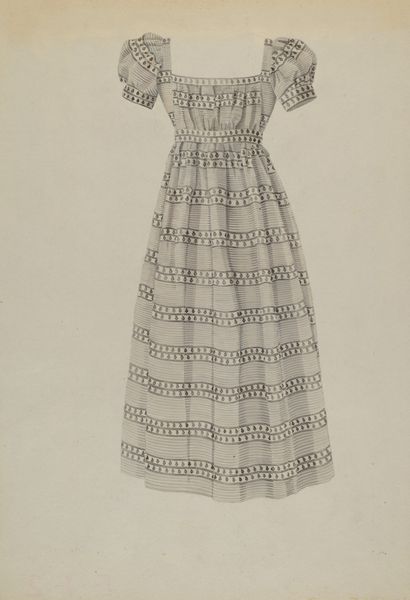
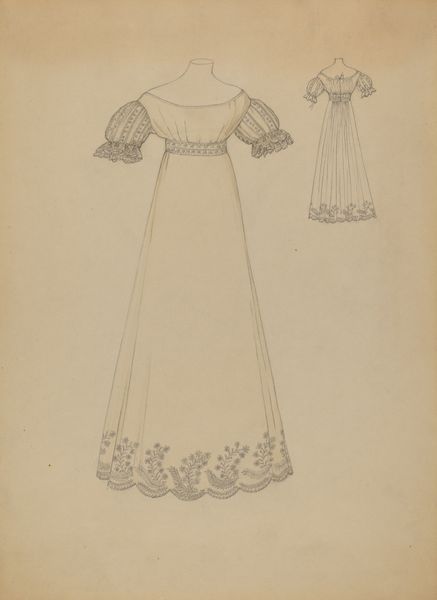
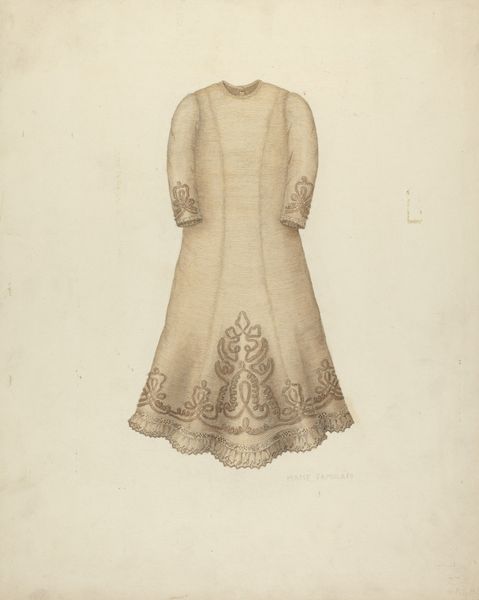
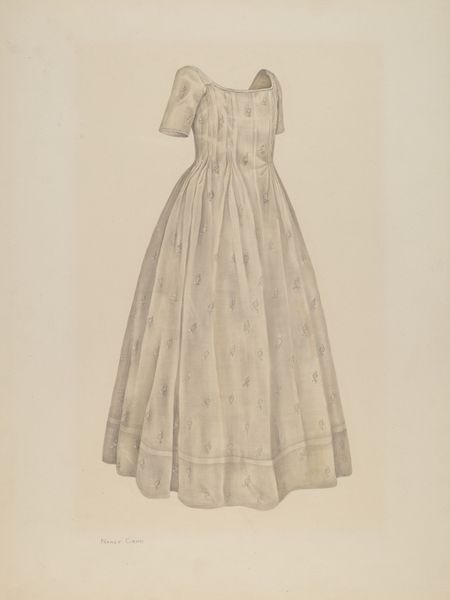
Editor: Here we have "Petticoat and Pantalettes," a drawing from around 1938 by Rex F. Bush, rendered in pencil. The almost ghostly depiction of undergarments gives me a sense of a bygone era. What do you make of this seemingly simple study? Curator: Seemingly simple, but rich! Think about the labor embedded in these objects. Pencil drawings such as this were crucial for mass-produced clothing, weren't they? Before computers, a skilled hand had to translate design into pattern. Notice the meticulous detail in the lace edging—it's a technical drawing, yes, but also reveals the intended level of consumerism. Does the choice of depicting *under*garments speak to anything in particular? Editor: I hadn’t considered the level of craft involved, but it makes sense given the pre-digital era. It’s interesting you bring up *under*garments too. It's definitely a different kind of artistic choice. I’m wondering if its placement underneath contributes to an invisibility? Perhaps we’re seeing a study of both construction *and* erasure? Curator: Precisely! The invisibility hints at social context. Think about the expectations of women in the 1930s: modesty, domesticity, hidden labor... These undergarments literally support the outward appearance while remaining unseen. This artwork forces us to acknowledge both the work involved *and* its deliberate obscuring. Editor: That reframes the piece for me completely! Seeing the drawing through the lens of labor and social expectations of the time opens up avenues of inquiry I wouldn't have considered otherwise. Curator: Exactly! Material culture tells powerful stories. This drawing serves as a reminder that art isn't always about the grand gesture, but also about understanding the quiet labor embedded in everyday objects.
Comments
No comments
Be the first to comment and join the conversation on the ultimate creative platform.
 Collect
 React
React Comment
More like this