About this artwork
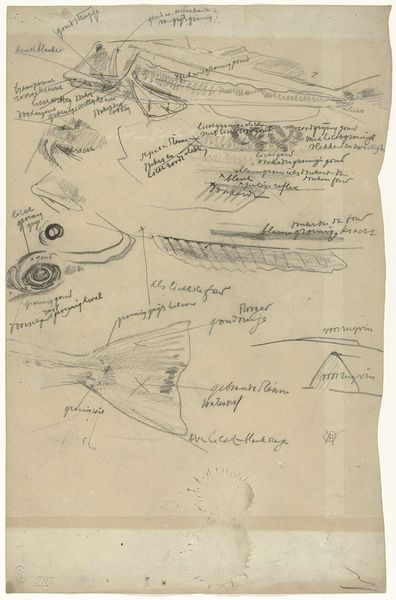
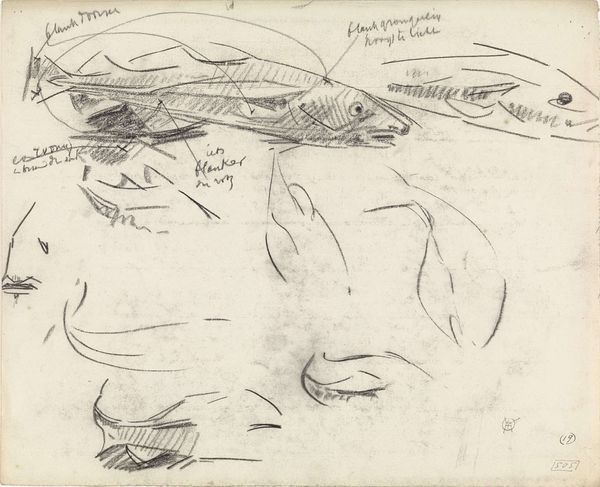
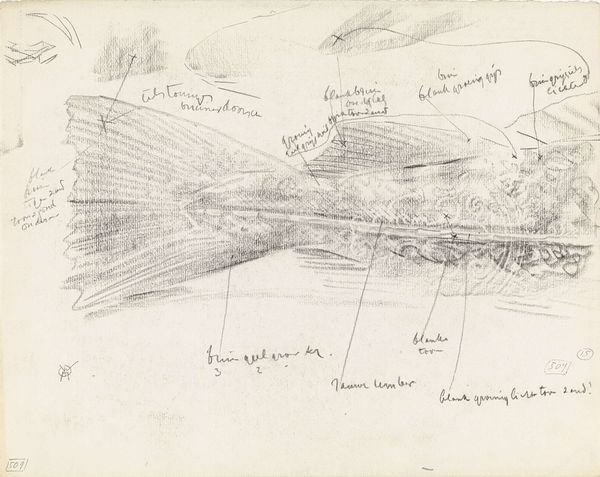
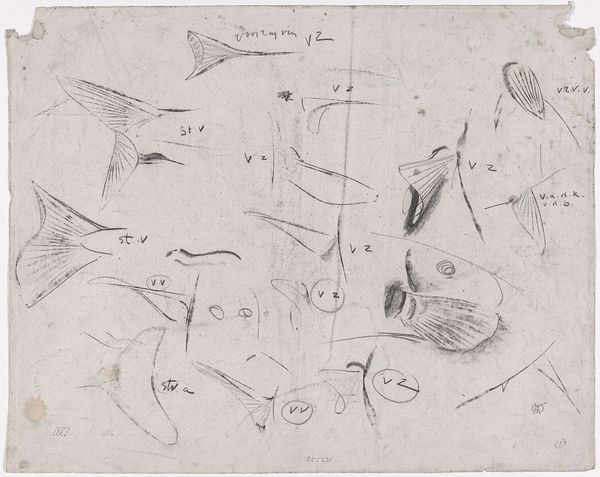
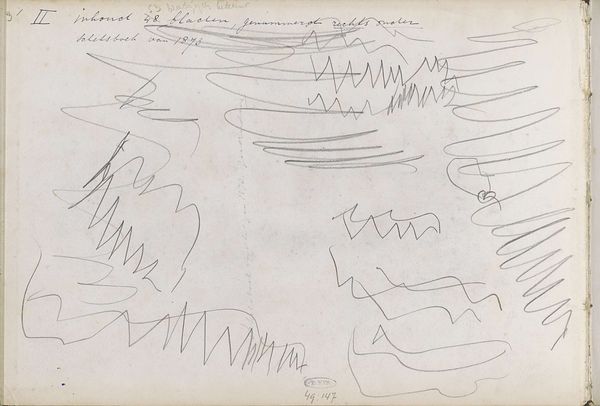
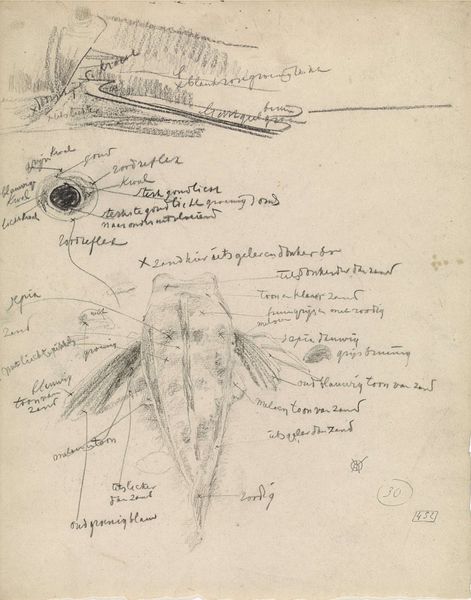
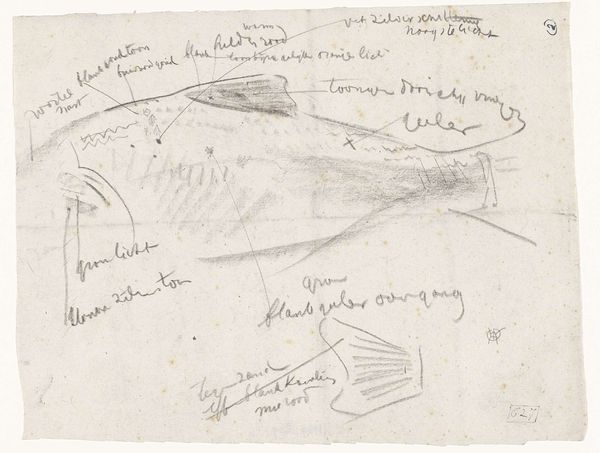
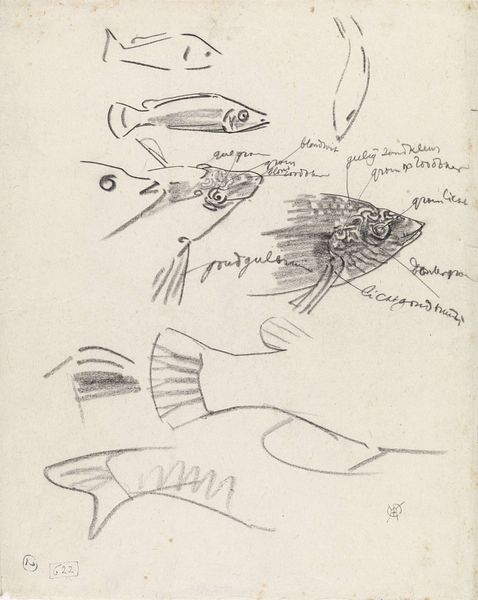
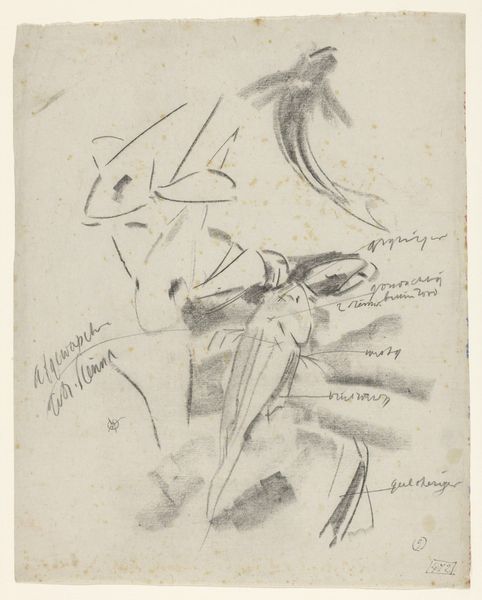
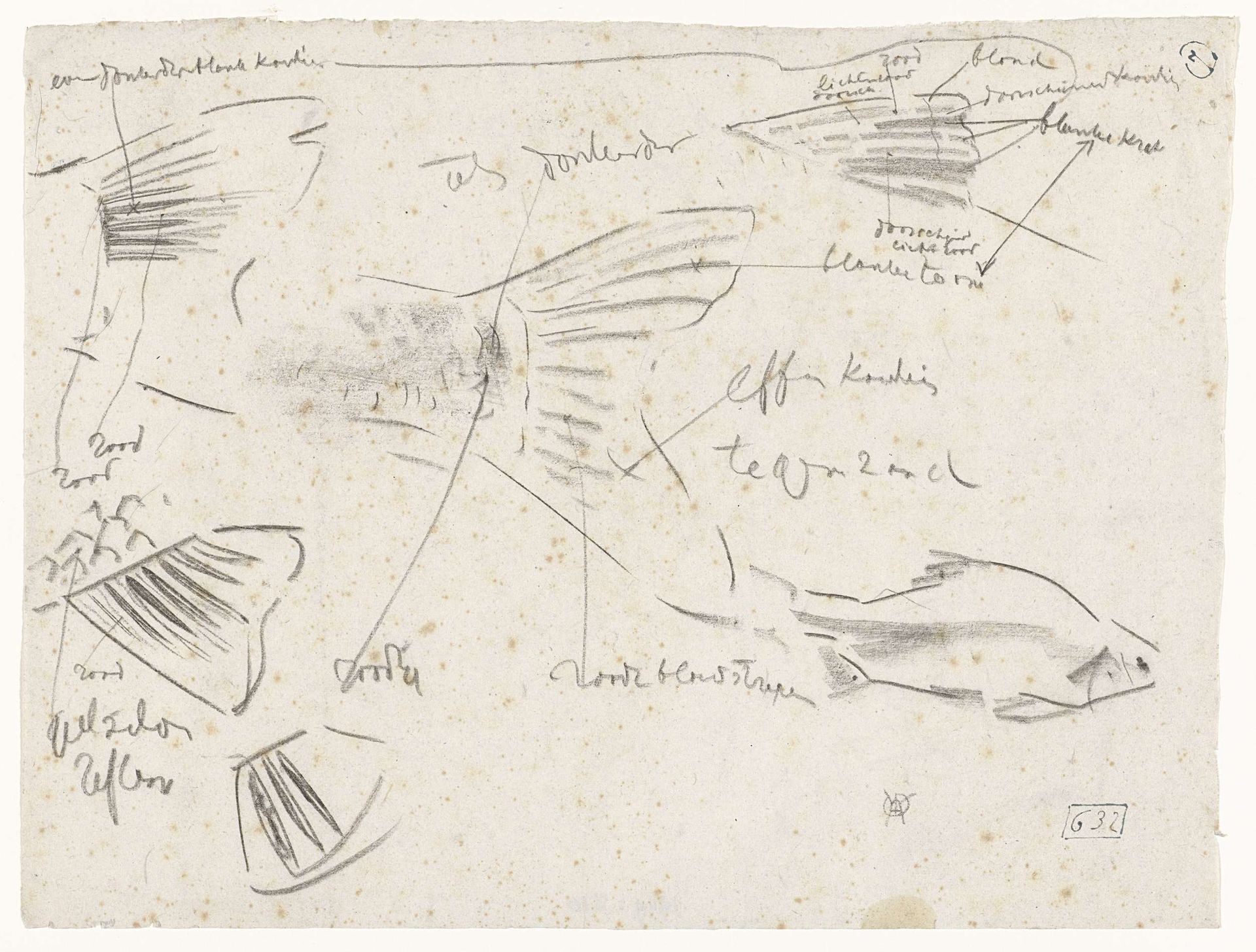
Gerrit Willem Dijsselhof created "Studies van de staart van een vis, met kleurnotities" using graphite on paper. The drawing presents a series of studies focused on the tail of a fish, accompanied by color notations. Dijsselhof meticulously captures the nuances of the fish's anatomy, emphasizing its structural elements and the play of light and shadow across its form. The composition reflects a keen interest in the natural world, examined through a detailed and analytical lens. The arrangement of the studies, with the inclusion of textual annotations, is suggestive of semiotic play. Each drawing can be interpreted as a sign that, when combined with the color notations, builds a system of representation. In this sense, Dijsselhof doesn't merely depict a fish's tail; he engages with the idea of representing nature through a structured visual language. Ultimately, the detailed rendering of the fish tail, combined with the artist's notes, reveals an underlying structure that invites multiple interpretations about form, color, and representation.
Studies van de staart van een vis, met kleurnotities
1876 - 1924

Gerrit Willem Dijsselhof
1866 - 1924Location
RijksmuseumArtwork details
- Medium
- drawing, paper, ink, pencil
- Dimensions
- height 220 mm, width 290 mm
- Location
- Rijksmuseum
- Copyright
- Rijks Museum: Open Domain
Tags
drawing
toned paper
quirky sketch
pen sketch
figuration
paper
personal sketchbook
ink
sketchwork
ink drawing experimentation
sketch
pen-ink sketch
pencil
sketchbook drawing
storyboard and sketchbook work
sketchbook art
Comments
Be the first to share your thoughts about this work.
About this artwork
Gerrit Willem Dijsselhof created "Studies van de staart van een vis, met kleurnotities" using graphite on paper. The drawing presents a series of studies focused on the tail of a fish, accompanied by color notations. Dijsselhof meticulously captures the nuances of the fish's anatomy, emphasizing its structural elements and the play of light and shadow across its form. The composition reflects a keen interest in the natural world, examined through a detailed and analytical lens. The arrangement of the studies, with the inclusion of textual annotations, is suggestive of semiotic play. Each drawing can be interpreted as a sign that, when combined with the color notations, builds a system of representation. In this sense, Dijsselhof doesn't merely depict a fish's tail; he engages with the idea of representing nature through a structured visual language. Ultimately, the detailed rendering of the fish tail, combined with the artist's notes, reveals an underlying structure that invites multiple interpretations about form, color, and representation.
Comments
Be the first to share your thoughts about this work.