About this artwork
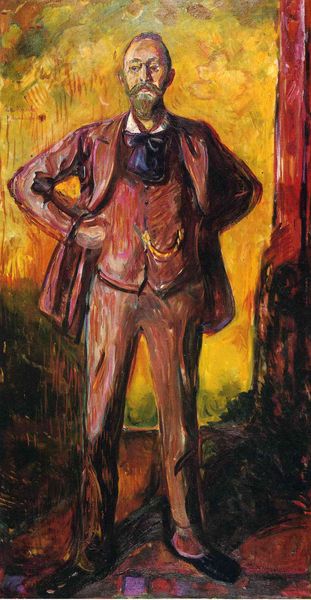
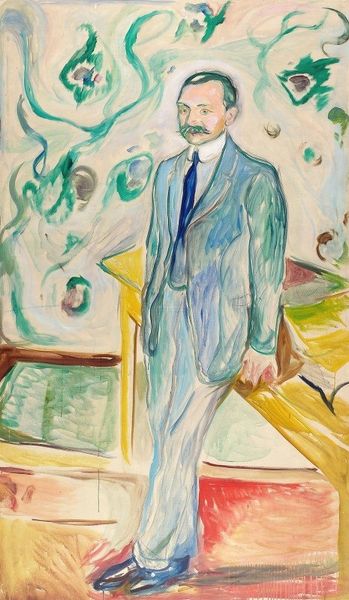
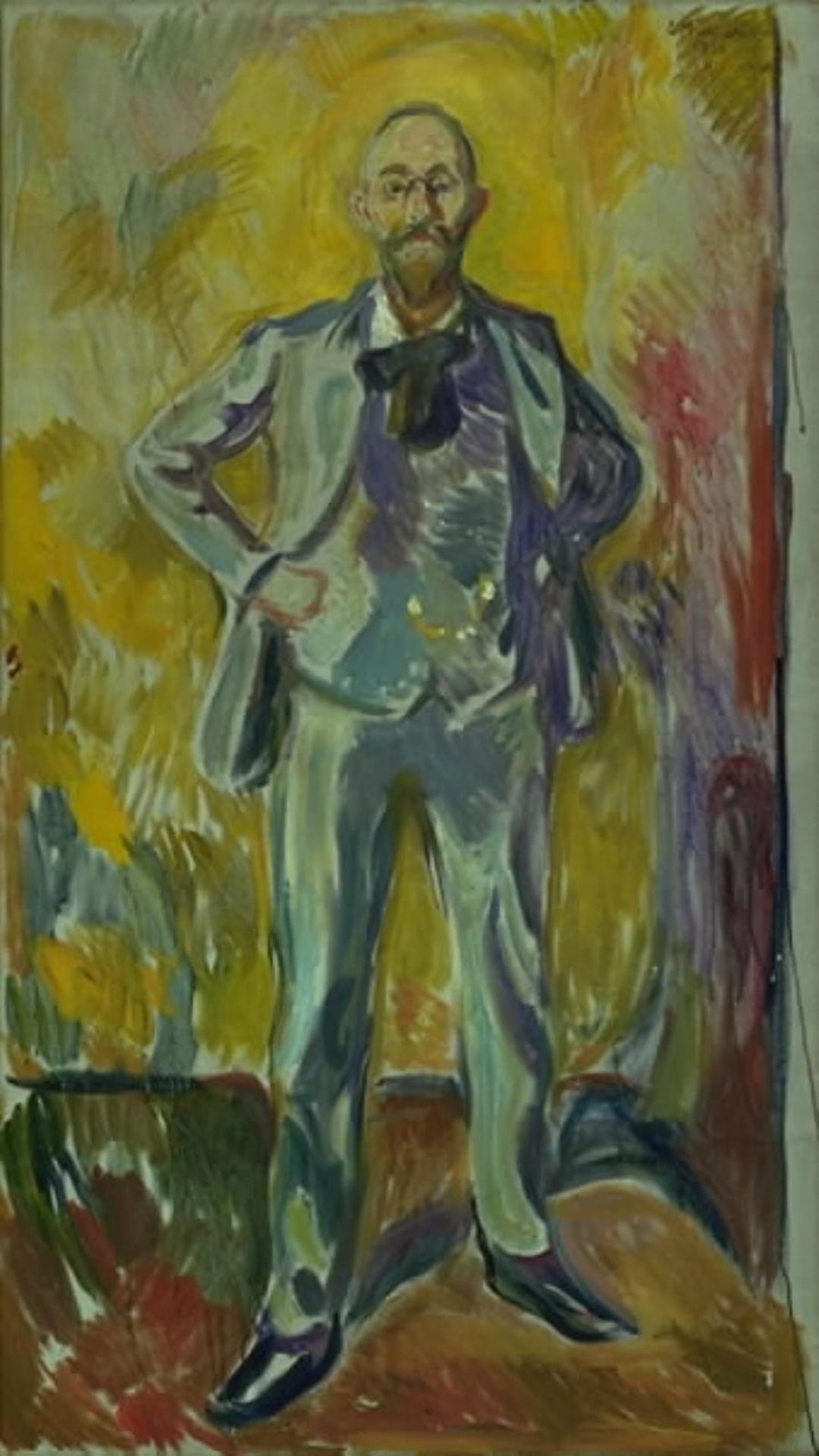
Edvard Munch painted this portrait of Professor Daniel Jacobson, using expressive brushstrokes and a muted palette to capture the essence of his sitter. Notice Jacobson's stance, with hands firmly on his hips, a gesture that speaks of authority and self-assuredness. This pose echoes through art history, from classical depictions of Roman emperors to later portraits of powerful figures. Think of the way Napoleon was often portrayed, radiating confidence and control. But here, Munch imbues the gesture with a more nuanced psychological dimension. There’s a hint of vulnerability beneath the surface of authority, a silent question in the eyes. This contrast draws us in, engaging our own subconscious understanding of power and the human condition. It is this cyclical progression of symbols, their resurfacing and reinterpretation, that reveals the powerful, timeless language of art.
Portrait of Professor Daniel Jacobson
1908


Artwork details
- Medium
- painting, oil-paint
- Dimensions
- 128.3 cm (height) x 73.7 cm (width) (Netto), 139.3 cm (height) x 83.6 cm (width) x 7.9 cm (depth) (Brutto)
- Location
- SMK - Statens Museum for Kunst
Tags
Comments
Share your thoughts
About this artwork
Edvard Munch painted this portrait of Professor Daniel Jacobson, using expressive brushstrokes and a muted palette to capture the essence of his sitter. Notice Jacobson's stance, with hands firmly on his hips, a gesture that speaks of authority and self-assuredness. This pose echoes through art history, from classical depictions of Roman emperors to later portraits of powerful figures. Think of the way Napoleon was often portrayed, radiating confidence and control. But here, Munch imbues the gesture with a more nuanced psychological dimension. There’s a hint of vulnerability beneath the surface of authority, a silent question in the eyes. This contrast draws us in, engaging our own subconscious understanding of power and the human condition. It is this cyclical progression of symbols, their resurfacing and reinterpretation, that reveals the powerful, timeless language of art.
Comments
Share your thoughts