Dimensions: 5 7/16 x 5 15/16 in. (13.81 x 15.08 cm) (image)
Copyright: No Copyright - United States
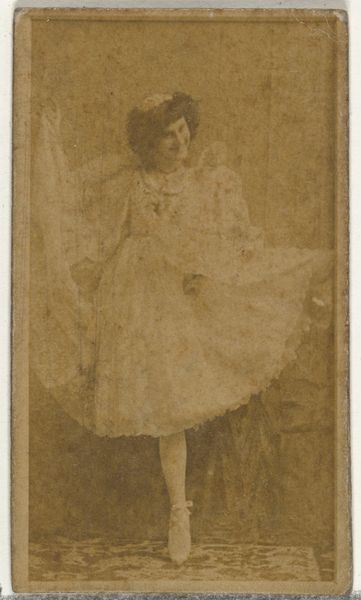
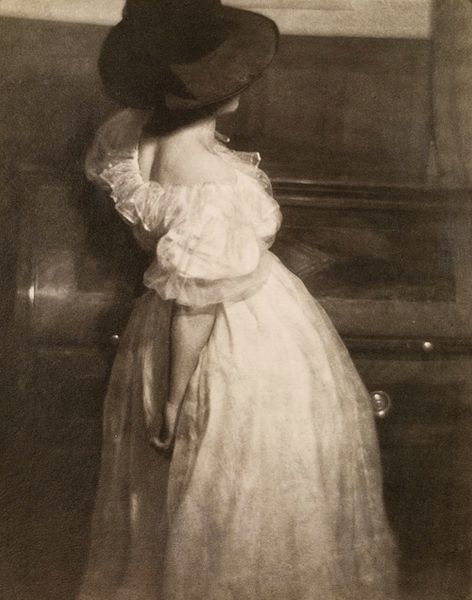
Curator: Robert Demachy created this artwork, entitled "Behind the Scenes," circa the 20th century. It’s currently housed here at the Minneapolis Institute of Art, and it’s rendered in charcoal. What are your first thoughts? Editor: A certain somber quality strikes me right away. The charcoal medium lends a smoky, subdued atmosphere, which makes me ponder the hidden labor and vulnerability beneath the idealized image of the ballerina. Curator: Absolutely. Demachy, operating within the late 19th and early 20th-century art scene, often used soft focus and alternative printing processes in his photography, similar to his charcoal drawings. This piece evokes Impressionism, yet the subject – a dancer – pulls us into considerations of gender, class, and performance in that era. Ballet was both an artistic achievement and a disciplined form of labor, heavily regulated, particularly for women. Editor: Exactly. How complicit were such institutions in shaping, or even exploiting, their young performers? Her posture and gaze averted downwards suggests a discomfort or perhaps a resignation to her position. What pressures did she face, and how does the institutional gaze amplify these issues of compliance, body image, and societal expectations placed on women in the arts? Curator: I agree, the piece lends itself to these critiques. Think about Degas and his ballet dancers – often considered purely aesthetic representations. Demachy offers a slightly different perspective, subtly revealing the artifice and even the anxieties woven into that world. Editor: And how the reception of the piece would shift. At the time, perhaps perceived merely as a pretty sketch. Viewed through our contemporary lens, "Behind the Scenes" takes on new critical weight, provoking us to confront power dynamics inherent within artistic representation. Curator: Right. The piece encourages an intersectional reading, drawing from feminist theory to analyze the dancer's position. Editor: And hopefully inspire thoughtful conversation, as we consider how art is displayed, contextualized, and received within our current social landscape. Curator: Agreed. By delving into both its art historical context and the complex narratives of its subject, “Behind the Scenes” reveals its timeless relevance.
Comments
No comments
Be the first to comment and join the conversation on the ultimate creative platform.
 React
React Comment