About this artwork
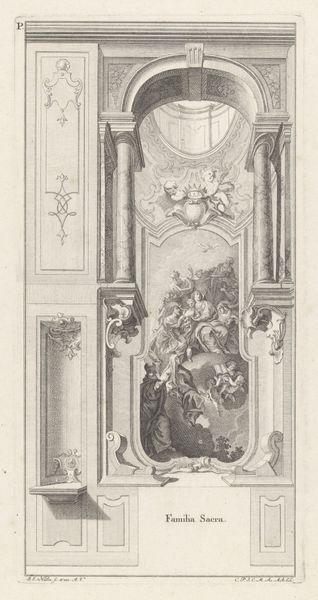
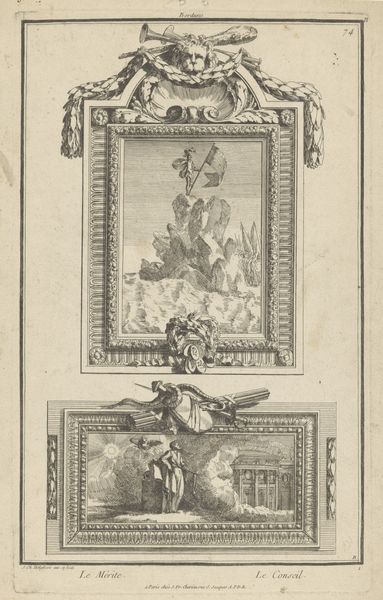
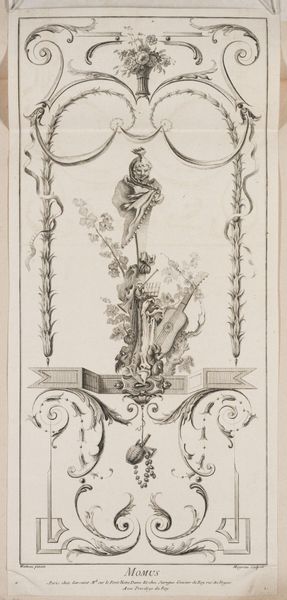
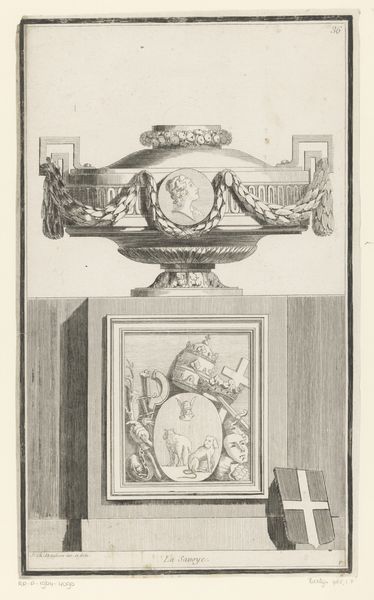
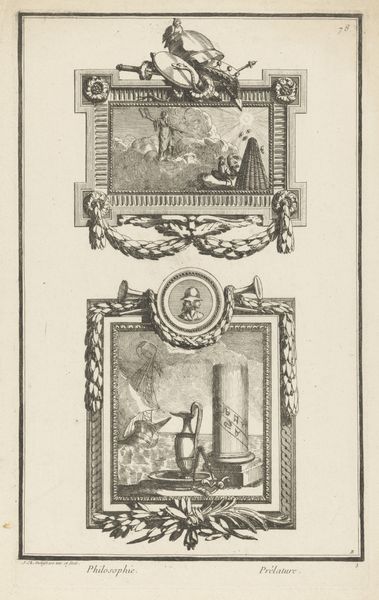
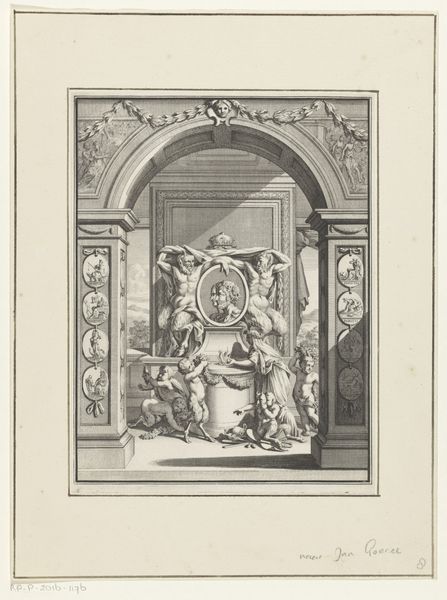
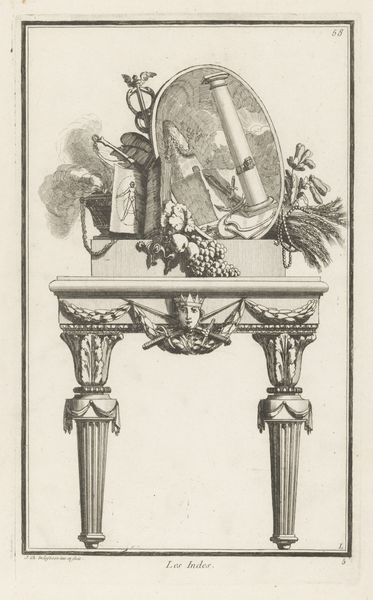
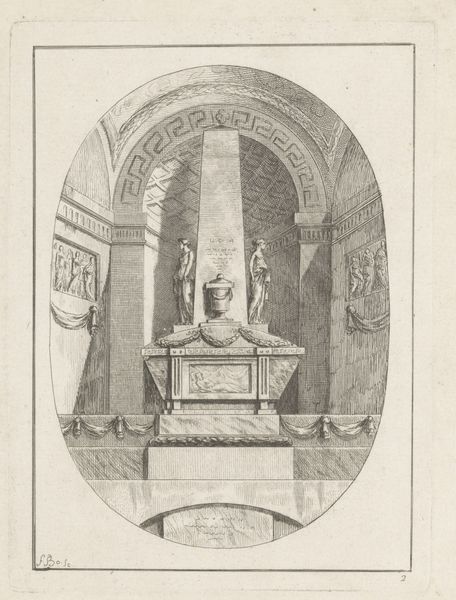
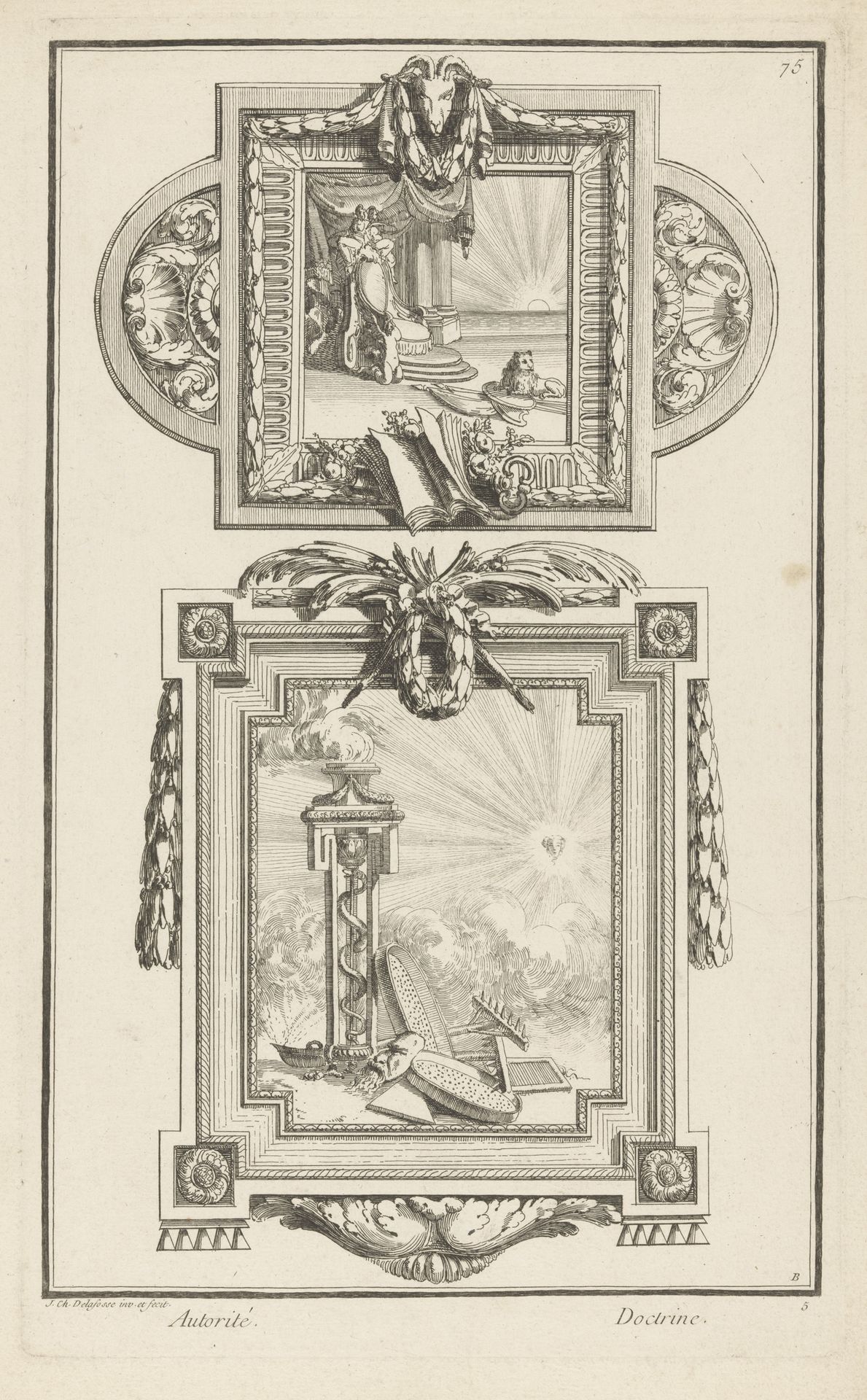
Jean Charles Delafosse made this print, Autoriteit en doctrine, using etching techniques. The fine lines and intricate details speak to the precision and skill involved in this process. The print’s visual texture gives depth to the allegorical scenes depicted within ornate frames. Note how the etched lines create shading and volume, almost like a three-dimensional relief. The making of prints like this involved a division of labor. It could take hours to complete each image. These processes have social significance: each print could carry ideas far beyond its place of origin, circulating concepts widely. Consider the layers of skill involved—the artist's design, the etcher’s ability to translate that design into a repeatable image. The material – humble paper – becomes a carrier of complex meanings. By appreciating the craft involved, we move beyond simply seeing the image and start to understand its cultural and historical importance.

Artwork details
- Medium
- print, engraving
- Dimensions
- height 381 mm, width 234 mm
- Location
- Rijksmuseum
- Copyright
- Rijks Museum: Open Domain
Tags
Comments
Share your thoughts
About this artwork
Jean Charles Delafosse made this print, Autoriteit en doctrine, using etching techniques. The fine lines and intricate details speak to the precision and skill involved in this process. The print’s visual texture gives depth to the allegorical scenes depicted within ornate frames. Note how the etched lines create shading and volume, almost like a three-dimensional relief. The making of prints like this involved a division of labor. It could take hours to complete each image. These processes have social significance: each print could carry ideas far beyond its place of origin, circulating concepts widely. Consider the layers of skill involved—the artist's design, the etcher’s ability to translate that design into a repeatable image. The material – humble paper – becomes a carrier of complex meanings. By appreciating the craft involved, we move beyond simply seeing the image and start to understand its cultural and historical importance.
Comments
Share your thoughts