1895
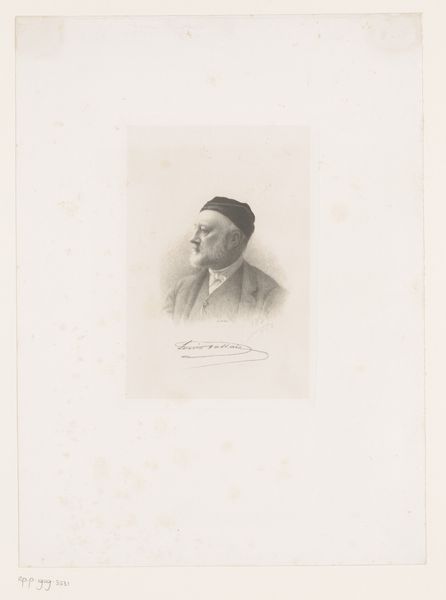
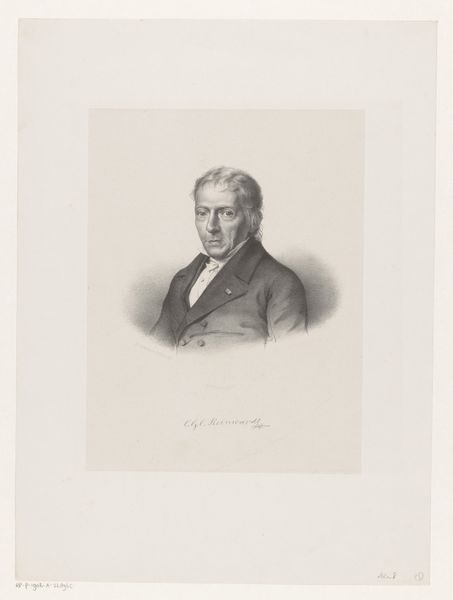
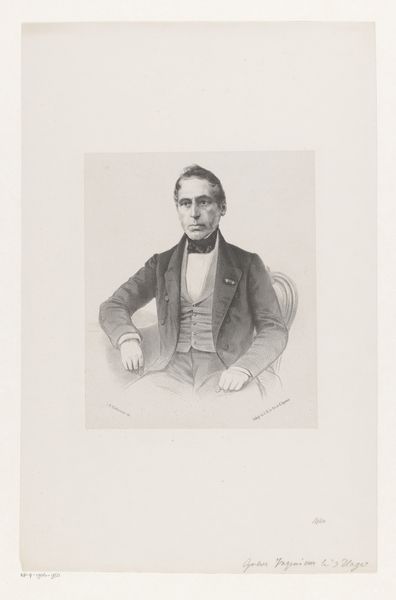
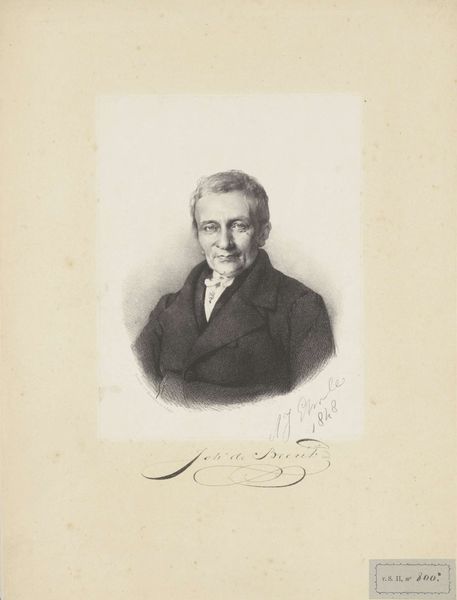
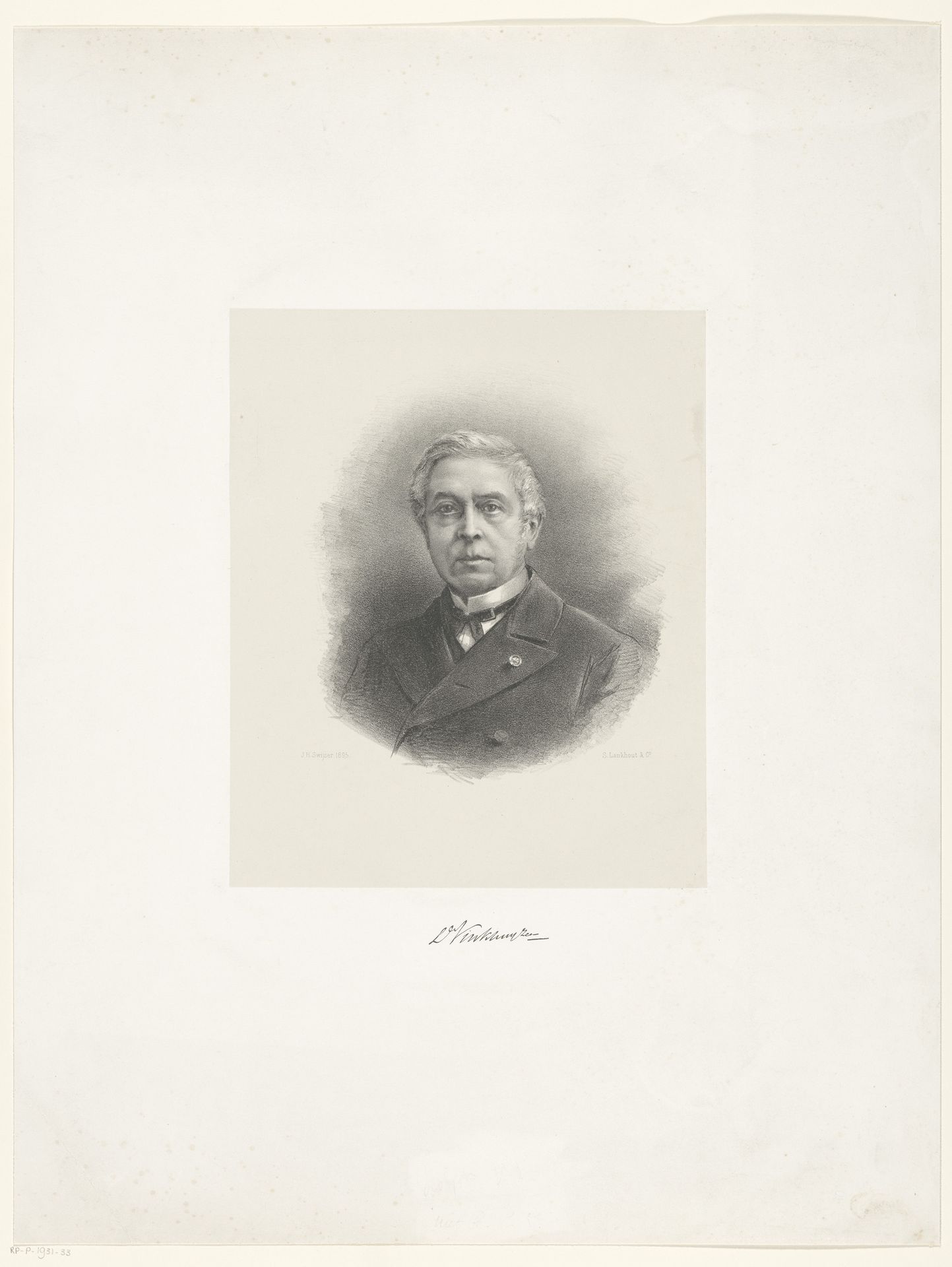
Portret van Cornelis Wilhelmus Vinkhuyzen

Listen to curator's interpretation
Curatorial notes
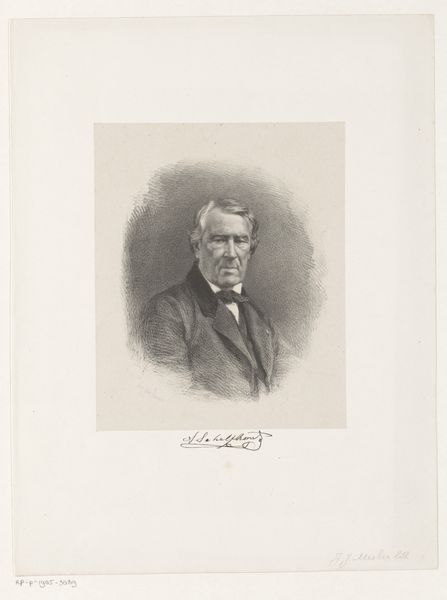
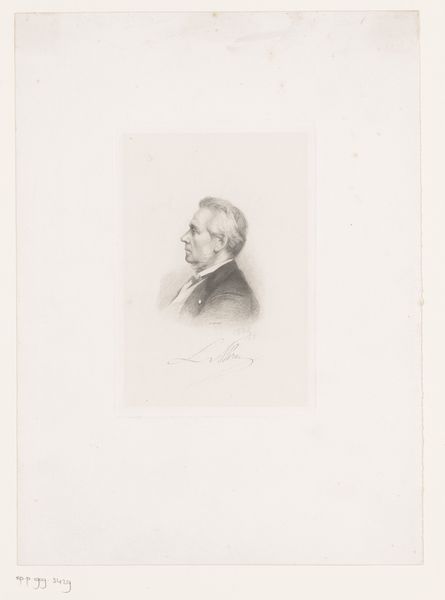
Curator: Standing before us, we have a print by Jacob Hendrik Swijser from 1895, titled "Portret van Cornelis Wilhelmus Vinkhuyzen". It's primarily a pencil work. Editor: Hmm, quite imposing! Even in monochrome, there's a certain gravity. He seems... very serious. I am drawn to the overall formal appearance and restrained presentation of his demeanor and dress. Curator: It's interesting you say that, I always felt there was an element of humanity poking through the formality, maybe in the gentle smudging around the edges, or the slight unevenness in his gaze? The artist really plays with light here to soften the edges, creating this wonderfully intimate impression, even though it is a portrait intended for the ages. Editor: I see your point. Looking closely, the softness, which is partly due to the materiality of the pencil on the printing technique, certainly mitigates any sense of cold austerity. Semiotically, this use of "soft focus", we could say, creates distance whilst simultaneously alluding to approachability, yes? Curator: Exactly! And the choice of using a print, rather than say an oil painting, speaks volumes about the democratization of art and representation during this period. It allowed a wider audience to have access to portraits of important figures, sort of early image proliferation if you will. Who gets to be immortalized, and how, right? Editor: Yes, that diffusion is intrinsic. But if we see that image democratization as the intent here, the lack of context puzzles me. The background almost fades entirely... Was it simply an aesthetic preference, or a cost-saving choice related to the print process, given the sociohistorical dimension we are mapping out? It could suggest the focus remains solely on Vinkhuyzen's "aura" alone. Curator: Interesting thought. I am prone to feeling there's intent. Perhaps it strips away any distraction, so we're left only with the man himself. The composition throws the focus solely onto his essence and allows his identity to speak for itself beyond external markers of social standing, which in itself says quite a bit in an era steeped in bourgeois symbolism. Editor: Well, whatever the intention, Swijser’s artistry created something that continues to provoke questions, doesn’t it? Curator: Absolutely. It's a work that stays with you. A subtle symphony in graphite.