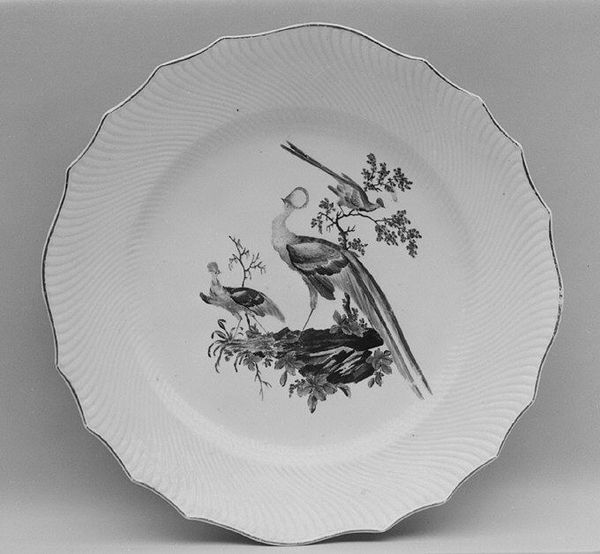
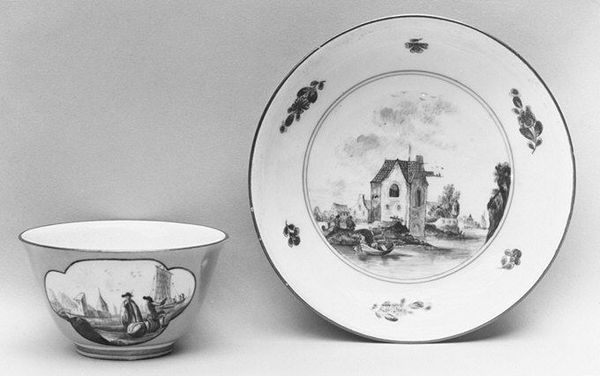
Dimensions: Diameter: 8 7/8 in. (22.5 cm)
Copyright: Public Domain
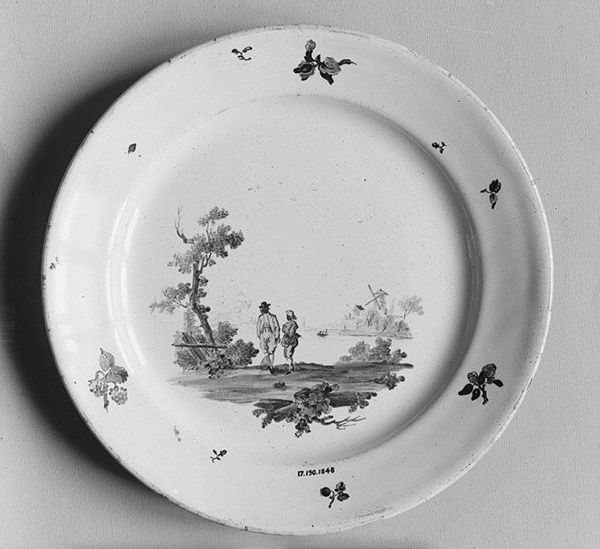
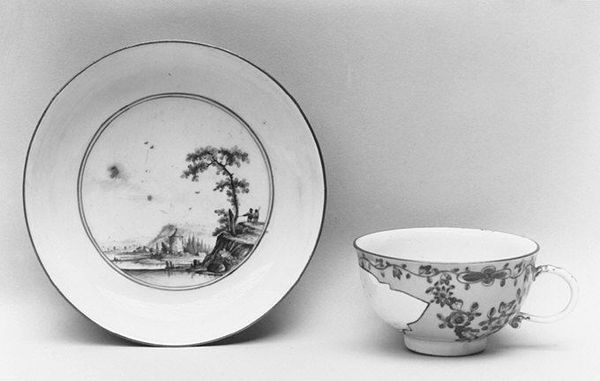
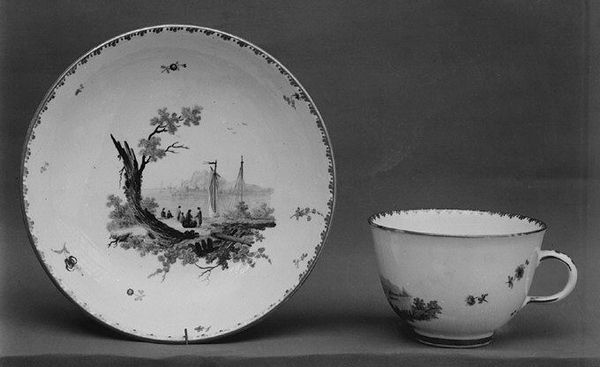
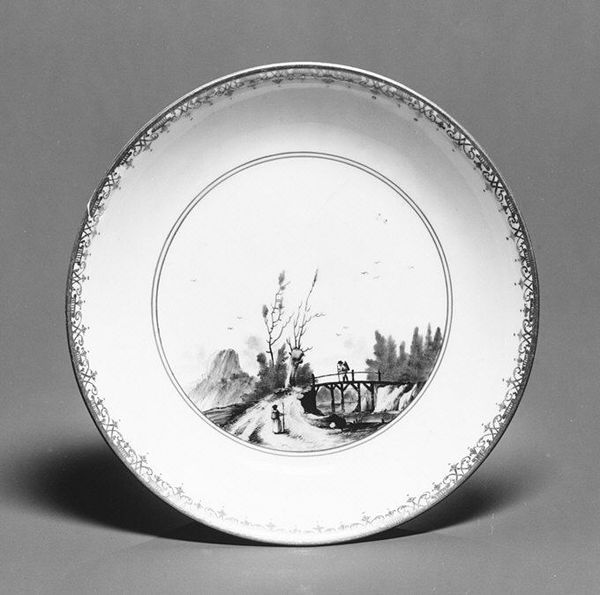
This plate was created by Fidelle Duvivier in the 18th century. At first glance, we see a picturesque landscape, but let’s look deeper. The central motif presents figures by a tree near water, an island, and a structure in the distance. This arrangement harkens back to classical pastoral scenes, echoing a longing for simpler, perhaps idealized times. The presence of ruins, barely visible in the background, subtly introduces a sense of melancholy and the transience of human achievement. Consider similar scenes in Poussin's landscapes or even Watteau's fêtes galantes; the past is always present. Such imagery taps into a collective memory, evoking feelings of nostalgia. These are feelings that can be seen from antiquity through to the Enlightenment, as humans seek an anchor in an ever-changing world. The cyclical nature of these images shows how human emotions resurface, evolve, and find new expression across time.
Comments
No comments
Be the first to comment and join the conversation on the ultimate creative platform.
 React
React Comment