About this artwork
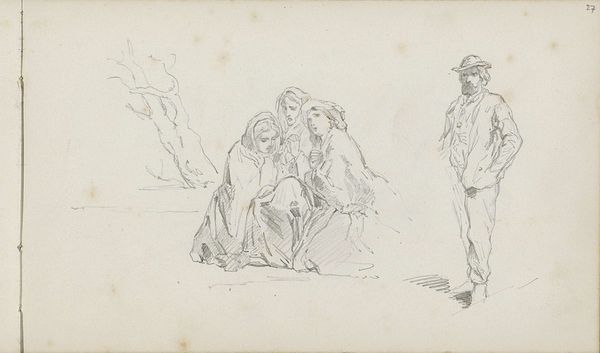
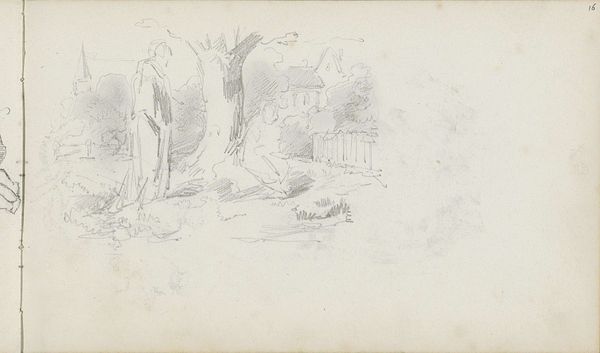
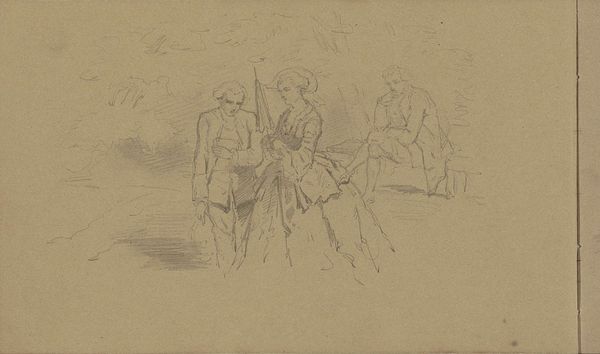
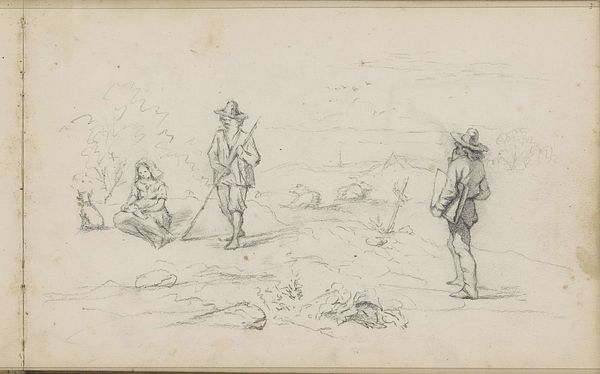
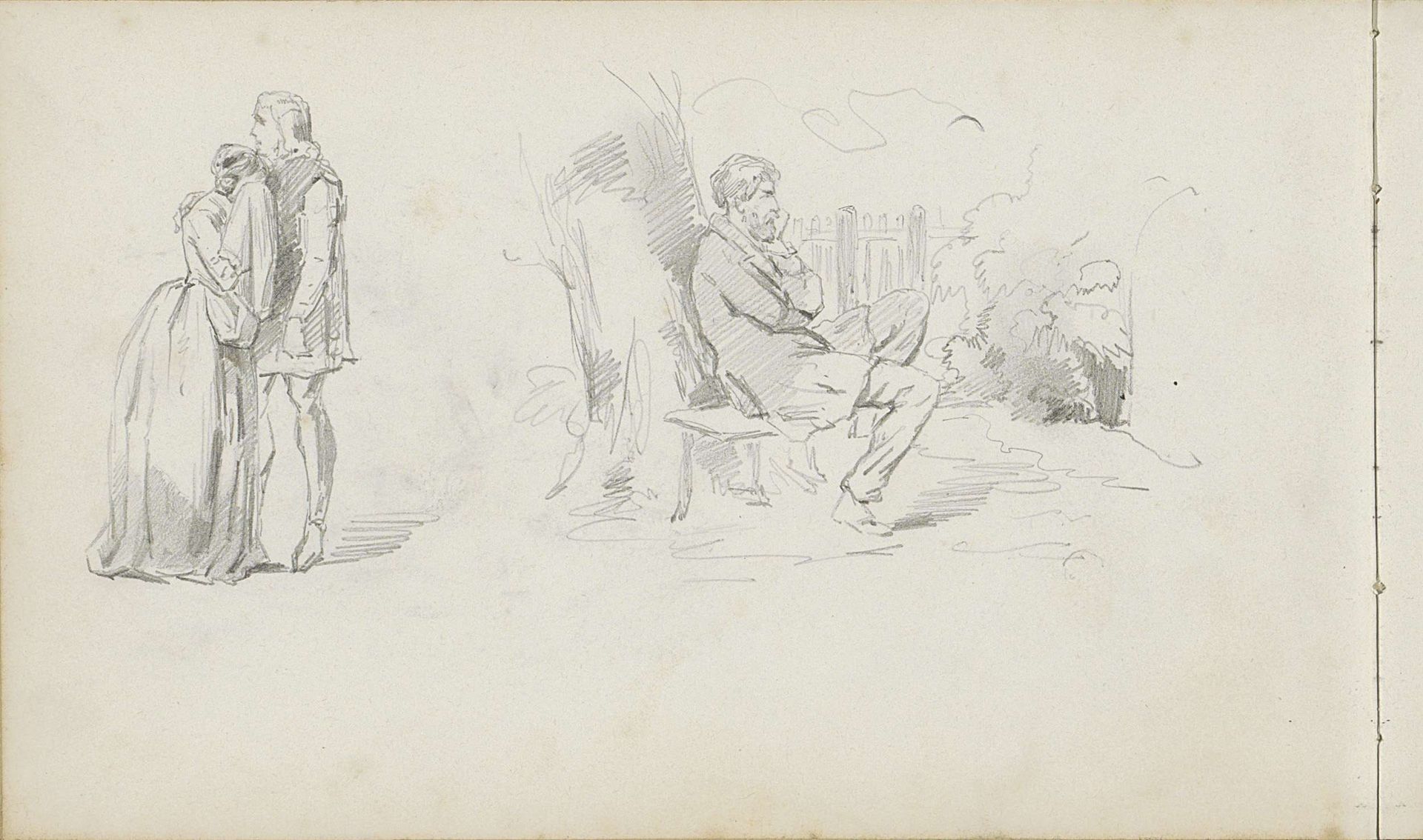
Charles Rochussen sketched this work, "Sitting Man under a Tree and a Crying Woman," using graphite. Rochussen lived through a time of significant social change. He developed his art during the rise of the middle class in the Netherlands. The artwork contains three figures: A man sits in repose while a crying woman is being embraced by a man. This composition encourages reflection on gender roles. The contrast between the active male figures and the passive female figure, might reflect the period's societal norms, which expected different emotional expressions from men and women. Rochussen’s choice to depict such intimate scenes may echo broader cultural conversations about privacy, emotion and individual expression in a rapidly changing society. The emotional dynamic captured invites us to consider the complexities of human relationships and the varying ways individuals navigate emotional experiences.
Zittende man onder een boom en een huilende vrouw c. 1840 - 1860

Charles Rochussen
1814 - 1894Location
RijksmuseumArtwork details
- Medium
- drawing, paper, pencil
- Location
- Rijksmuseum
- Copyright
- Rijks Museum: Open Domain
Tags
tree
drawing
amateur sketch
light pencil work
quirky sketch
pencil sketch
incomplete sketchy
landscape
figuration
paper
personal sketchbook
idea generation sketch
sketchwork
romanticism
pencil
sketchbook drawing
genre-painting
sketchbook art
Comments
No comments
About this artwork
Charles Rochussen sketched this work, "Sitting Man under a Tree and a Crying Woman," using graphite. Rochussen lived through a time of significant social change. He developed his art during the rise of the middle class in the Netherlands. The artwork contains three figures: A man sits in repose while a crying woman is being embraced by a man. This composition encourages reflection on gender roles. The contrast between the active male figures and the passive female figure, might reflect the period's societal norms, which expected different emotional expressions from men and women. Rochussen’s choice to depict such intimate scenes may echo broader cultural conversations about privacy, emotion and individual expression in a rapidly changing society. The emotional dynamic captured invites us to consider the complexities of human relationships and the varying ways individuals navigate emotional experiences.
Comments
No comments