About this artwork
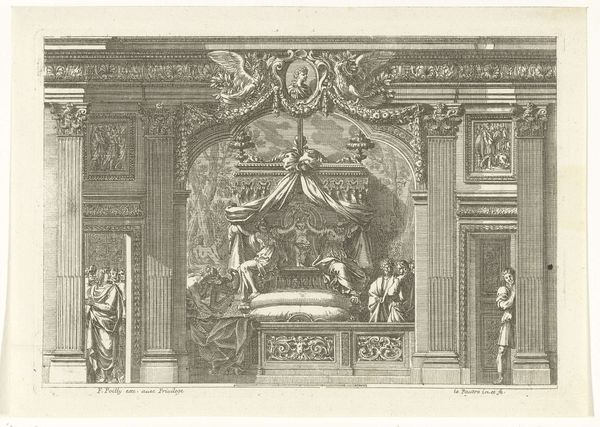
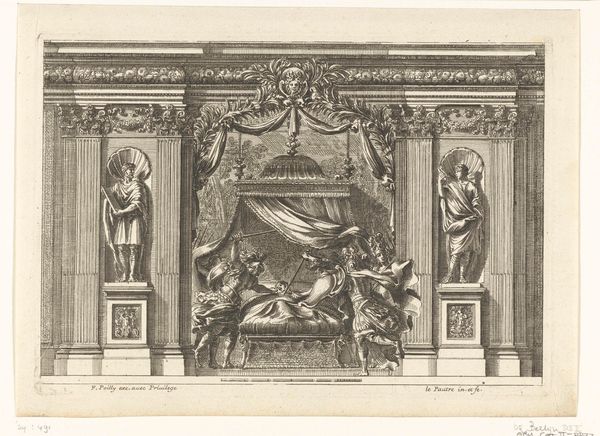
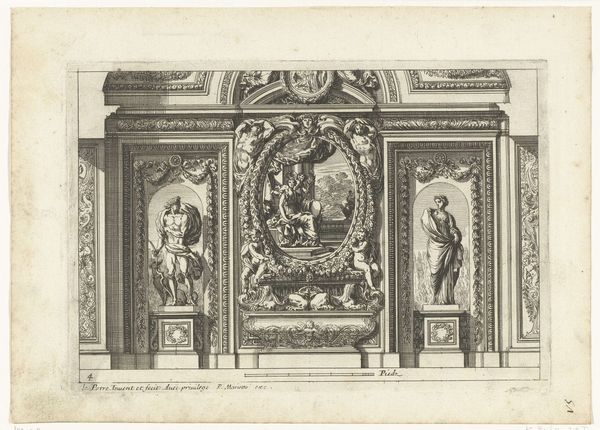
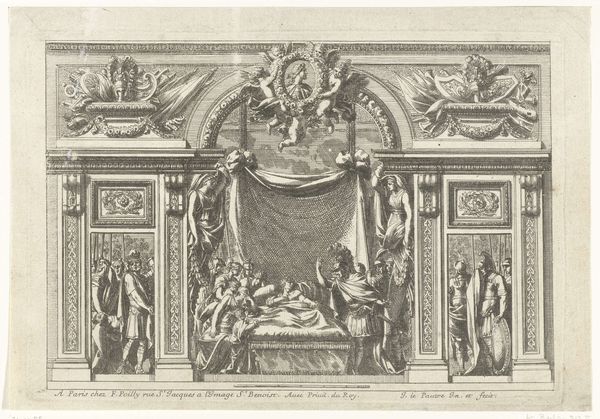
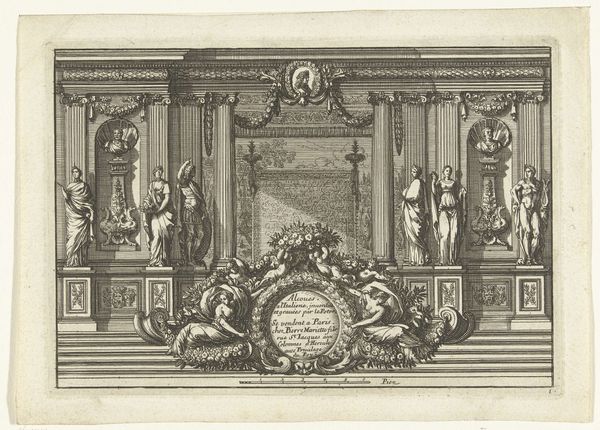
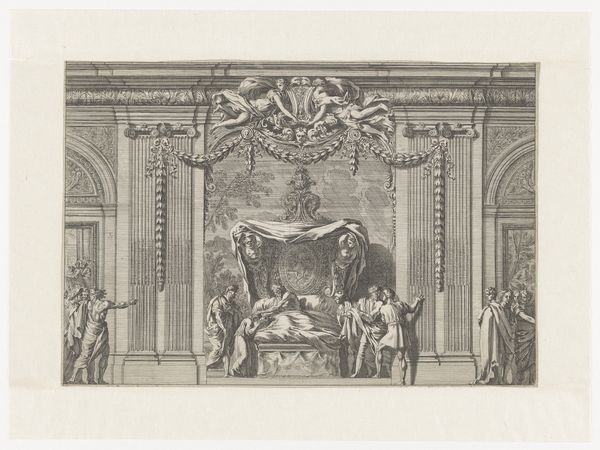
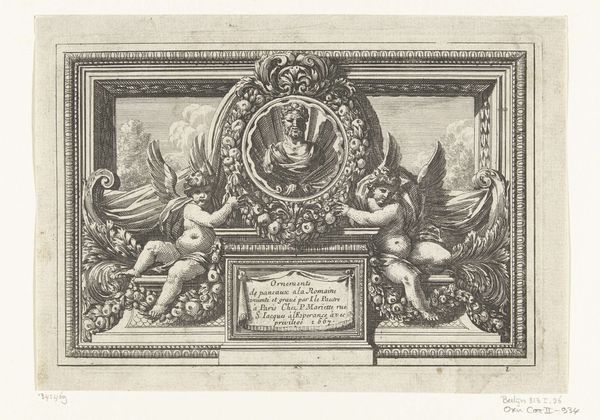
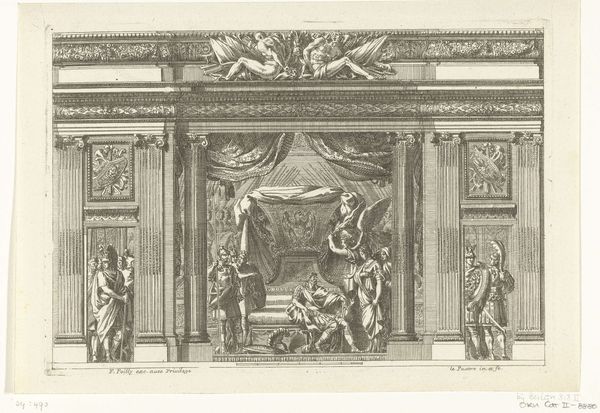
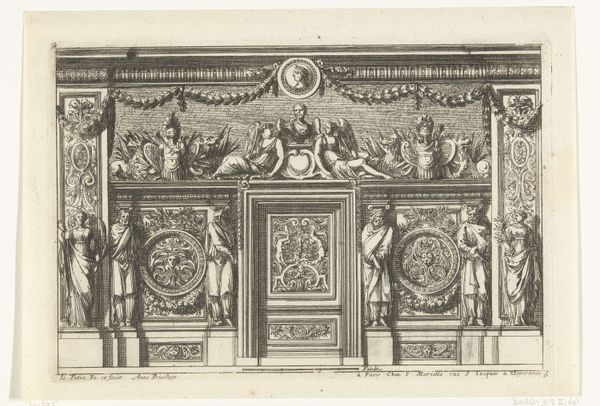
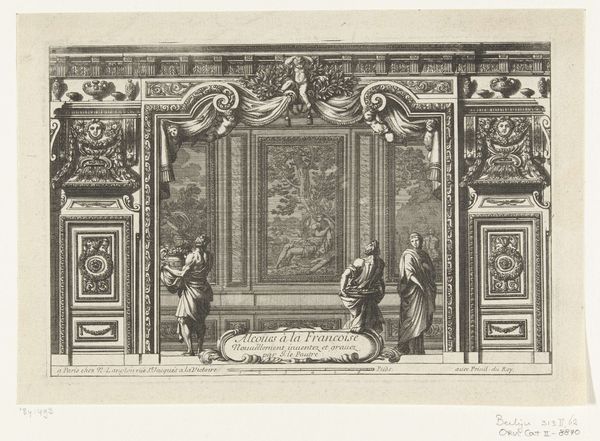
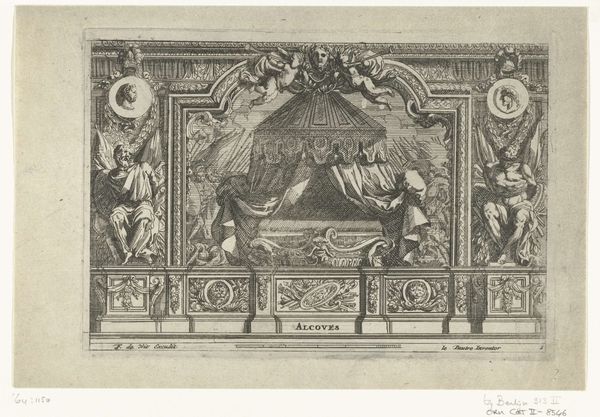
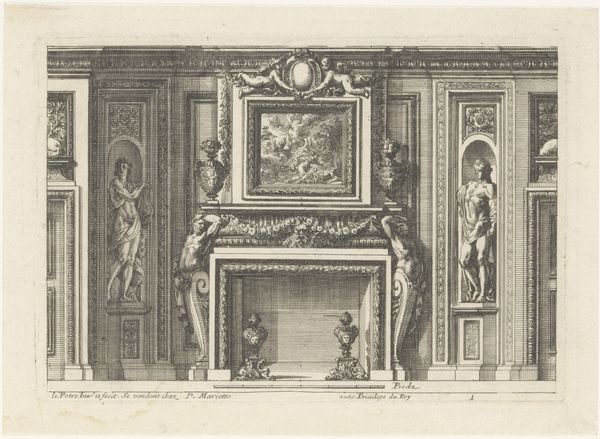
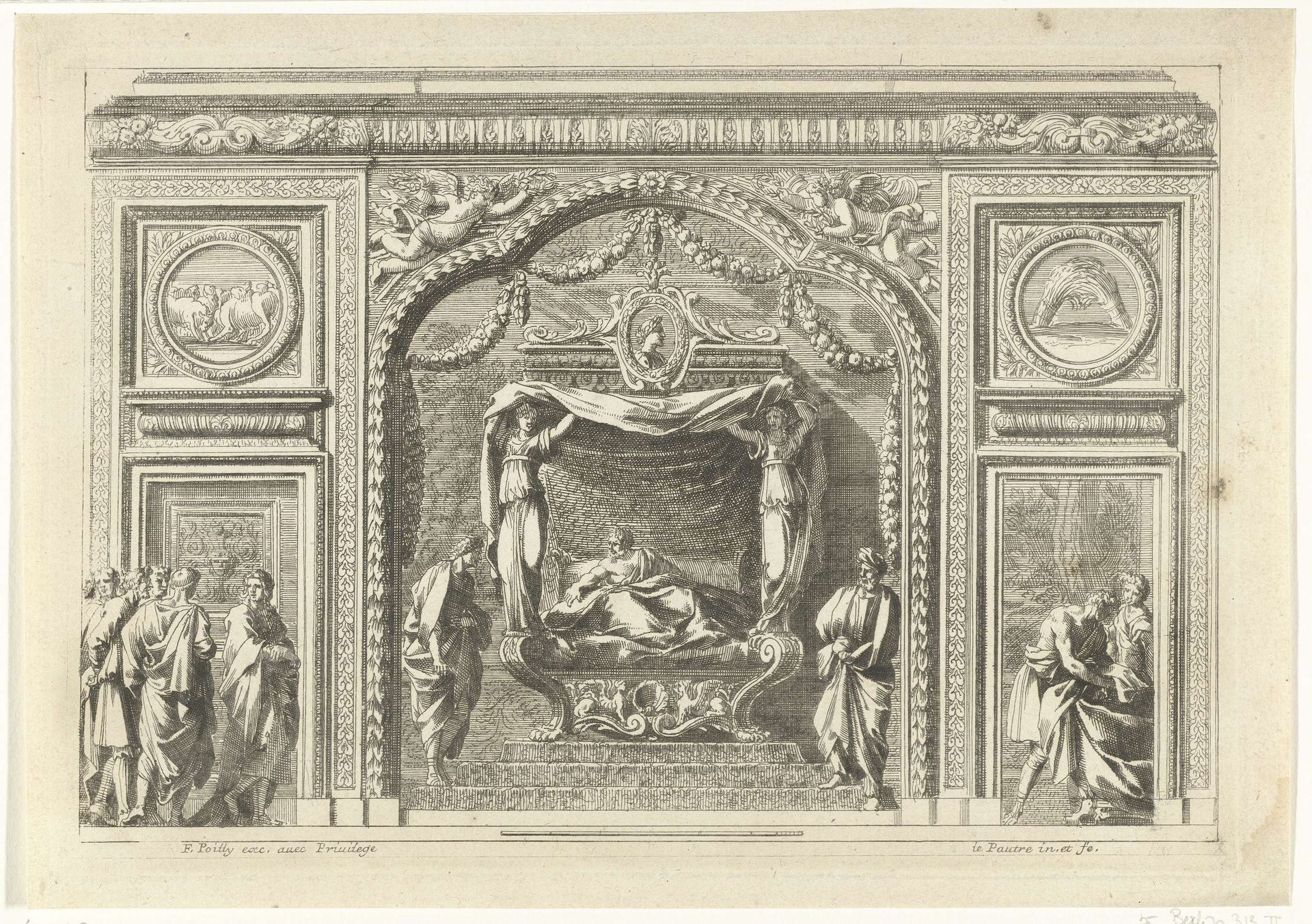
This print, "Alkoof met baldakijn ondersteund door twee vrouwen," was made by Jean Lepautre, likely in the mid-17th century. The printmaking process involves considerable labor; a design is incised into a metal plate, inked, and then printed onto paper. This reproductive technique allowed for the wide dissemination of ornamental designs during the period. Here, the depicted alcove is ornamented with figures, garlands, and bas-reliefs. Its architectural elements appear to be made of stone or plasterwork, materials often associated with permanence and grandeur. But of course, these are mere representations, achieved through a highly skilled, though ultimately mechanical, process. Lepautre’s print offers us a glimpse into the aesthetics of luxury, while also reminding us of the labor and skill involved in both its original creation and its reproduction. It’s a potent example of how the worlds of design, craft, and printmaking intersect, reflecting the social and economic values of the time.
Alkoof met baldakijn ondersteund door twee vrouwen
c. 1665

Jean Lepautre
1618 - 1682Location
RijksmuseumArtwork details
- Medium
- print, engraving
- Dimensions
- height 165 mm, width 238 mm
- Location
- Rijksmuseum
- Copyright
- Rijks Museum: Open Domain
Tags
allegory
baroque
pen drawing
figuration
form
line
history-painting
engraving
Comments
Be the first to share your thoughts about this work.
About this artwork
This print, "Alkoof met baldakijn ondersteund door twee vrouwen," was made by Jean Lepautre, likely in the mid-17th century. The printmaking process involves considerable labor; a design is incised into a metal plate, inked, and then printed onto paper. This reproductive technique allowed for the wide dissemination of ornamental designs during the period. Here, the depicted alcove is ornamented with figures, garlands, and bas-reliefs. Its architectural elements appear to be made of stone or plasterwork, materials often associated with permanence and grandeur. But of course, these are mere representations, achieved through a highly skilled, though ultimately mechanical, process. Lepautre’s print offers us a glimpse into the aesthetics of luxury, while also reminding us of the labor and skill involved in both its original creation and its reproduction. It’s a potent example of how the worlds of design, craft, and printmaking intersect, reflecting the social and economic values of the time.
Comments
Be the first to share your thoughts about this work.