
Curatorial notes
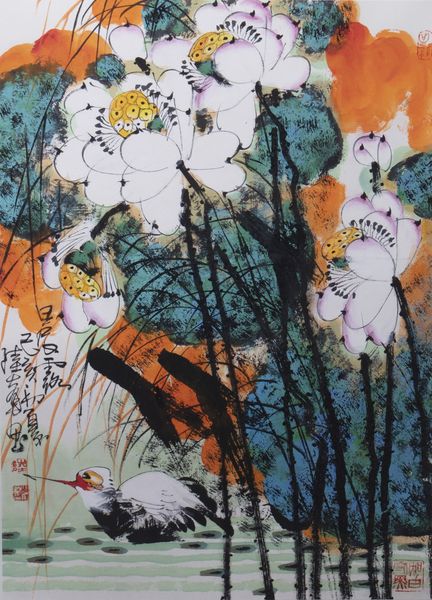
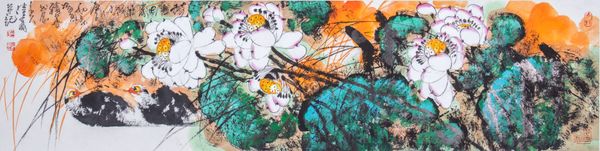
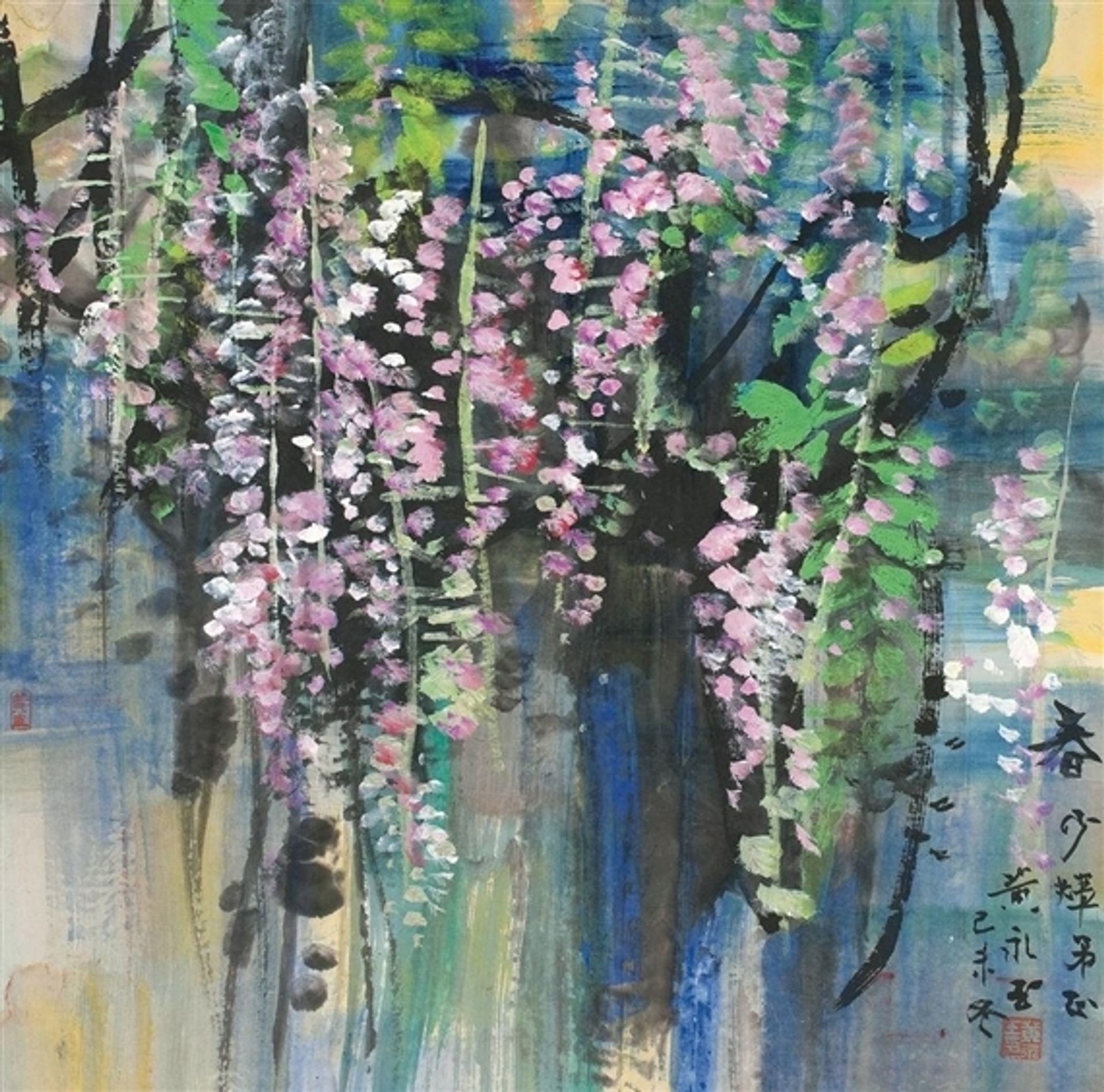
Editor: Here we have Huang Yongyu's "Spring", crafted using watercolor and ink. The cascade of purple wisteria immediately strikes me—there’s a delicate sadness to their drooping forms. How do you interpret this work? Curator: Indeed. I see in these blooms the profound weight of fleeting beauty, the ephemeral nature of life celebrated in many Asian cultures. Consider the use of line, almost calligraphic, evoking a deep well of tradition. The imagery serves as more than representation; it invites contemplation on our relationship with time, mortality and renewal. Does the flow of the ink suggest anything specific to you? Editor: Perhaps the idea of continuous movement? How everything is interconnected, even in decline? The blossoms falling are part of the same process as new buds forming above. Curator: Precisely. The flowing lines create both form and feeling. Notice the interplay of emptiness and fullness; in art traditions influenced by Taoism, emptiness isn’t just absence, but a space for possibility. It seems that every single brushstroke creates both substance and allusion to its inverse. Can we appreciate nature only because its ephemerality? Editor: I hadn't considered the "emptiness" quite that way, it is so rich! This adds a deeper dimension to how I perceive the wisteria's poignant beauty. The image and style make perfect sense with that Taoist-inspired reading. Curator: Exactly! Through visual language, Huang Yongyu connects us to enduring cultural memories about natural phenomena and cycles of time. Editor: This piece feels more vibrant and thoughtful now, exploring how an artwork echoes through time with purpose and sensitivity to the imagery we respond to.