

17th century
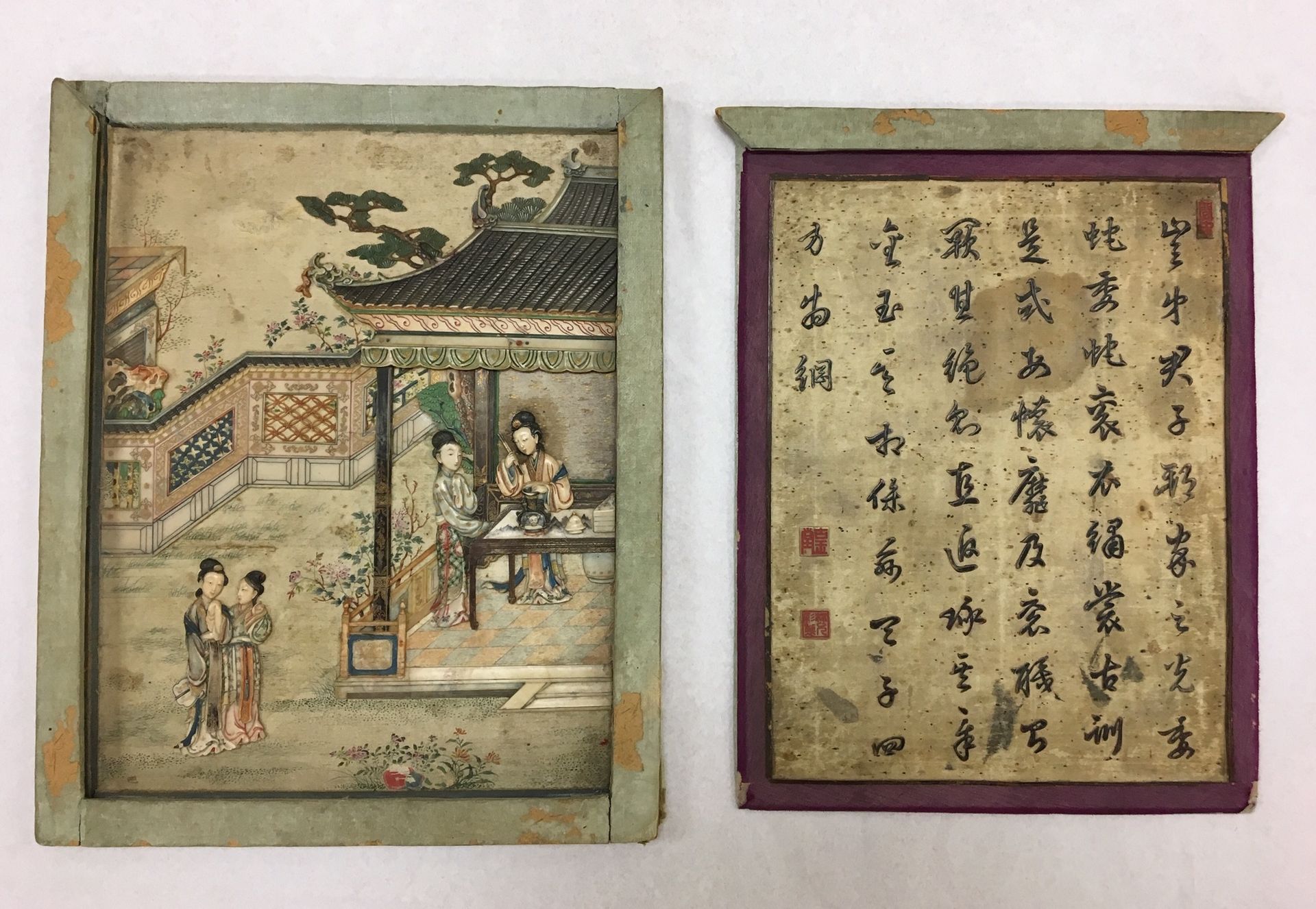
Panel Illustrating Feminine Virtue: The Art of Cooking or Hospitality (?)

Listen to curator's interpretation
Curatorial notes
Editor: Here we have, "Panel Illustrating Feminine Virtue: The Art of Cooking or Hospitality (?)", a watercolor painting by Lin Yuncai from the 17th century. I find the image quite serene and intimate, especially with the focus on domestic life. What story do you think this work is telling us? Curator: The artwork seems to be offering a perspective into the expected roles of women in 17th-century Chinese society. Observe how women's virtues are depicted, framed through domestic duties like cooking and hospitality, mirroring a broader social expectation that confines women to the domestic sphere. This act of confinement often meant that women of certain societal ranks had limited interaction with the world outside of their homes and family, restricting the freedom to gain income, knowledge, or connections. What does the accompanying calligraphy suggest about these feminine virtues? Editor: That's fascinating. I hadn't considered it as a commentary on confinement. The calligraphy, from what I can tell, appears to reinforce traditional values, probably amplifying the virtues illustrated. Curator: Exactly. How might we interpret this artwork through a contemporary feminist lens? What does it reveal about power dynamics and gender roles, then and now? Editor: I guess seeing this today, it makes me think about how much has changed – and also, perhaps, how much hasn't. There's still a lot of pressure, even if it’s more subtle, on women to fulfill certain roles. Curator: Precisely. The painting isn’t just a historical artifact; it’s a mirror reflecting ongoing societal debates. By understanding its historical context, we can better analyze current discussions surrounding gender, labor, and representation. Editor: This has totally changed how I see this piece. It's not just a pretty picture of the past; it's part of an ongoing conversation. Curator: Indeed, engaging with art history in this way allows us to connect past and present, challenging existing social structures.