About this artwork
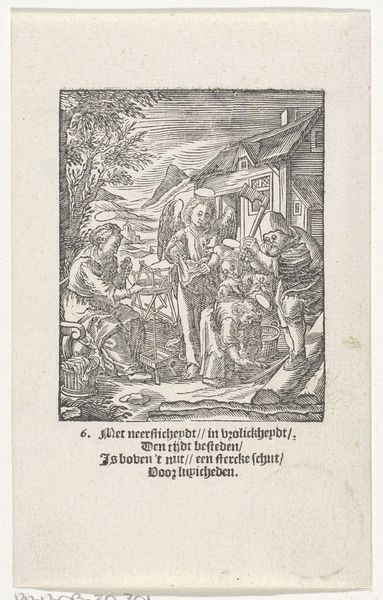
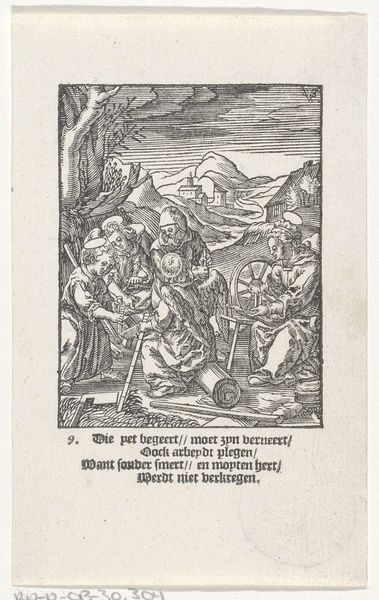
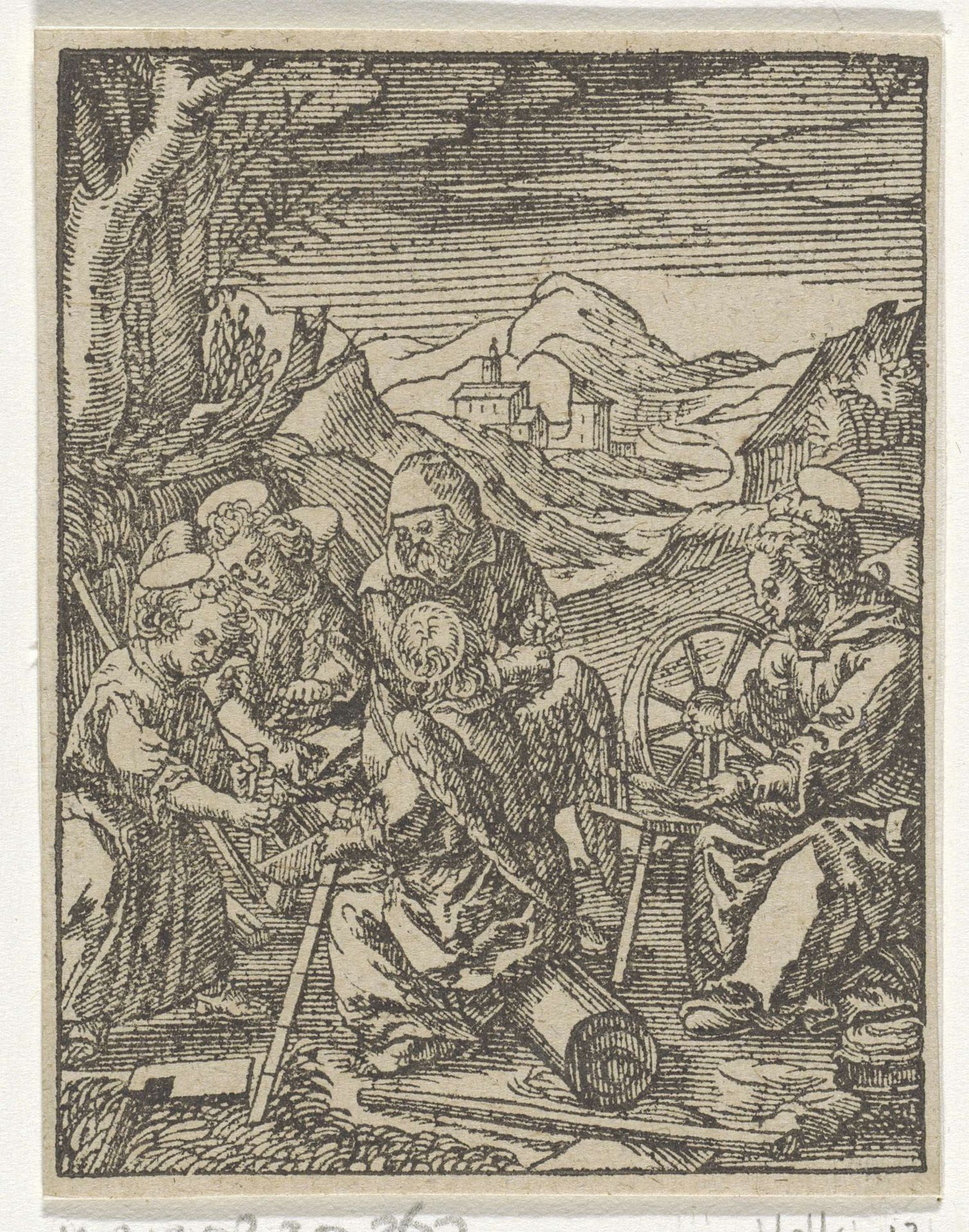
Christoffel van Sichem II created this woodcut titled 'Christuskind zaagt een boomstam', or Christ Child sawing a log, in the Netherlands during the 17th century. Here, Sichem presents a highly domestic scene. As a child, Jesus helps in Joseph’s workshop. In the background, a church or monastery suggests the importance of the Christian faith in the daily life of the Dutch. This image presents a humanized version of Jesus, one that reflects the values of the working class, and perhaps subtly critiques the opulence of the church. Woodcuts like this were often made to be widely distributed, and it may have served as a devotional aid for the less wealthy members of Dutch society. To fully understand the function of an image like this, we need to know how it circulated, who its intended audience was, and what other types of images they may have seen. Social and economic historians, as well as art historians, can help us understand art as something embedded in its historical moment.
Christuskind zaagt een boomstam
1617 - 1658

Christoffel van (II) Sichem
1581 - 1658Location
RijksmuseumArtwork details
- Medium
- print, engraving
- Dimensions
- height 85 mm, width 66 mm
- Location
- Rijksmuseum
- Copyright
- Rijks Museum: Open Domain
Tags
Comments
Share your thoughts
About this artwork
Christoffel van Sichem II created this woodcut titled 'Christuskind zaagt een boomstam', or Christ Child sawing a log, in the Netherlands during the 17th century. Here, Sichem presents a highly domestic scene. As a child, Jesus helps in Joseph’s workshop. In the background, a church or monastery suggests the importance of the Christian faith in the daily life of the Dutch. This image presents a humanized version of Jesus, one that reflects the values of the working class, and perhaps subtly critiques the opulence of the church. Woodcuts like this were often made to be widely distributed, and it may have served as a devotional aid for the less wealthy members of Dutch society. To fully understand the function of an image like this, we need to know how it circulated, who its intended audience was, and what other types of images they may have seen. Social and economic historians, as well as art historians, can help us understand art as something embedded in its historical moment.
Comments
Share your thoughts