

1650
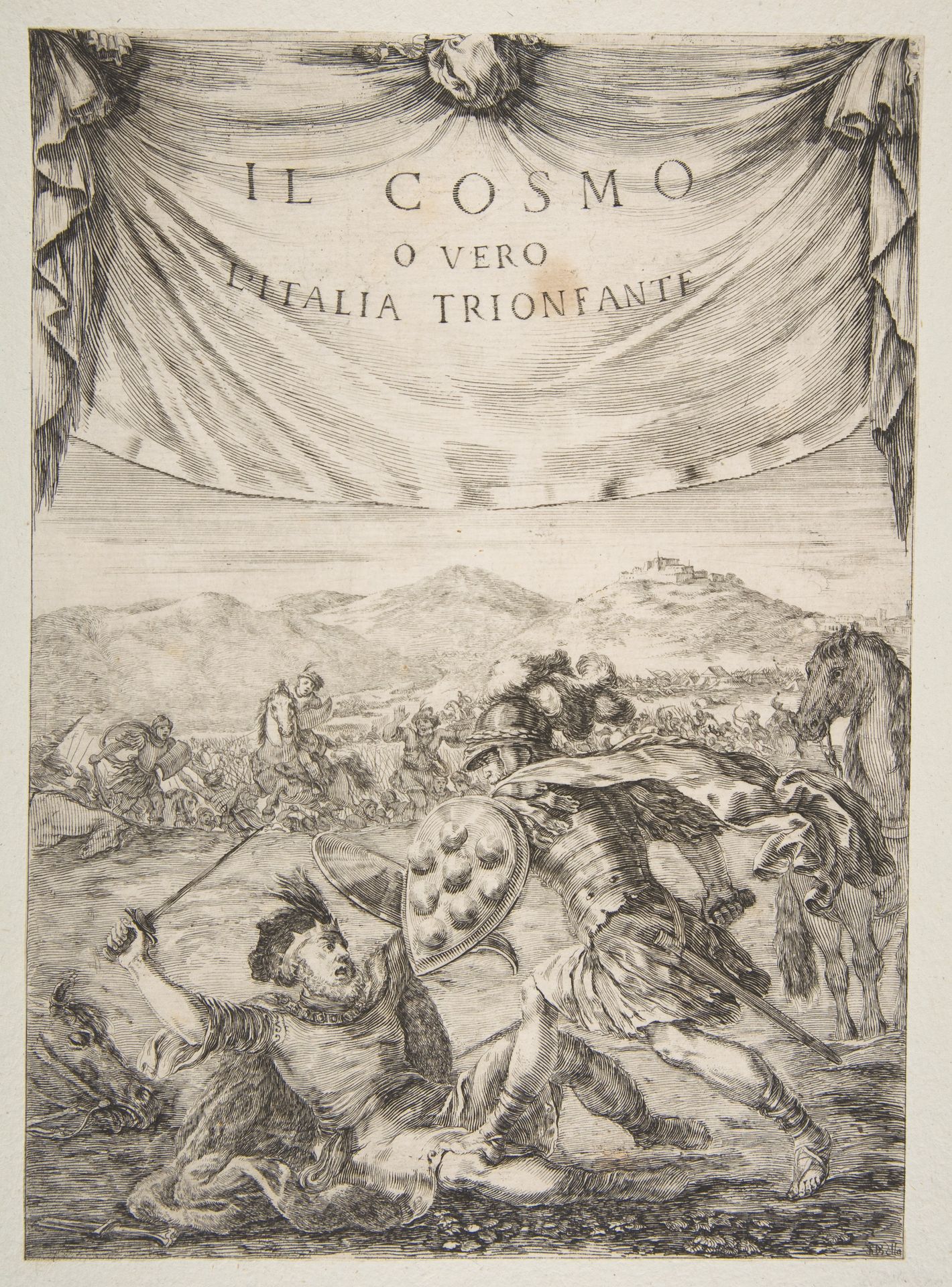
Frontispiece for Il Cosmo

Stefano della Bella
1610 - 1664The Metropolitan Museum of Art
Metropolitan Museum of Art, New York, NYListen to curator's interpretation
Curatorial notes
Curator: Welcome. We are standing before "Frontispiece for Il Cosmo," created around 1650 by Stefano della Bella. This print, rendered through etching and engraving, depicts a scene of military conflict under a draped banner. Editor: My first impression is just how frenetic it feels. The figures are so intertwined, and the lines practically vibrate with energy, a sort of visual echo of the clash of steel and desperate cries. Curator: Absolutely. Consider the curtain-like banner at the top. Its inscription "Il Cosmo o vero Italia Trionfante" positions the unfolding battle as representative of Italy's triumph—but also sets up a stage. The image itself becomes a spectacle, laden with symbolic weight. The idea of triumph always raises questions: victory over whom? Editor: The figure in the foreground is striking—armored, shield raised, engaged in fierce combat. He looms so much larger, too. All while chaos surrounds him in every direction! This speaks to the period's preoccupation with heroic narratives and idealized representations of military might. But who actually feels that way, you know? Curator: Note the detail of the shield. Those multiple circular shapes can suggest military might, yet are small. And those behind him appear as part of the battle, not to offer protection, as if caught in its unrelenting swell. In history painting, these recurring elements served as powerful reminders of the constant human struggle. It becomes quite literal! Editor: What do you make of the landscape stretching out behind the combatants? In it, there's a distant town set on a hill. Curator: That elevated locale traditionally symbolizes power, and aspiration, yes? While also inviting viewers to look deeper. The background offers respite from the immediacy of conflict, all while implicitly justifying it through ideas of control, and perhaps, even manifest destiny. Editor: Looking at this piece makes you consider war itself, doesn't it? Even victory tastes bitter in such circumstances. In some respects, the battle continues onward. I leave with my ideas of triumph forever disrupted. Curator: Precisely. Its enduring appeal rests in its ability to challenge those concepts. These potent symbols stay with us long after we have turned to go. Thank you for your attention.