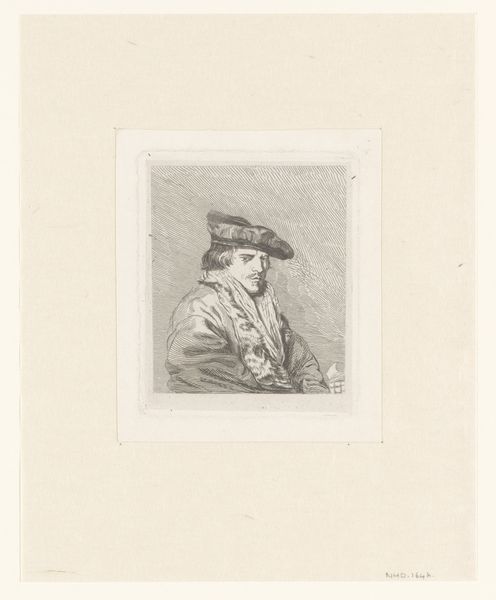
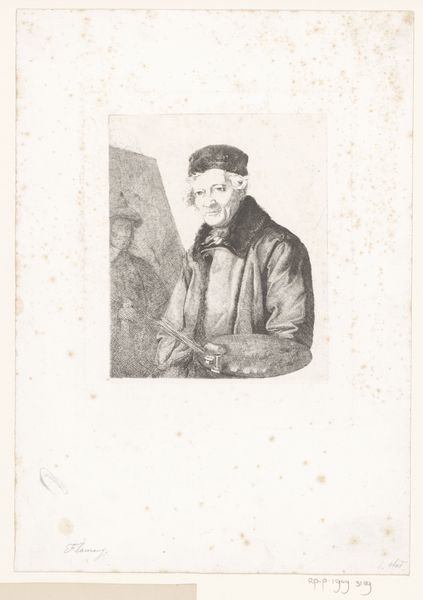
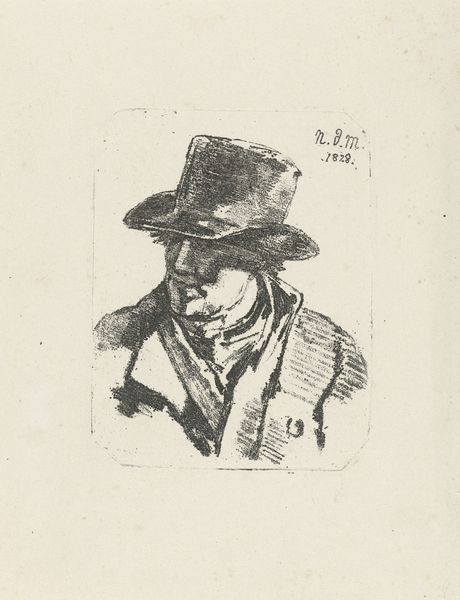
drawing, print, etching
#
portrait
#
drawing
# print
#
etching
#
pencil sketch
#
realism
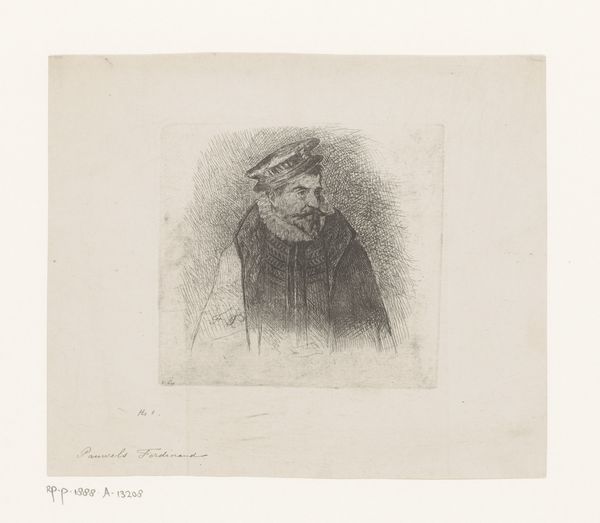
Dimensions: height 105 mm, width 113 mm
Copyright: Rijks Museum: Open Domain
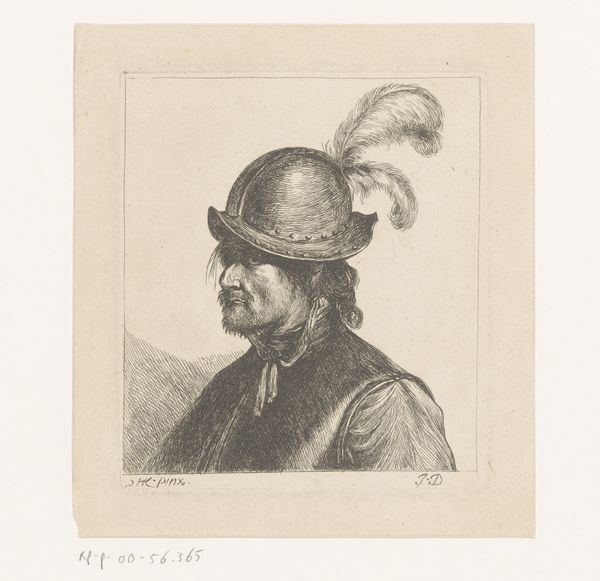
Editor: We are looking at Ferdinand Pauwels's "Man in zeventiende-eeuwse kleding," made between 1840 and 1888. It’s an etching, so a print, and the detail achieved is just remarkable. I’m struck by how meticulously the clothing is rendered, but I wonder about the choice to depict a subject from so long ago. What do you make of it? Curator: It's crucial to remember that artists aren't isolated; they exist within a network of patronage, exhibition spaces, and, crucially, historical narratives. The choice to represent a 17th-century figure during the 19th century signals a deep engagement with the past. Was this nostalgia, a reflection of contemporary society, or something else? Consider, how does looking back serve a purpose in their present moment? Editor: That’s interesting, the "why now" idea of the art. I hadn't thought of that. So, what purpose could this backward glance have served in Pauwels's time? Curator: The 19th century was obsessed with nation-building and constructing historical identities. By representing a man in 17th-century attire, Pauwels is likely participating in the construction of a specific Dutch or Flemish identity, possibly linking contemporary values with a romanticized past. Who was benefiting from this narrative? Was it meant to legitimize power structures, promote a sense of cultural superiority, or even critique the present? Editor: So, this wasn't just about aesthetics but about actively shaping a national story through art. It makes me wonder what stories contemporary art tells about us now. Curator: Exactly. The politics of imagery are always at play, shaping collective memory and influencing societal values. Reflect on how museums play a role, even today, in constructing the grand narrative of art history. Editor: This has given me a lot to think about, particularly how the historical context can shape our understanding of even seemingly straightforward portraits. Thanks! Curator: It’s all about unpicking the layers of meaning that artworks accumulate across time and in relation to specific sociopolitical contexts.
Comments
No comments
Be the first to comment and join the conversation on the ultimate creative platform.
 Collect
 React
React Comment
More like this