About this artwork
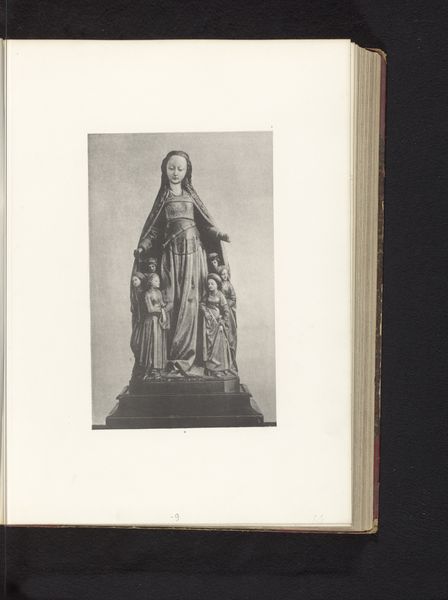
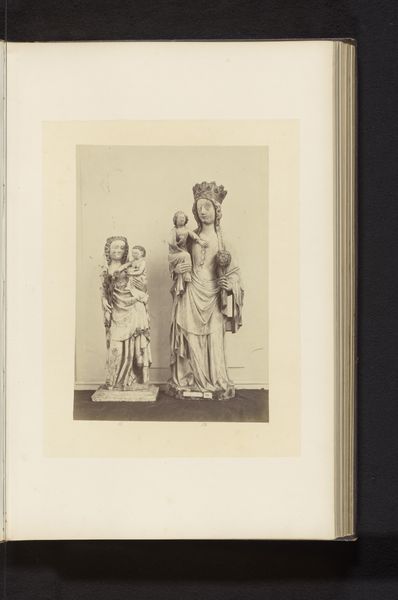
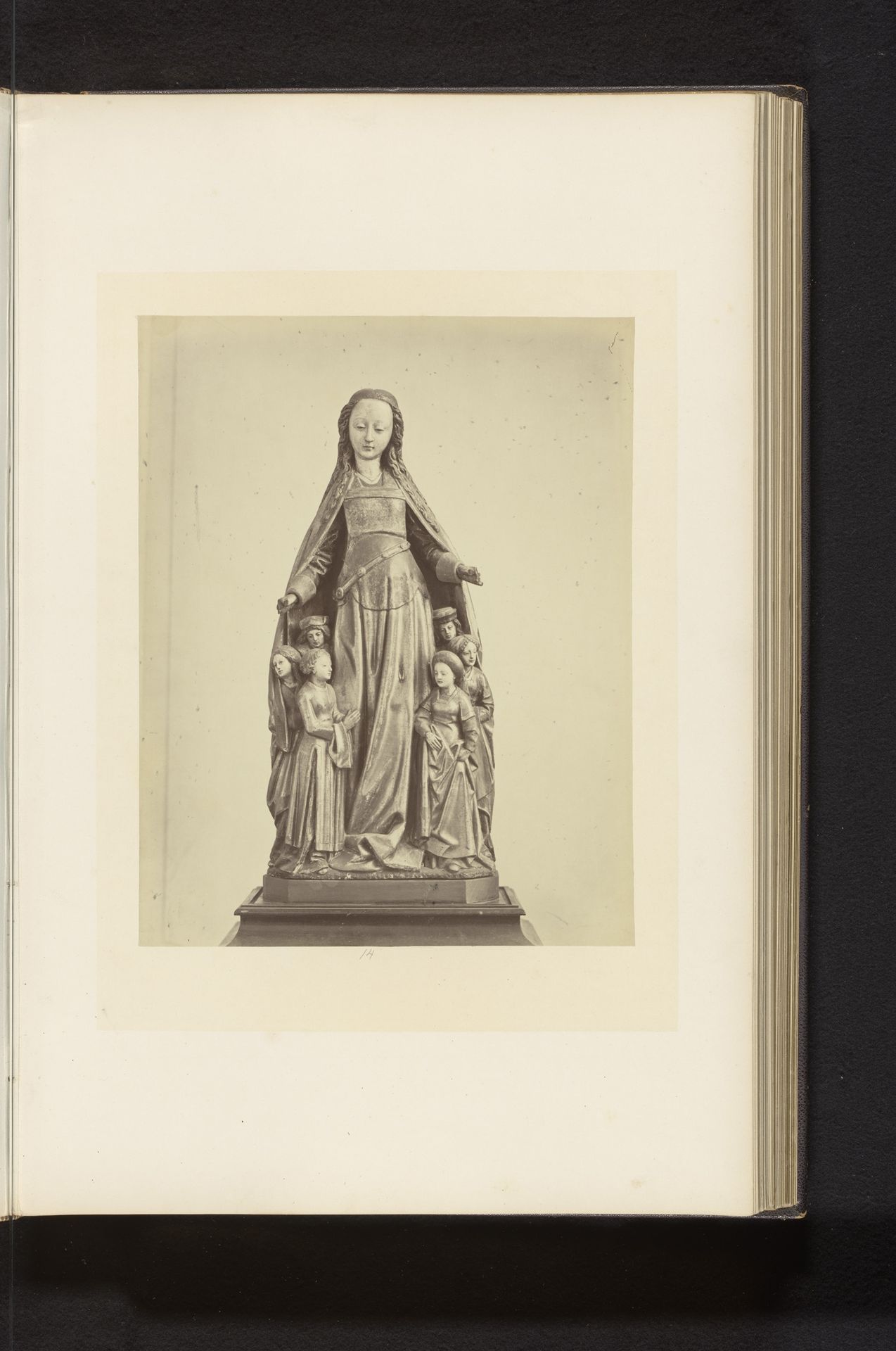
This colored oak sculpture by Joseph Maes, exhibited in 1864, captures the Virgin Mary sheltering monks and nuns under her mantle. This 'cloak of protection', or Schutzmantelmadonna, embodies the Virgin’s role as protector of the faithful. This motif resonates with earlier depictions of royal figures offering sanctuary, echoing the ancient Roman tradition of rulers extending their cloaks to signify protection. The gesture of sheltering under a protective cloak is deeply embedded in our collective memory. We see this motif in the protective wings of ancient deities, a visual language of comfort and security passed down through generations. Psychologically, it speaks to our innate need for safety, mirroring the parent-child bond, stirring deep, subconscious emotions. This symbol is not static. It has recurred and transformed across different contexts. Here, in Maes’ sculpture, the cyclical nature of these protective symbols emphasizes the enduring human desire for safety. The image shows the Virgin Mary as a powerful force, engaging viewers on a deep, subconscious level.
Sculptuur van gekleurd eikenhout van Maria die monniken en nonnen onder haar mantel verstopt, opgesteld op een tentoonstelling over religieuze objecten uit de middeleeuwen en renaissance in 1864 in Mechelen
1864

Artwork details
- Medium
- photography, sculpture, wood
- Dimensions
- height 259 mm, width 203 mm
- Copyright
- Rijks Museum: Open Domain
Tags
Comments
Share your thoughts
About this artwork
This colored oak sculpture by Joseph Maes, exhibited in 1864, captures the Virgin Mary sheltering monks and nuns under her mantle. This 'cloak of protection', or Schutzmantelmadonna, embodies the Virgin’s role as protector of the faithful. This motif resonates with earlier depictions of royal figures offering sanctuary, echoing the ancient Roman tradition of rulers extending their cloaks to signify protection. The gesture of sheltering under a protective cloak is deeply embedded in our collective memory. We see this motif in the protective wings of ancient deities, a visual language of comfort and security passed down through generations. Psychologically, it speaks to our innate need for safety, mirroring the parent-child bond, stirring deep, subconscious emotions. This symbol is not static. It has recurred and transformed across different contexts. Here, in Maes’ sculpture, the cyclical nature of these protective symbols emphasizes the enduring human desire for safety. The image shows the Virgin Mary as a powerful force, engaging viewers on a deep, subconscious level.
Comments
Share your thoughts