1935 - 1942
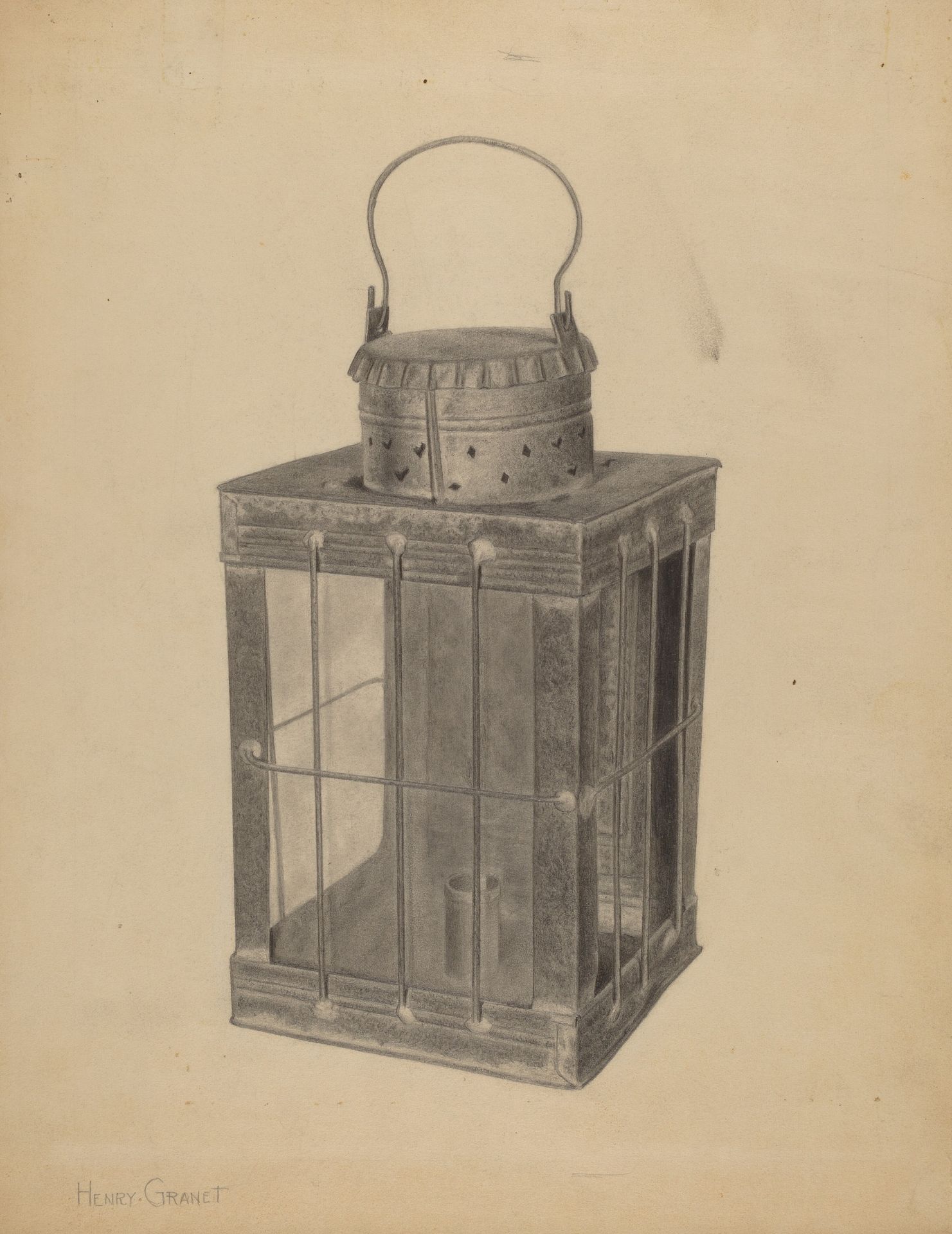
Lantern for Candle


Listen to curator's interpretation
Curatorial notes
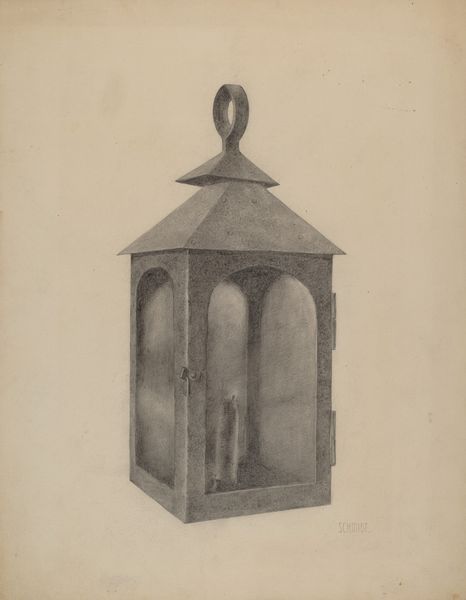
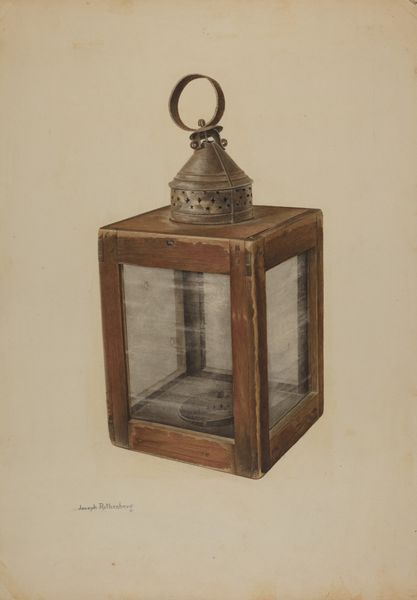
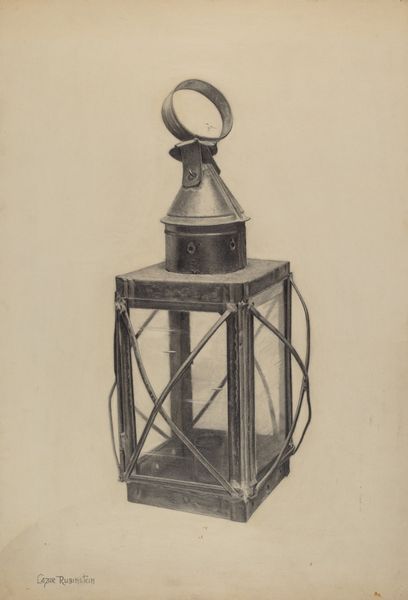
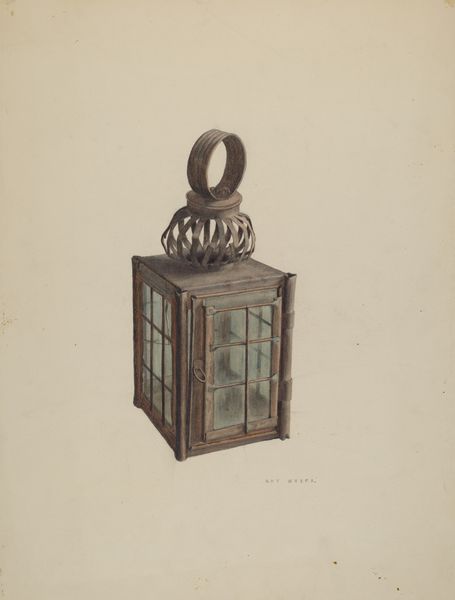
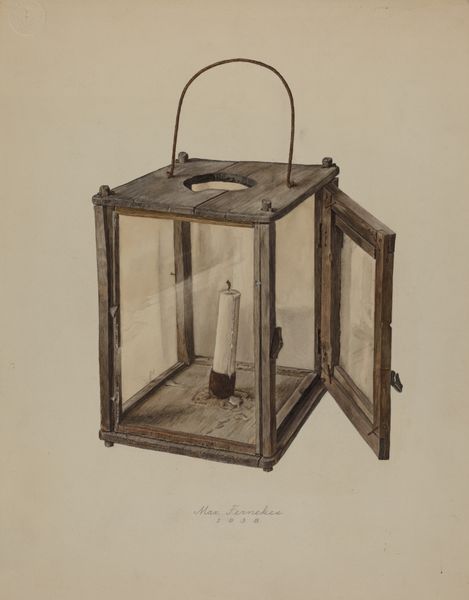
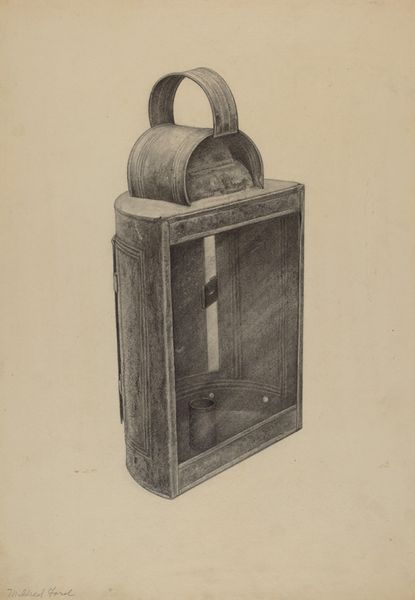
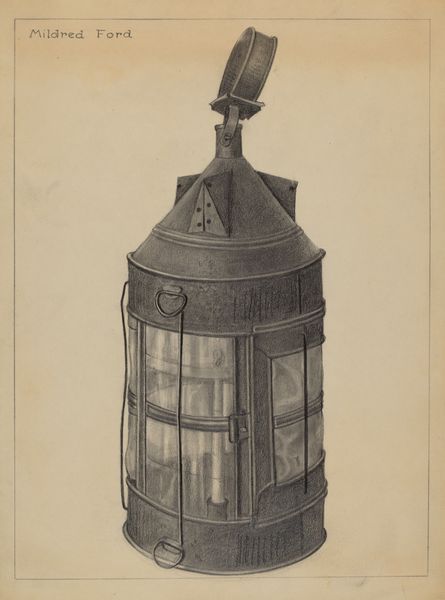
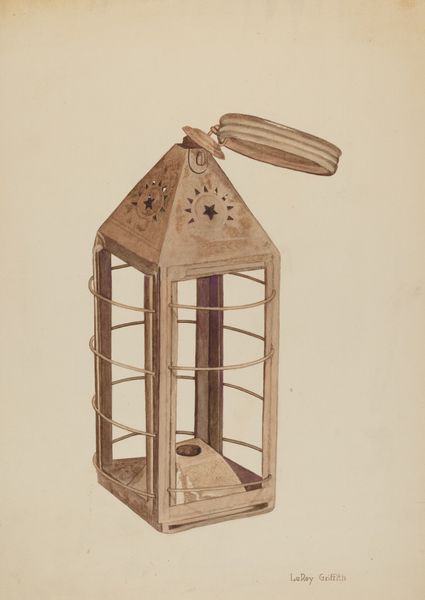
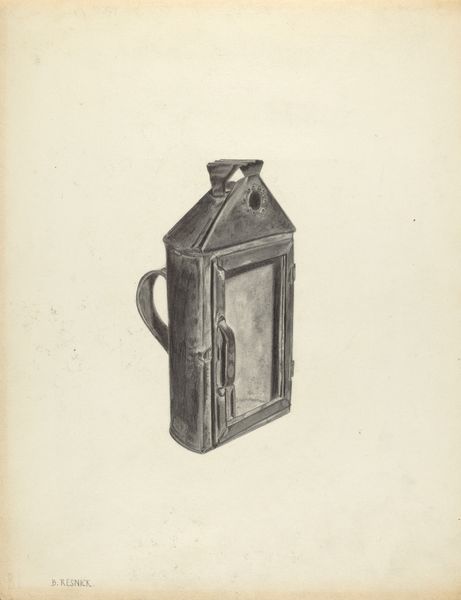
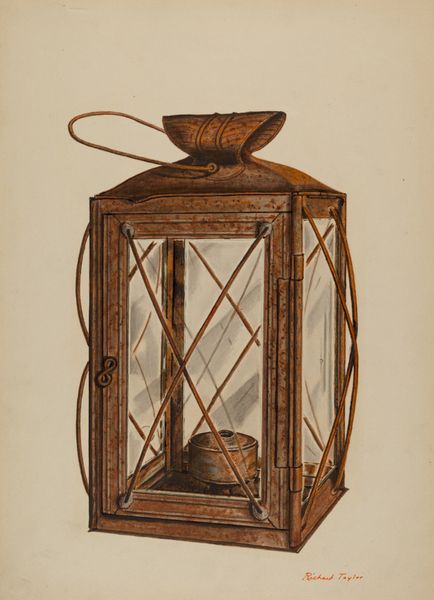
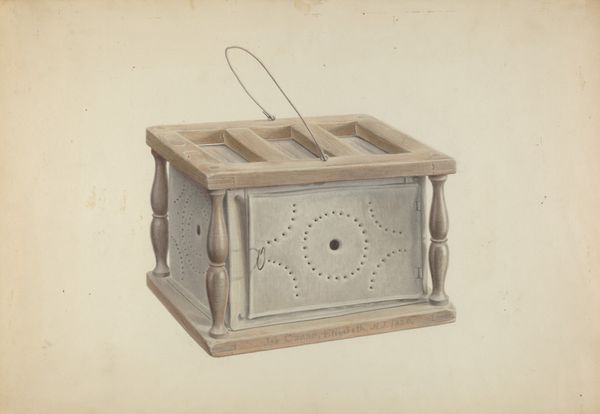
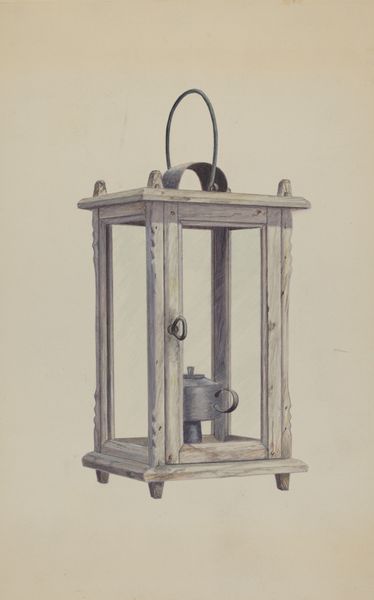
Curator: We’re looking at Henry Granet’s drawing "Lantern for Candle," likely created between 1935 and 1942. It's rendered in pencil. Editor: The first thing that strikes me is its starkness, almost severe. The precise rendering of this utilitarian object elevates it. What I find especially intriguing is the handling of light and shadow despite its execution in monochrome, almost mimicking the subtle glow emanating from a real candle lantern. Curator: Indeed, it's fascinating how Granet imbued such a simple object with such significance. These lanterns were common tools for laborers. Consider the socio-economic implications, especially during the period he made this, during the Great Depression. A source of light represented sustenance for some people. Editor: Good point. I also see it as a study in form. Look at the rectangular cage softened by the cylindrical top and arched handle. The linear bars create a visual rhythm that encloses what appears to be a solitary candle stub. The composition balances geometric shapes with a subdued tone. Curator: Absolutely. Granet may also be engaging in a larger dialogue about craft. With increasing industrialization, handmade lanterns evoke ideas about a bygone era where things are created more slowly, perhaps invoking an argument about the ethics of different labor forms. Editor: The artist seems captivated by the geometric harmony. It's almost a celebration of utility, elevating something so functional to an object of beauty. And I can’t ignore how, using a single pencil, Granet coaxes a feeling of volume. Look at the upper section, a type of crowning structure atop the primary form of the lantern, complete with delicately shaded ventilation holes. Curator: That's very well observed! Understanding the socio-historical conditions under which it was made and displayed invites reflection on what it meant to depict working-class imagery. The lantern serves as a quiet testament to endurance through those challenging years. Editor: For me, I walk away with a new appreciation for line and form through this seemingly humble image. Curator: And I appreciate how studying this piece lets us consider everyday laborers and the meanings we may extract from that memory.