About this artwork
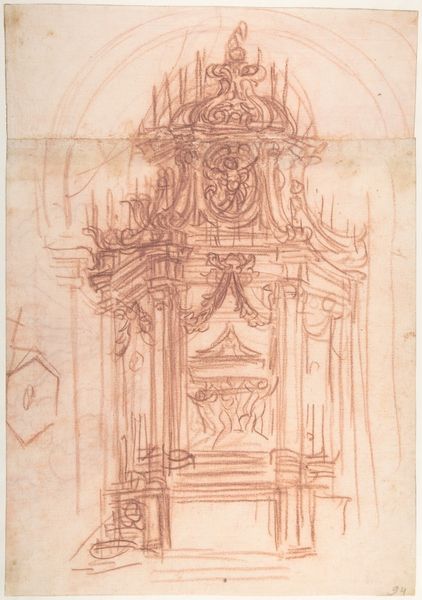
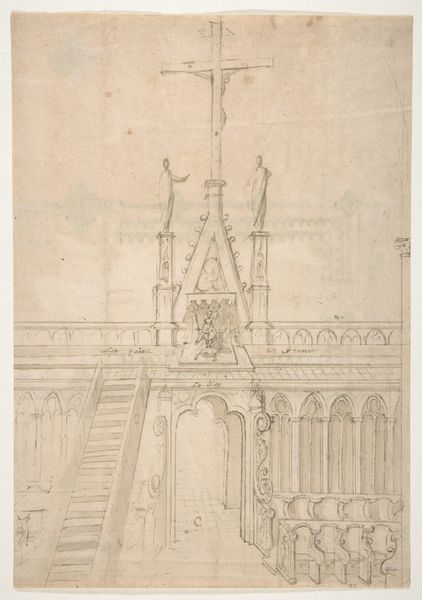
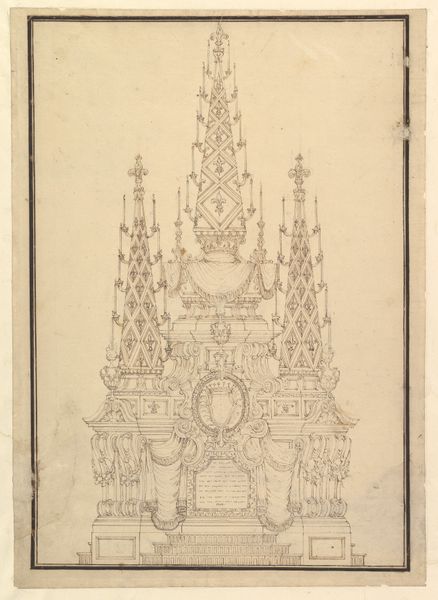
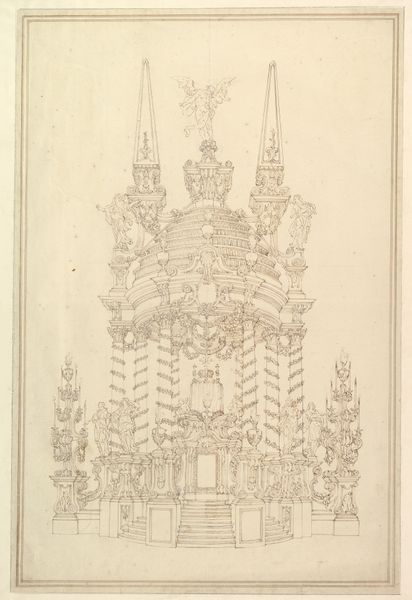
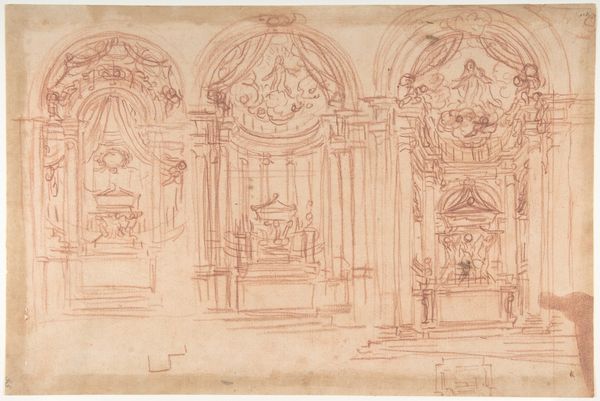
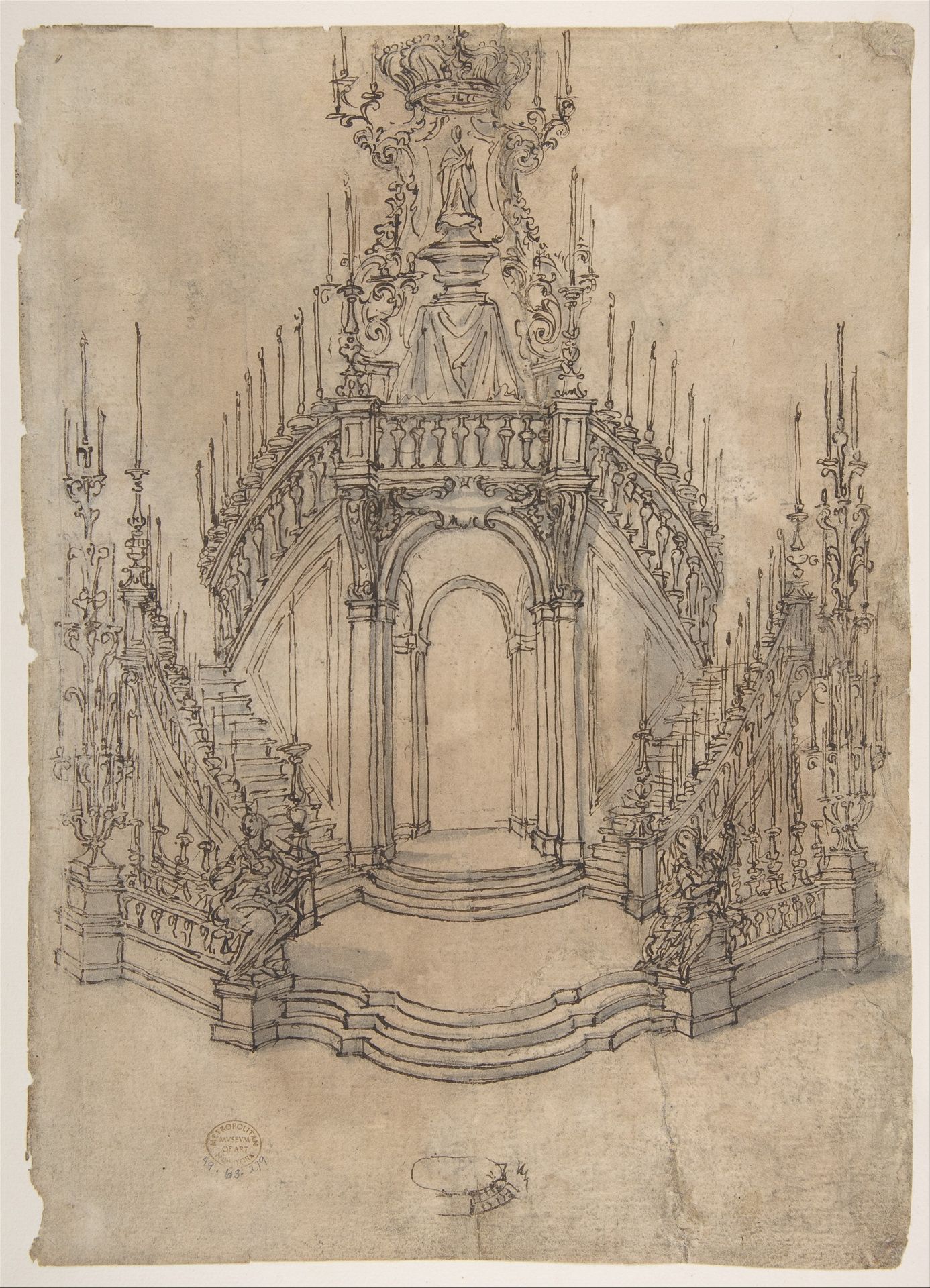
This drawing was made by Giovanni Battista Foggini, an Italian sculptor, and draughtsman, sometime in the late 17th or early 18th century. Executed in pen and brown ink, it shows a design for an elaborate funerary monument with stairs. Foggini's monument is a testament to the Baroque style, characterized by its grandeur, intricacy, and dramatic flair. But it also speaks to the social context of the time, in which elaborate displays of wealth and power were commonplace among the elite. Consider the sheer amount of labor that would have been involved in realizing this design in stone, from quarrying and carving to transportation and assembly. The design shows a whole economy of skilled craftsmanship. Looking at the drawing, we can admire not only Foggini's artistic skill, but also the vision of a society preoccupied with death, status, and the conspicuous consumption of art. It reminds us that the most evocative creations often reflect the broader social and economic forces at play.
Designs for a Funerary Monument with Stairs (Recto). Various Funerary Monument Designs (Verso).
1652 - 1725

Giovanni Battista Foggini
1652 - 1725
The Metropolitan Museum of Art
Metropolitan Museum of Art, New York, NYArtwork details
- Medium
- drawing, fresco, pencil, engraving, architecture
- Dimensions
- sheet: 11 5/8 x 8 3/8 in. (29.5 x 21.3 cm)
- Location
- Metropolitan Museum of Art, New York, NY
- Copyright
- Public Domain
Tags
drawing
baroque
fresco
pencil
history-painting
engraving
architecture
Comments
Be the first to share your thoughts about this work.
About this artwork
This drawing was made by Giovanni Battista Foggini, an Italian sculptor, and draughtsman, sometime in the late 17th or early 18th century. Executed in pen and brown ink, it shows a design for an elaborate funerary monument with stairs. Foggini's monument is a testament to the Baroque style, characterized by its grandeur, intricacy, and dramatic flair. But it also speaks to the social context of the time, in which elaborate displays of wealth and power were commonplace among the elite. Consider the sheer amount of labor that would have been involved in realizing this design in stone, from quarrying and carving to transportation and assembly. The design shows a whole economy of skilled craftsmanship. Looking at the drawing, we can admire not only Foggini's artistic skill, but also the vision of a society preoccupied with death, status, and the conspicuous consumption of art. It reminds us that the most evocative creations often reflect the broader social and economic forces at play.
Comments
Be the first to share your thoughts about this work.