2007
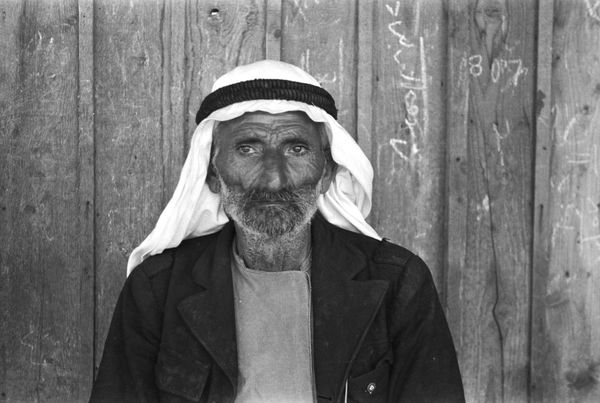
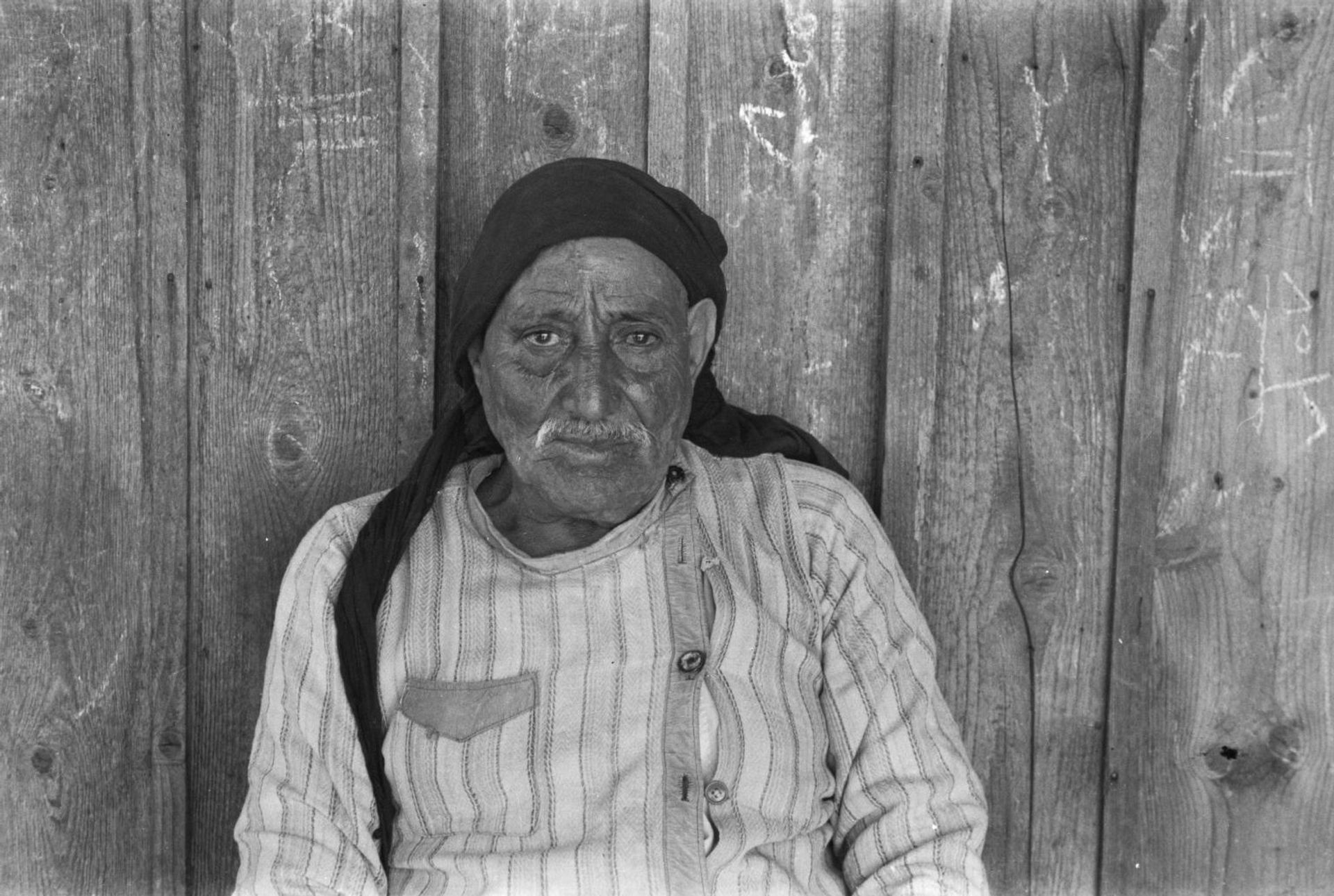
Anonymous. South Lebanon, 1952. Hashem el Madani

Listen to curator's interpretation
Curatorial notes
Curator: This is Akram Zaatari's "Anonymous. South Lebanon, 1952. Hashem el Madani," a photographic print from an earlier studio portrait. There’s a starkness to it. Editor: Absolutely, the direct gaze and the grainy texture create an immediate sense of intimacy. It feels almost confrontational, highlighting the sitter’s dignity, despite the backdrop. Curator: Madani's studio practice often documented everyday life in Saida, and Zaatari's re-presentation raises questions about authorship, archiving, and the circulation of images. What is preserved and why? Editor: Right, and the anonymity underscores a broader issue. Whose stories get told, and whose are erased in historical narratives? The man's weathered face speaks volumes about resilience, class, and the weight of time in Lebanon. Curator: The simplicity of the composition, the man centered against the rough wood planks, it all points to the studio’s role in shaping identity and preserving memory within a community. Editor: It really asks us to consider whose gaze is framing this narrative. What does it mean to reclaim and recontextualize images from a specific historical and political moment? Curator: Thinking about it this way makes me appreciate the complexities embedded in this seemingly simple portrait. Editor: Precisely, a potent reminder of how art can challenge dominant narratives and honor untold stories.