![[George Augustus Baker] by Maurice Stadtfeld](https://d2w8kbdekdi1gv.cloudfront.net/eyJidWNrZXQiOiAiYXJ0ZXJhLWltYWdlcy1idWNrZXQiLCAia2V5IjogImFydHdvcmtzL2E0N2RlYTI2LTEyNWEtNDNhOC04ZDEyLWU0ZmRiM2VkN2IxZS9hNDdkZWEyNi0xMjVhLTQzYTgtOGQxMi1lNGZkYjNlZDdiMWVfZnVsbC5qcGciLCAiZWRpdHMiOiB7InJlc2l6ZSI6IHsid2lkdGgiOiAxOTIwLCAiaGVpZ2h0IjogMTkyMCwgImZpdCI6ICJpbnNpZGUifX19)
About this artwork
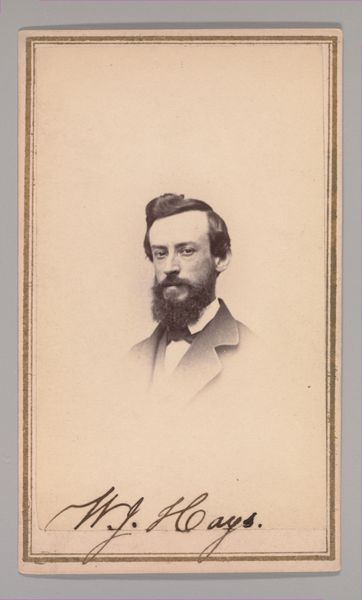
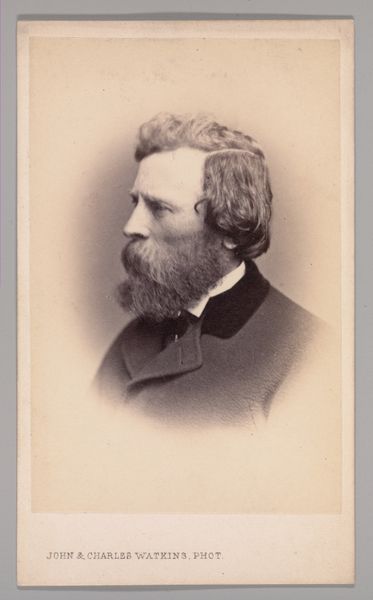
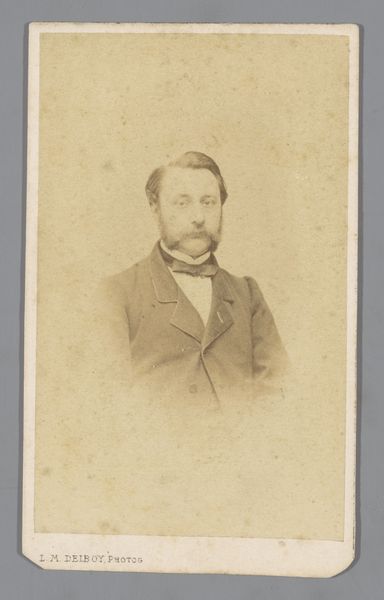
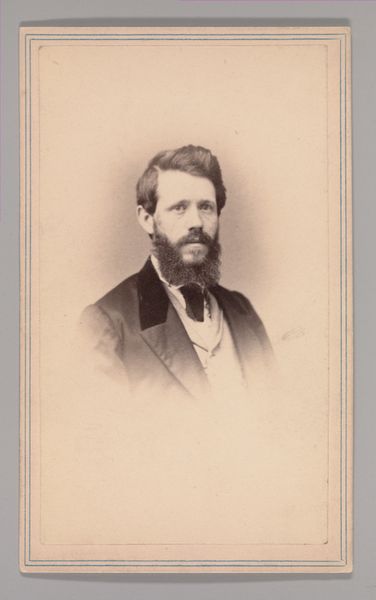
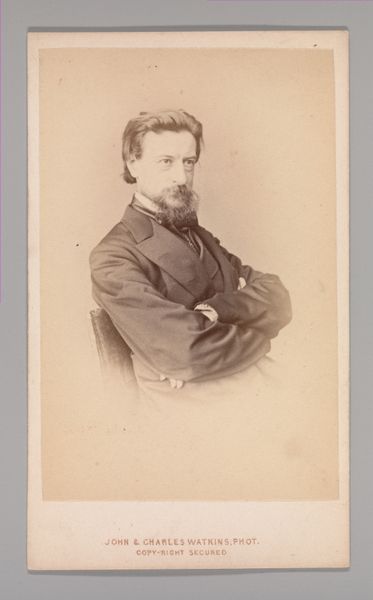
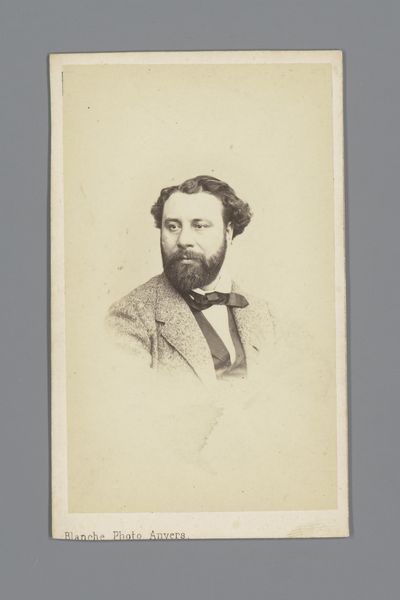
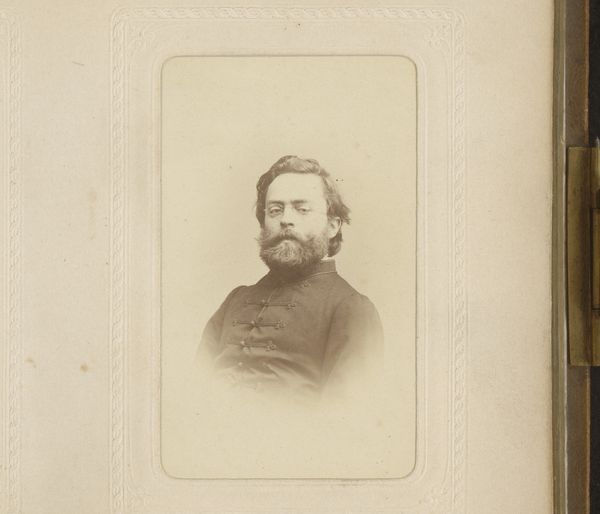
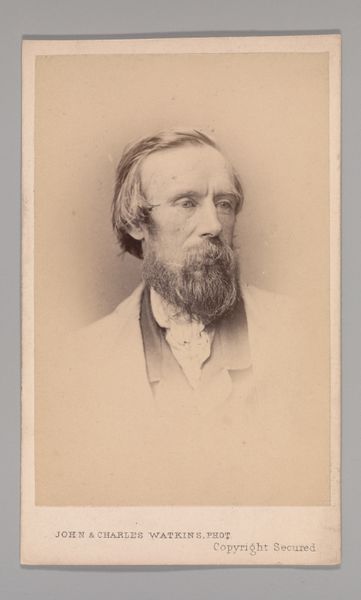
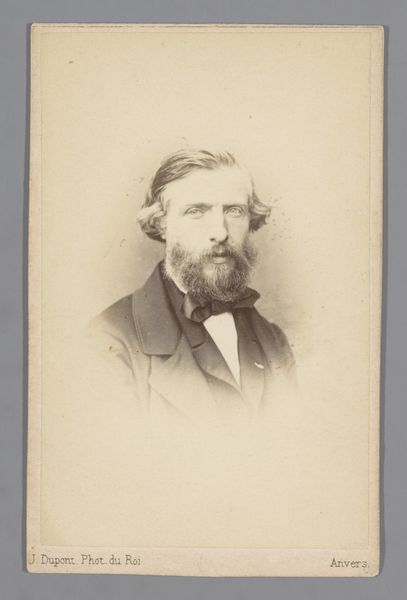
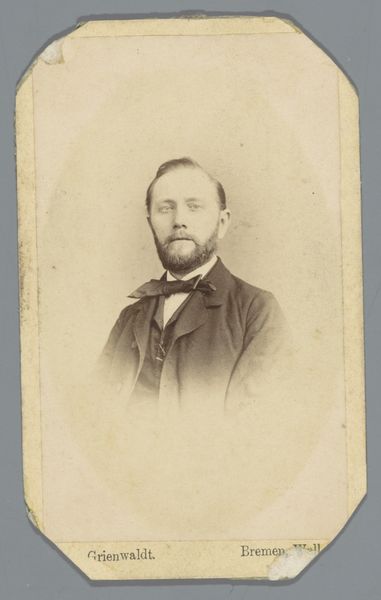
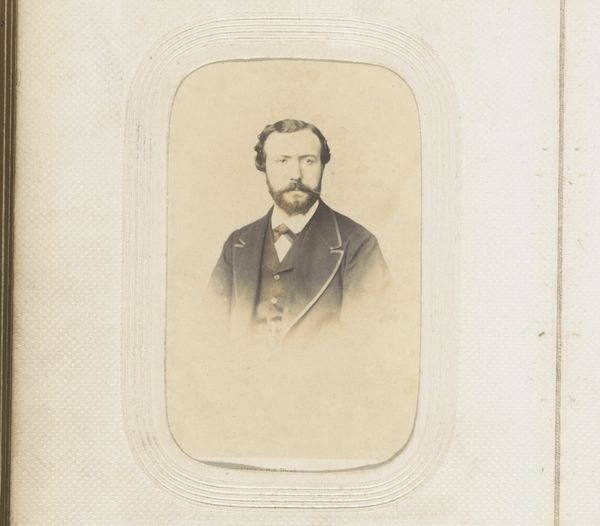
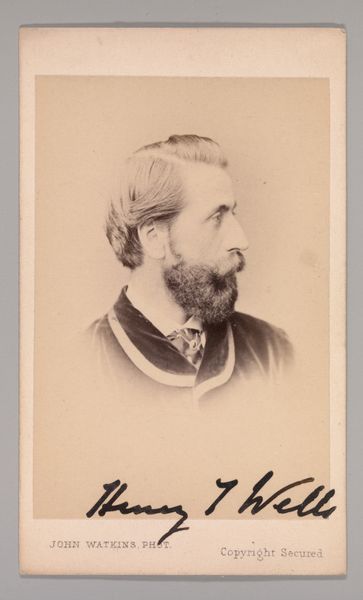
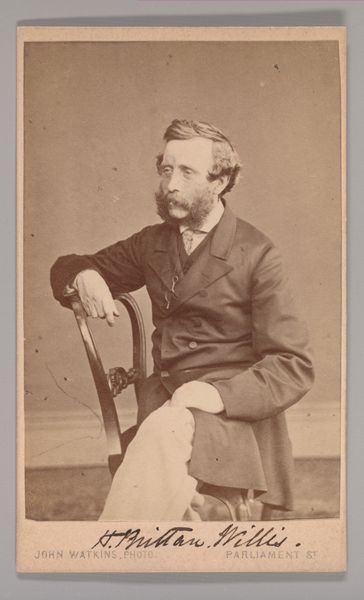
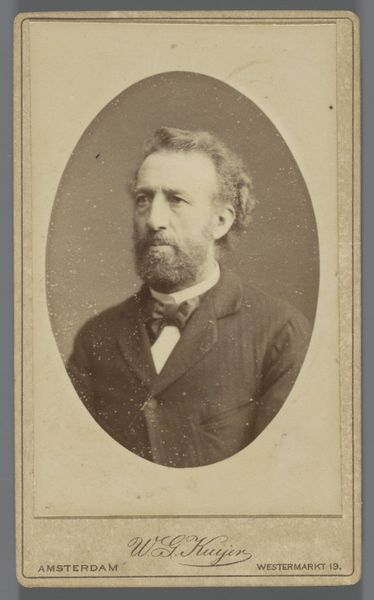
Editor: Here we have a photographic portrait, presumably of George Augustus Baker, dating to the 1860s. It's an albumen print, a very common process in the 19th century. There's something so dignified, and yet fragile, about these old photos. What stands out to you? Curator: Immediately I’m drawn to consider the industrialization embedded within this seemingly simple portrait. This is more than just a captured image, it represents a pivotal shift in the availability of representation. Editor: How so? Curator: Well, consider the albumen print process itself. It was a revolution in photographic reproduction! Think about the industrial production of glass plates, the sourcing of albumen, usually from egg whites, on a massive scale. Suddenly, portraits are accessible to a burgeoning middle class. This challenges the traditional domain of painted portraiture, reserved for the elite, and opens questions about value and accessibility. What labour went into making it? Who could afford it? These are all relevant. Editor: So it democratized art and representation? Curator: In a way, yes, it did disrupt the existing social hierarchy linked to portraiture. Photography became a powerful tool for self-representation and social mobility. But this democratization wasn't without its own set of limitations and power dynamics relating to how labor was exploited and distributed within these burgeoning photo studios. Editor: That’s a completely different way to view this portrait. I was so focused on the individual, and you’ve shown me how to see the larger picture of production and access. Curator: Precisely. By analyzing the materials and processes, we can uncover hidden histories and power structures embedded in even the most seemingly straightforward images.
[George Augustus Baker]
1860s


Artwork details
- Medium
- photography, gelatin-silver-print, albumen-print
- Dimensions
- Approx. 10.2 x 6.3 cm (4 x 2 1/2 in.)
- Location
- Metropolitan Museum of Art, New York, NY
- Copyright
- Public Domain
Tags
Comments
Share your thoughts
About this artwork
Editor: Here we have a photographic portrait, presumably of George Augustus Baker, dating to the 1860s. It's an albumen print, a very common process in the 19th century. There's something so dignified, and yet fragile, about these old photos. What stands out to you? Curator: Immediately I’m drawn to consider the industrialization embedded within this seemingly simple portrait. This is more than just a captured image, it represents a pivotal shift in the availability of representation. Editor: How so? Curator: Well, consider the albumen print process itself. It was a revolution in photographic reproduction! Think about the industrial production of glass plates, the sourcing of albumen, usually from egg whites, on a massive scale. Suddenly, portraits are accessible to a burgeoning middle class. This challenges the traditional domain of painted portraiture, reserved for the elite, and opens questions about value and accessibility. What labour went into making it? Who could afford it? These are all relevant. Editor: So it democratized art and representation? Curator: In a way, yes, it did disrupt the existing social hierarchy linked to portraiture. Photography became a powerful tool for self-representation and social mobility. But this democratization wasn't without its own set of limitations and power dynamics relating to how labor was exploited and distributed within these burgeoning photo studios. Editor: That’s a completely different way to view this portrait. I was so focused on the individual, and you’ve shown me how to see the larger picture of production and access. Curator: Precisely. By analyzing the materials and processes, we can uncover hidden histories and power structures embedded in even the most seemingly straightforward images.
Comments
Share your thoughts