

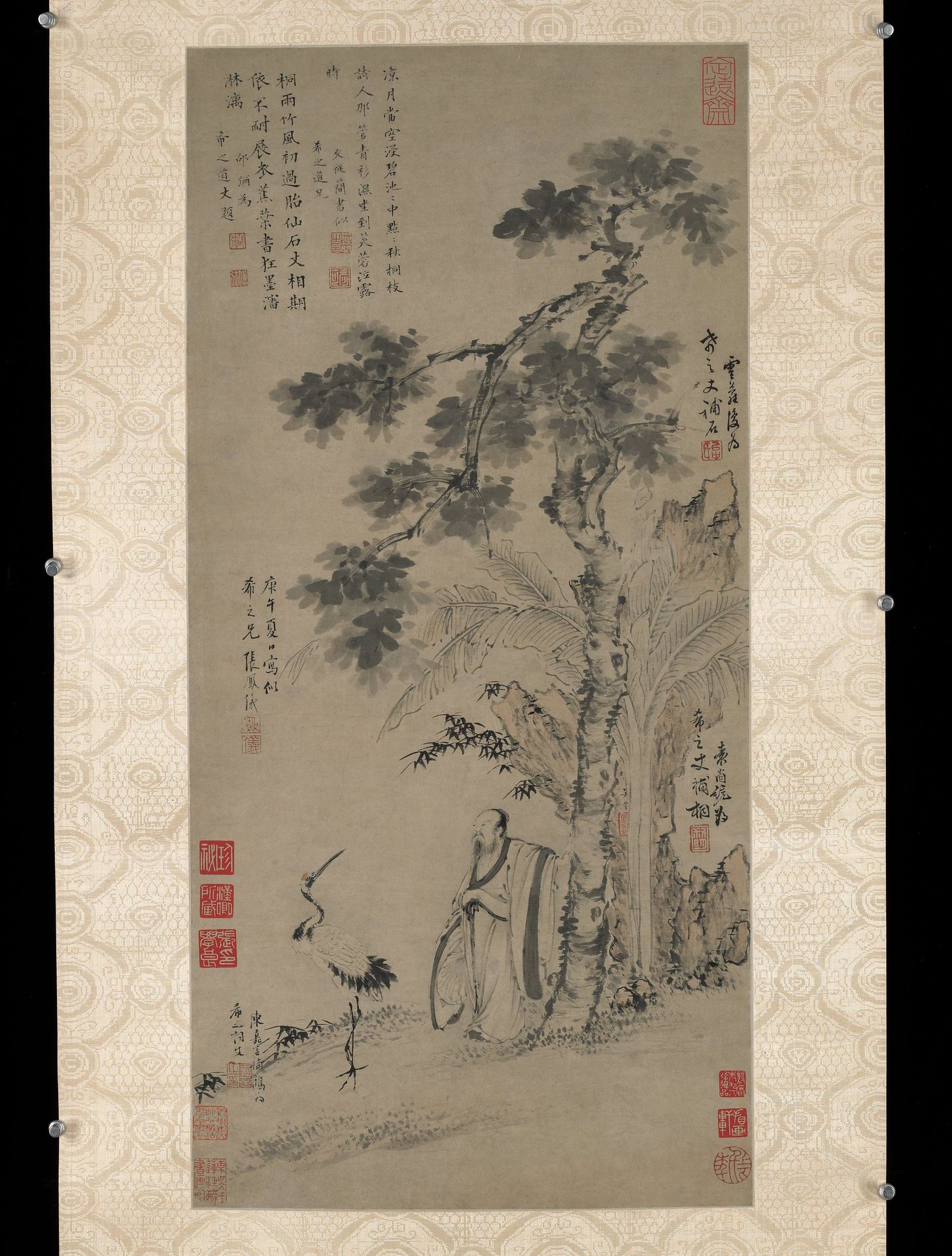
1630
Scholar


Listen to curator's interpretation
Curatorial notes
Curator: Zhang Fengyi's "Scholar," dated 1630, a hanging scroll using ink and color on paper, strikes me with its delicate rendering. What do you make of it? Editor: It feels so serene. The lone figure with the crane… What is the story here? How should we understand this? Curator: Consider the materials. Ink, color on paper… these were readily available but required intense skill. How does that impact the work's reception, do you think? Its status? Editor: Because it's a 'hanging scroll,' would that impact how someone might access the artwork and experience it? Curator: Exactly. It suggests private contemplation, a cultivated setting, away from public clamor. The production of these scrolls often involved multiple artisans. Are we truly looking at the singular genius of one artist, or a collaboration fueled by workshops and established techniques? Editor: That challenges the traditional idea of the "lone genius" artist! It implies a whole support system contributing to the artwork. Curator: Indeed. Now, look closely at the pigments. How might their sourcing and trade routes played a role in shaping the aesthetic we admire today? Think about the labor involved in preparing these materials. Editor: I hadn't thought about it like that! It makes me see the work as less about individual expression and more about a collective effort influenced by material realities and constraints. I guess there's a huge commercial machine and material culture behind it. Curator: Precisely. These materials tell a richer story about the artist's work. They show social conditions, too, by highlighting the skilled labor behind such imagery. It changes how we understand art. Editor: I'll definitely look at artworks differently from now on! This conversation highlighted material conditions and craftsmanship, expanding the notion of artistic creation for me.
