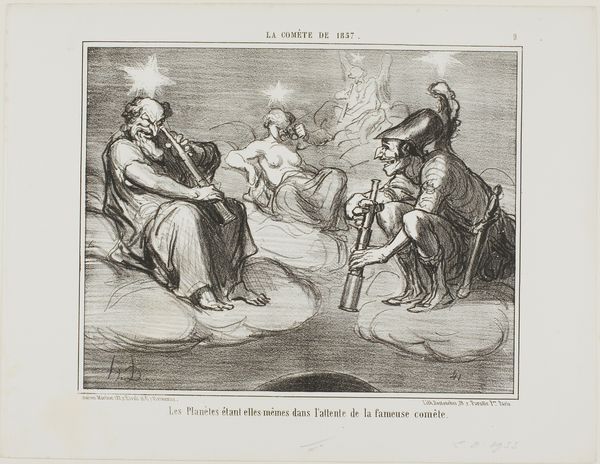
lithograph, print
lithograph
caricature
romanticism
history-painting
Copyright: National Gallery of Art: CC0 1.0
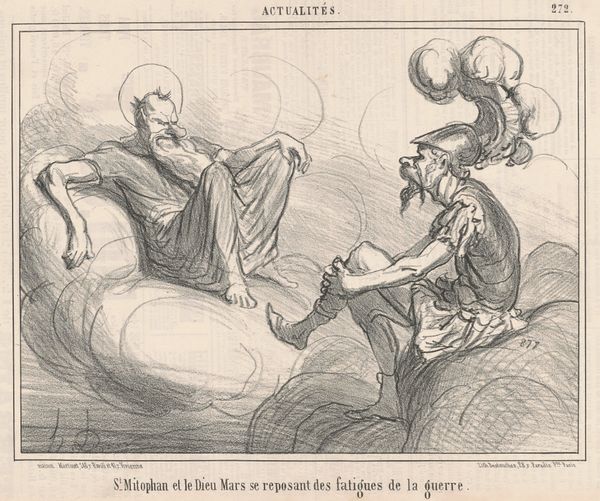
This satirical lithograph, "Sébastopol," was made by Honoré Daumier in 1854. Daumier used lithography, a printmaking technique utilizing a stone or metal plate with a smooth surface, to create this stark image. The process involves drawing on the plate with a greasy substance, applying ink that adheres only to the drawn areas, and then transferring the image to paper. It's a method that allows for nuanced tonal variations, evident here in the dark, smoky atmosphere and the expressions on the figures' faces. Daumier's choice of lithography wasn't just about aesthetics; it was a means of mass production, allowing his commentary to reach a wide audience. In this print, he critiques the Crimean War, portraying it as a grim meal served up by the French. The printmaking process, in its reproducibility, mirrors the endless cycle of conflict and consumption that Daumier so powerfully condemns. By examining the material and techniques, we can appreciate how Daumier blurred the lines between art, social commentary, and political activism.
Comments
No comments
Be the first to comment and join the conversation on the ultimate creative platform.
 React
React Comment