1888 - 1893
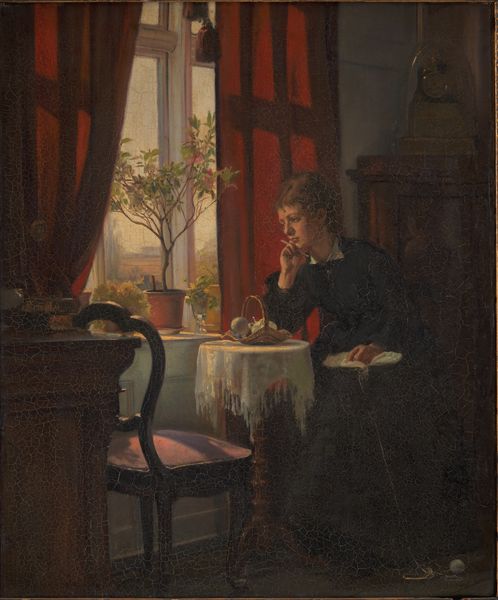
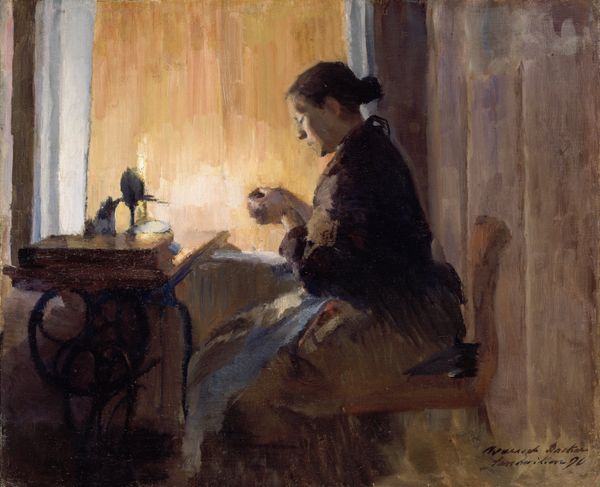
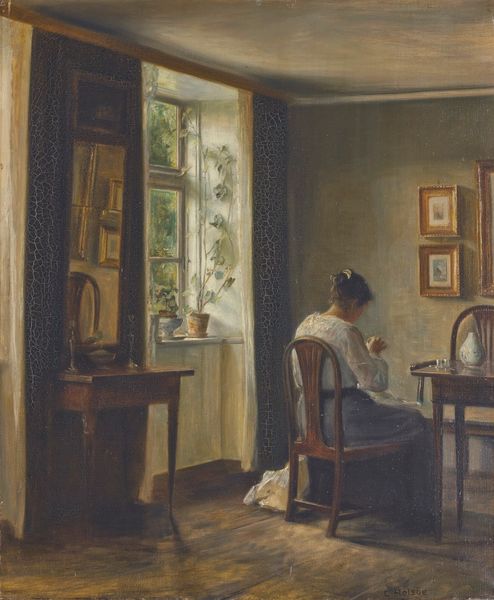
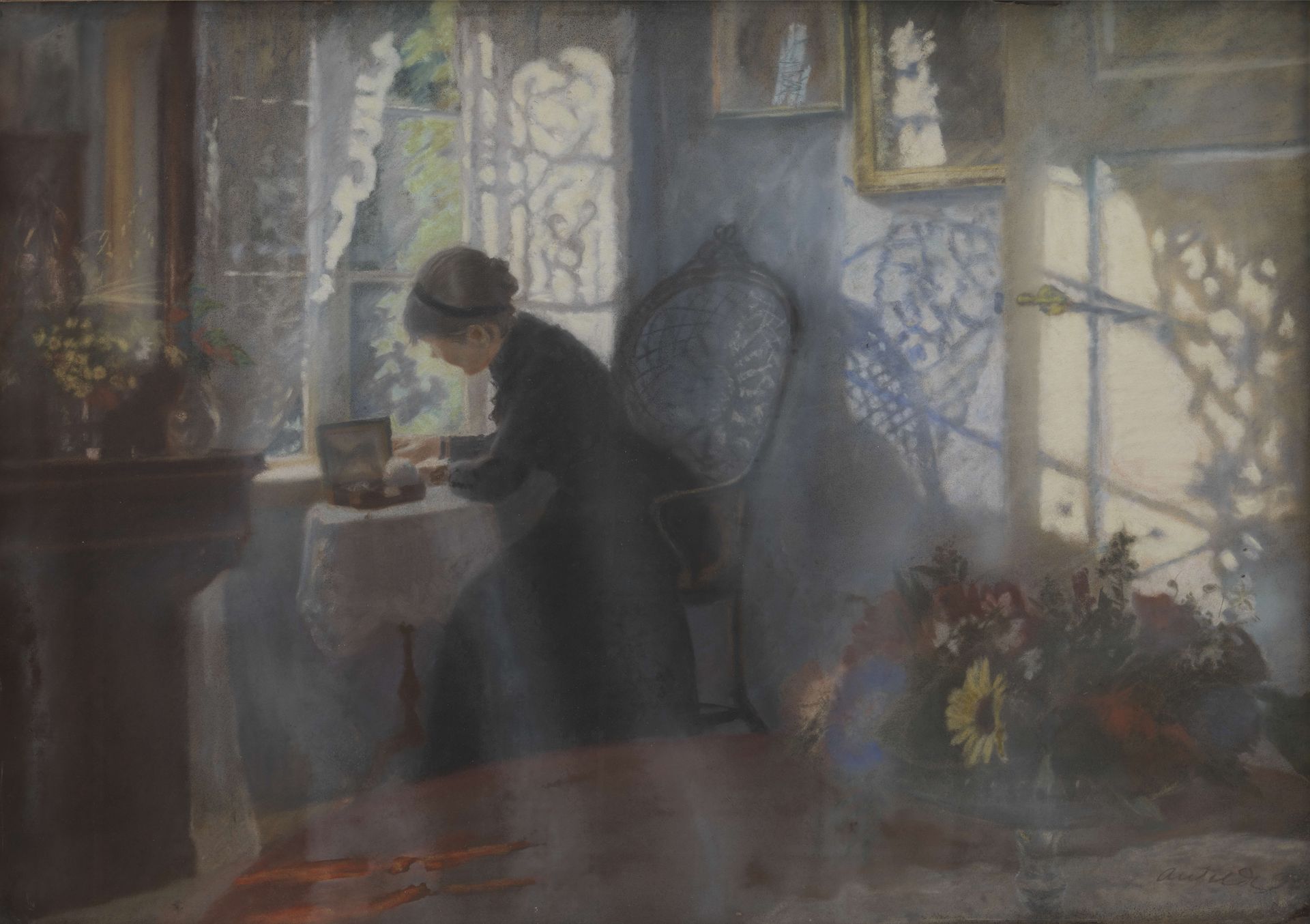
I Fiskerstuen i Hellebæk


Listen to curator's interpretation
Curatorial notes
Alexander Wilde painted "In the Fishing Room at Hellebæk" using oil on canvas. The window here is not merely an architectural detail, but a profound symbol, reminiscent of the *fenestra lucifera*—the light-bringing window of antiquity. Notice how the play of light through the window transforms the interior space. The window motif has appeared throughout art history, from the enclosed gardens of medieval tapestries to the Renaissance Annunciation scenes, where light pierces through to signal divine presence. Consider the emotional weight carried by this symbol across centuries: the window as a barrier, but also as a threshold of the unknown. In Wilde’s interpretation, the window’s transparency invites contemplation, blurring the lines between inner reflection and the external world. The window acts as a lens through which the subject filters reality. It's a cyclical progression: a beacon of introspection, then a gateway to the world, and finally, a mirror reflecting the self.