tempera, painting
#
tempera
#
painting
#
painted
#
figuration
#
oil painting
#
underpainting
#
history-painting
#
italian-renaissance
Copyright: Public domain
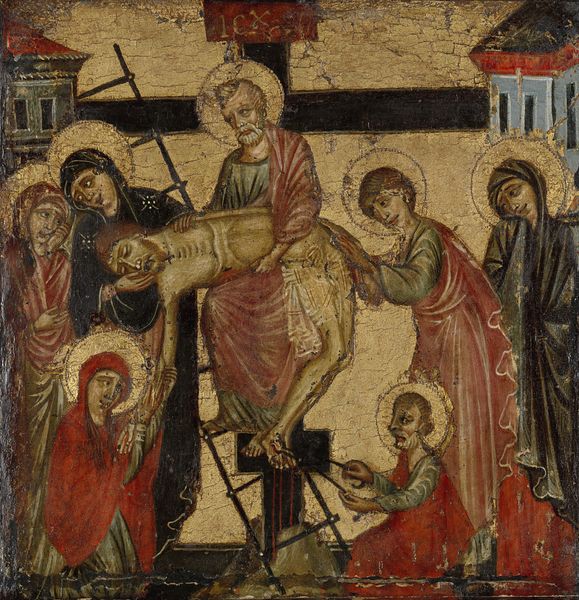
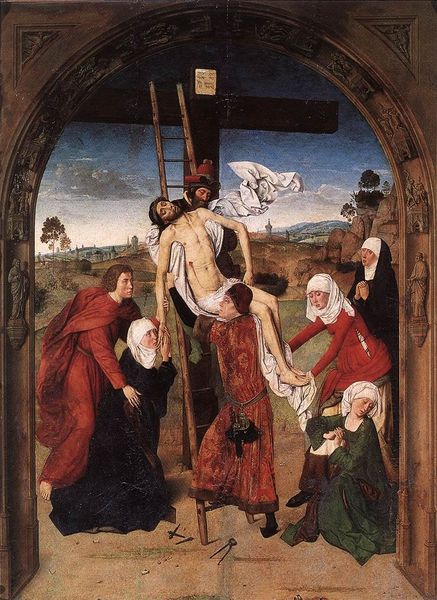
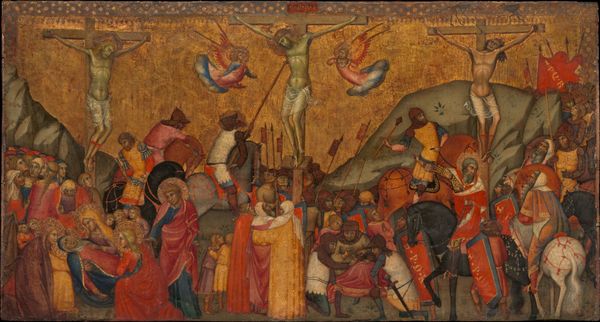
Curator: Standing before us is Antoniazzo Romano’s painting titled, “Deposition”, a tempera work that vividly captures a poignant biblical scene. Editor: The color palette immediately strikes me. There's a stark contrast between the pallid skin of the deceased Christ and the deep, mournful hues of the surrounding figures' garments. It creates a heavy, somber mood. Curator: Romano's meticulous application of tempera contributes significantly to this emotional depth. Consider the labor-intensive process involved: grinding pigments, mixing them with egg yolk, and carefully applying thin layers to build up the image. Each stroke represents a tangible investment of time and skill. We might think of this material process as an echo of the careful and arduous preparation of Christ's body for burial. Editor: Absolutely, and situating it within the socio-political context of the Italian Renaissance provides a richer understanding. The depisition is a complex, emotive performance and display. How might such an artwork challenge or reinforce the gendered and religious power structures of that period, particularly through its portrayal of mourning women? Curator: Note too, the inclusion of what seems to be a ladder near the cross – it reminds us of the tools and materials necessary for Christ’s removal. Such details reflect the lived reality of laborers involved in constructing, and then dismantling, instruments of execution. It’s a powerful reminder of the tangible human effort behind such historical and spiritual events. Editor: Indeed. Viewing this work, I'm also struck by the way it invites us to contemplate not only spiritual themes but also the realities of suffering, loss, and the various ways communities grapple with grief across time. It provokes us to acknowledge not only the religious aspects but also consider gender, race, and power within the same narrative. Curator: The artist has invested great intention in not just depicting a scene, but embedding it within the physical reality of its making and the economic conditions that would have facilitated such a piece. Editor: For me, its enduring value lies in prompting ongoing critical discourse and questioning historical power dynamics. Curator: And in reflecting on the physical acts of labor and materials used, the artwork reveals layers of meaning about faith, suffering, and representation.
Comments
No comments
Be the first to comment and join the conversation on the ultimate creative platform.
 Collect
 React
React Comment
More like this