1400 BC
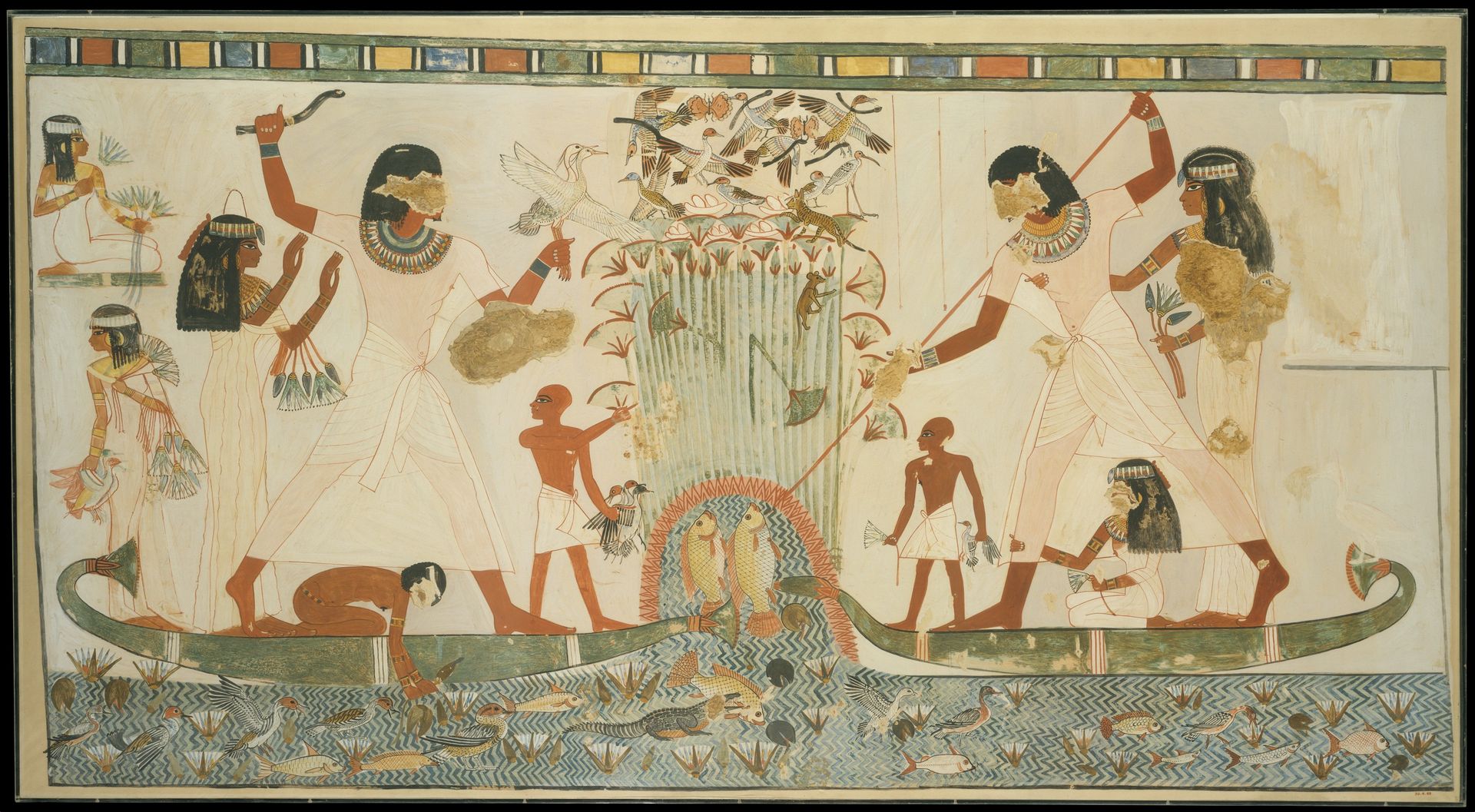
Menna and Family Hunting in the Marshes, Tomb of Menna

Nina de Garis Davies
1881 - 1965
The Metropolitan Museum of Art
Metropolitan Museum of Art, New York, NYListen to curator's interpretation
Curatorial notes
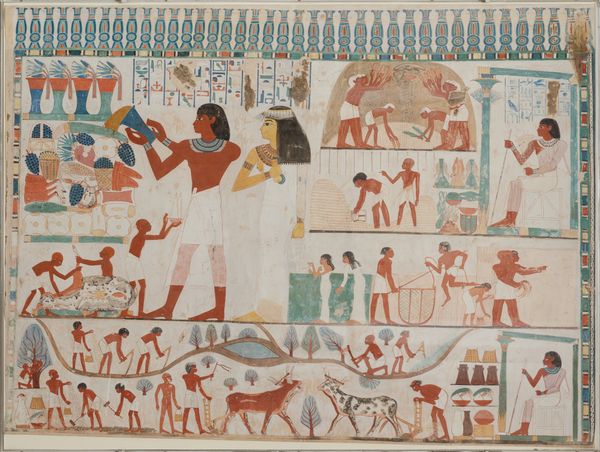
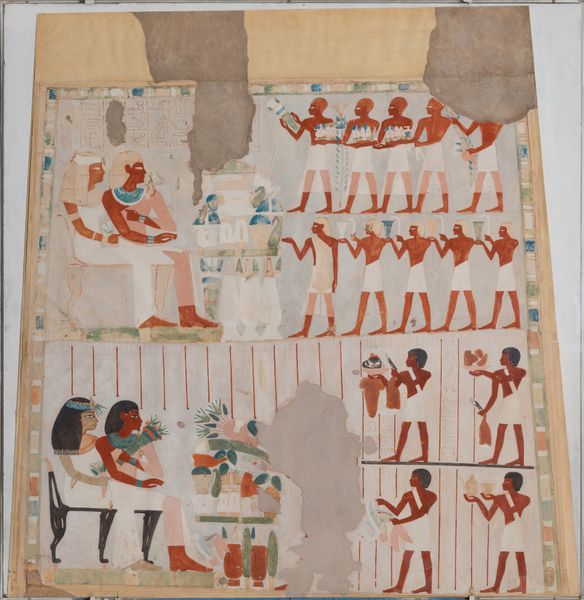
Nina de Garis Davies created this watercolor facsimile of "Menna and Family Hunting in the Marshes" from the Tomb of Menna. Davies was part of a larger effort in the early 20th century to document Egyptian tombs. Here, we witness an elite man, Menna, enjoying a hunt with his family. Such scenes weren’t just about leisure; they were potent symbols of power and control in ancient Egyptian society. Hunting, especially in the marshlands, represented Menna's dominion over nature and, by extension, his status. This depiction also offers insights into the roles of women and children, who are present but in supportive, secondary roles, reflecting the patriarchal structure of Egyptian society. It’s a constructed image, presenting an idealized version of family and social hierarchy. Looking at this piece, I’m struck by how it encapsulates both the personal and the political. What do you feel as you consider the layers of identity, power, and representation embedded in this seemingly simple scene of a family outing?