painting, oil-paint, canvas
#
woman
#
allegory
#
baroque
#
painting
#
oil-paint
#
figuration
#
canvas
#
14_17th-century
#
genre-painting
#
history-painting
#
nude
#
realism
Dimensions: 151.9 x 203.6 cm
Copyright: Public Domain
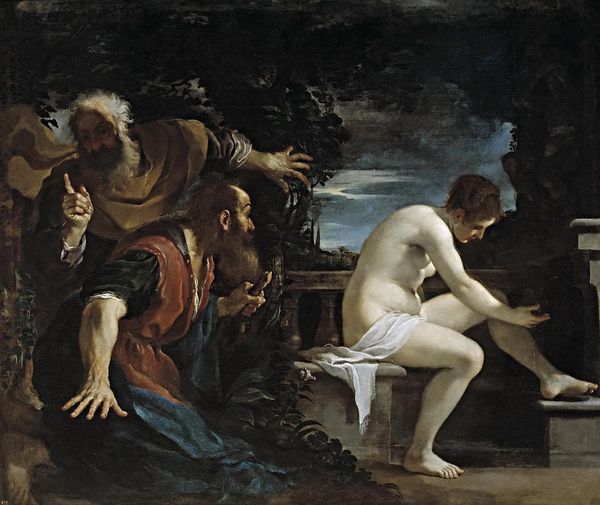
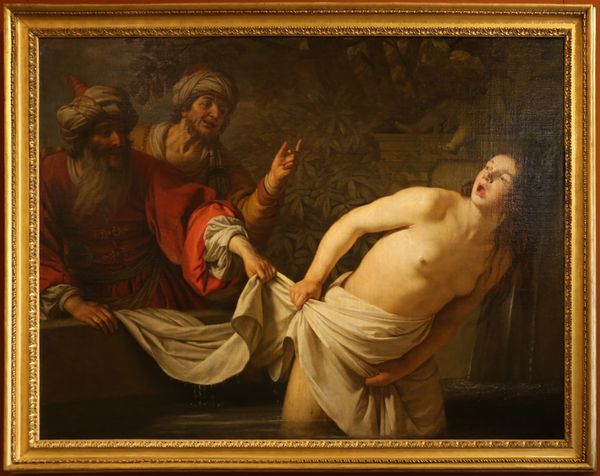
Editor: This is Massimo Stanzione’s "Susanna and the Elders," painted around 1630 to 1635. It's an oil on canvas and quite striking. I’m immediately drawn to the textures – the folds of the cloth Susanna is holding, the rough skin of the elders. It seems to highlight the physical presence of everyone. What do you see in this piece, considering its materiality? Curator: I see a painting deeply invested in the societal gaze and power dynamics represented through material things. Look closely at the textiles, not just Susanna's cloth but also the elders' robes. These aren’t just aesthetic elements, they signify wealth, status, and by extension, the social power the elders wielded. Consider also, the use of oil paint itself – a relatively new medium at the time that allowed for such detailed renderings of texture. Do you think Stanzione is making a comment about how these material possessions contribute to a false sense of authority? Editor: That's a compelling point! I hadn’t thought about the elders' clothing as a symbol of power. It makes me reconsider the purpose of art and whether artists wanted to make a statement. Perhaps he's questioning their positions in society and using material objects as a way to emphasize it. Curator: Precisely. Think about the canvas itself. This is not a fresco in a public space; it's a painting meant to be owned, likely by someone who could afford it. Its existence depends on certain structures of economic production and consumption. I wonder how that affected Stanzione’s interpretation of the story. Editor: That’s a great consideration. This new view has transformed my reading. So it's less about the dramatic narrative and more about dissecting the relationship between power, materials, and social class, all manufactured and mediated through paint? Curator: Absolutely! It really puts a fresh lens on how to read this moment in Susanna's story. The materiality gives tangible form to these power imbalances and economic factors operating in the 17th century. Editor: I’ve certainly got more to think about now regarding how the tangible objects surrounding people make them. Thanks for your help with this!
Comments

stadelmuseum over 2 years ago
⋮
Looking anxious, young Susanna tries to evade a sexual assault. This scene from the Old Testament shows two old village judges who are about to ambush her while she takes a bath in her garden. Should she disobey them, they would accuse her of adultery, which is punishable by death. Full of trust in God, she still refuses and is rewarded for it: thanks to divine inspiration, the young prophet Daniel recognises her innocence and convicts the real culprits.With psychological finesse, the artist focuses the narrative on the monumental figures, their body language, facial expressions and gestures. Susanna’s immaculate body contrasts with the coarse features and rough skin of the dressed elderly. Her nakedness represents innocence and defencelessness – and yet is being displayed to the viewer.


Join the conversation
Join millions of artists and users on Artera today and experience the ultimate creative platform.
 Collect
More like this