About this artwork
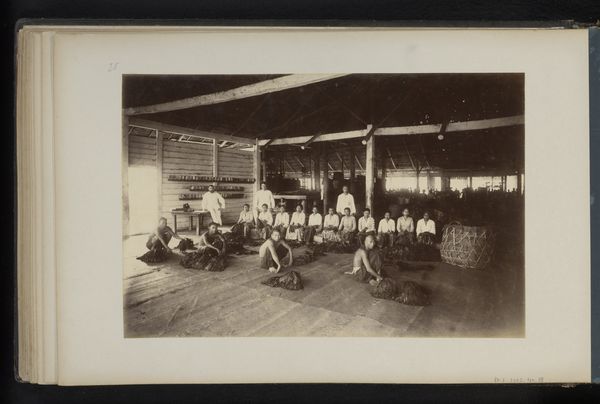
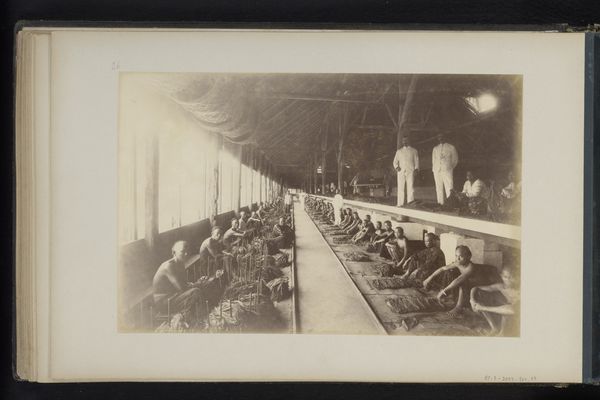
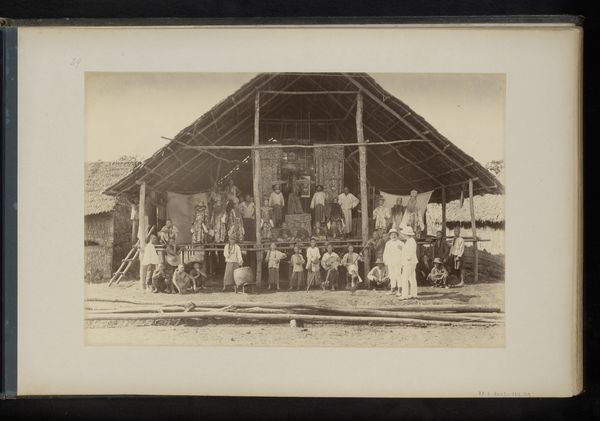
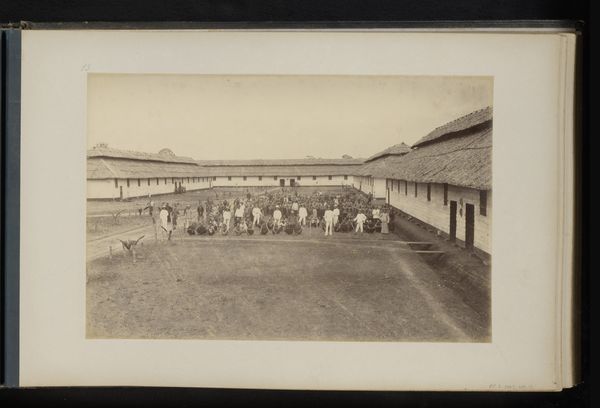
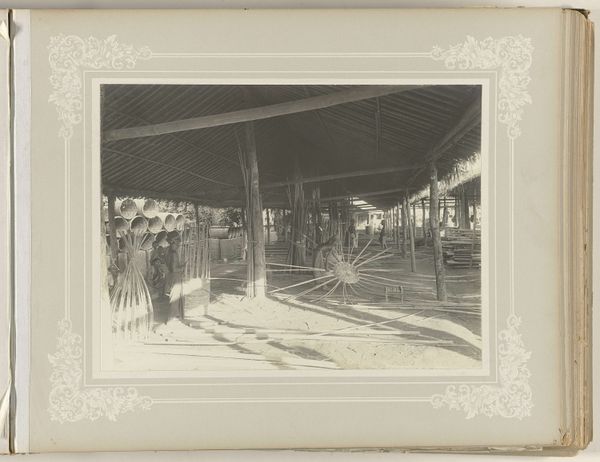
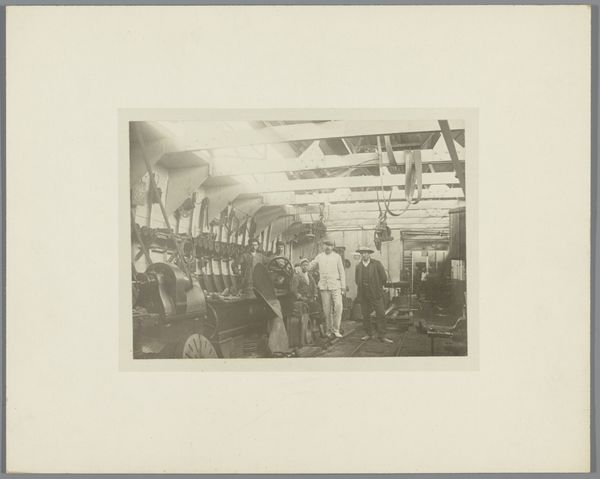
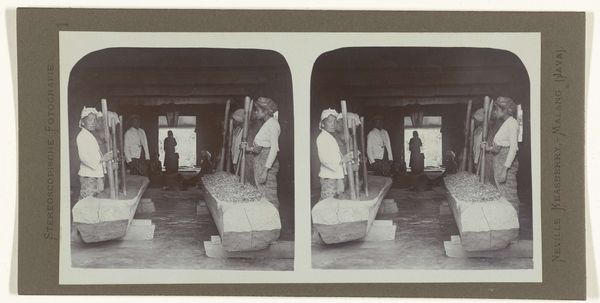
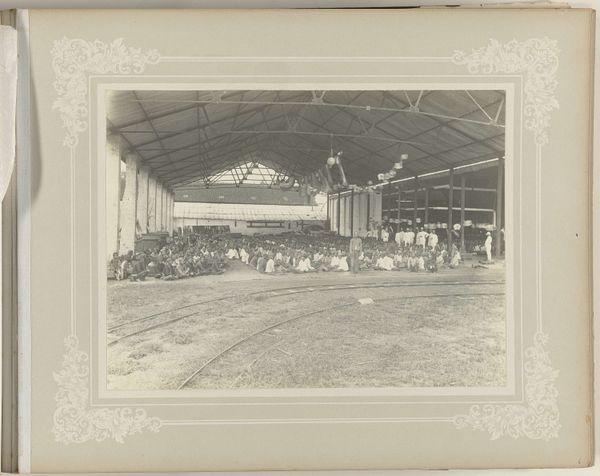
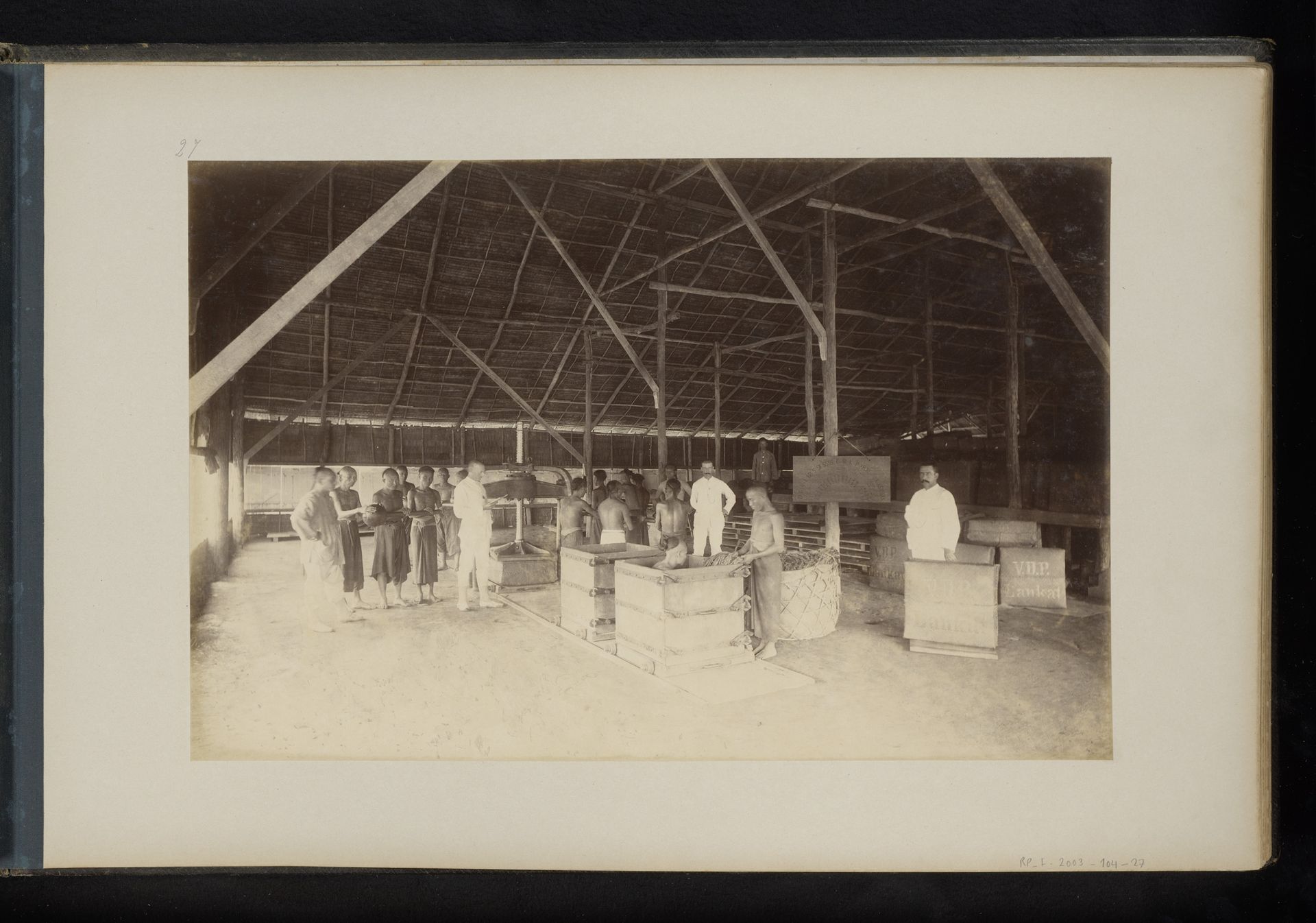
Editor: This gelatin-silver print, titled "Tabakpersers in Tandjong-Retoes, Sumatra", was created around 1890-1900 by Heinrich Ernst & Co and now resides in the Rijksmuseum. It feels... documentary, almost anthropological, but there's also a distance, a kind of staged quality to the scene. What strikes you about this work? Curator: It has the air of a constructed narrative, doesn't it? Like a stage set, the workers carefully arranged within the cavernous interior of the tobacco processing plant. It's interesting to consider this through the lens of Orientalism. It aims to document, but also to present a specific image of labor and culture. I wonder, what story is the photographer trying to tell us, and perhaps more importantly, what story are they *not* telling? What is captured about these workers' real life conditions beyond this manufactured presentation? Editor: That's fascinating. I hadn’t considered the photographer's intent. The arrangement of the figures certainly feels deliberate now. I initially focused on the vastness of the space itself – it dwarfs the people within it. Does the high contrast of light and shadow add a layer of meaning? Curator: Absolutely. The photographer skillfully uses light to guide the viewer’s eye, emphasizing certain figures and obscuring others. Those strong contrasts emphasize the divide, literally and figuratively, between overseers and laborers. It highlights a system of control and power dynamics so prevalent at the time in colonial settings. Editor: It's incredible how much the image reveals when you start to unpack it. I'm walking away with a much richer understanding of the cultural and historical context surrounding this photograph. Curator: Indeed. It’s a potent reminder that art – even documentary photography – is never neutral. Every image whispers secrets, waiting for us to listen closely.
Tabakpersers in Tandjong-Retoes, Sumatra
c. 1890 - 1900

Heinrich Ernst & Co
@heinrichernstcoLocation
RijksmuseumArtwork details
- Medium
- photography, gelatin-silver-print
- Dimensions
- height 265 mm, width 355 mm
- Location
- Rijksmuseum
- Copyright
- Rijks Museum: Open Domain
Tags
Comments
Share your thoughts
About this artwork
Editor: This gelatin-silver print, titled "Tabakpersers in Tandjong-Retoes, Sumatra", was created around 1890-1900 by Heinrich Ernst & Co and now resides in the Rijksmuseum. It feels... documentary, almost anthropological, but there's also a distance, a kind of staged quality to the scene. What strikes you about this work? Curator: It has the air of a constructed narrative, doesn't it? Like a stage set, the workers carefully arranged within the cavernous interior of the tobacco processing plant. It's interesting to consider this through the lens of Orientalism. It aims to document, but also to present a specific image of labor and culture. I wonder, what story is the photographer trying to tell us, and perhaps more importantly, what story are they *not* telling? What is captured about these workers' real life conditions beyond this manufactured presentation? Editor: That's fascinating. I hadn’t considered the photographer's intent. The arrangement of the figures certainly feels deliberate now. I initially focused on the vastness of the space itself – it dwarfs the people within it. Does the high contrast of light and shadow add a layer of meaning? Curator: Absolutely. The photographer skillfully uses light to guide the viewer’s eye, emphasizing certain figures and obscuring others. Those strong contrasts emphasize the divide, literally and figuratively, between overseers and laborers. It highlights a system of control and power dynamics so prevalent at the time in colonial settings. Editor: It's incredible how much the image reveals when you start to unpack it. I'm walking away with a much richer understanding of the cultural and historical context surrounding this photograph. Curator: Indeed. It’s a potent reminder that art – even documentary photography – is never neutral. Every image whispers secrets, waiting for us to listen closely.
Comments
Share your thoughts