1840 - 1880
Strooper

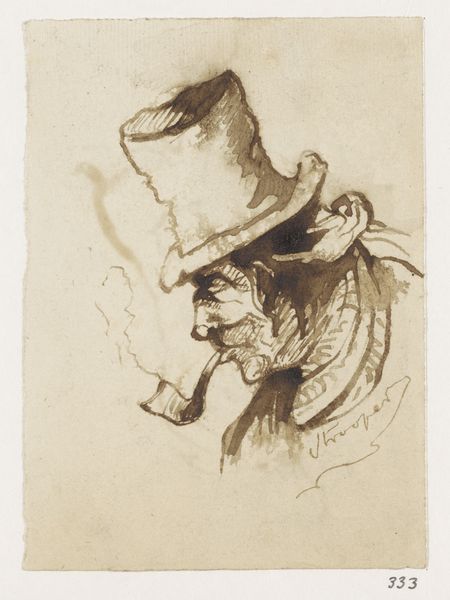
Johannes Tavenraat
1809 - 1881Location
RijksmuseumListen to curator's interpretation
Curatorial notes
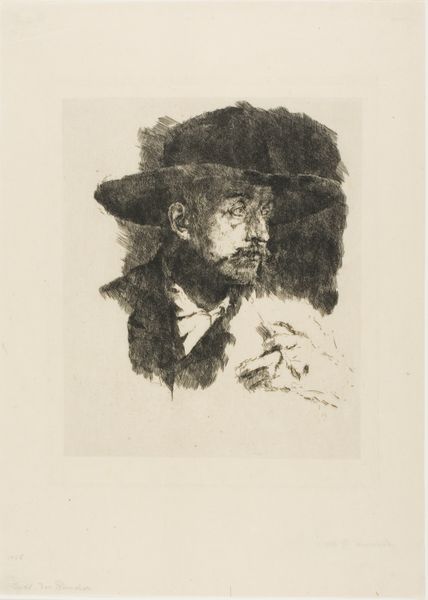
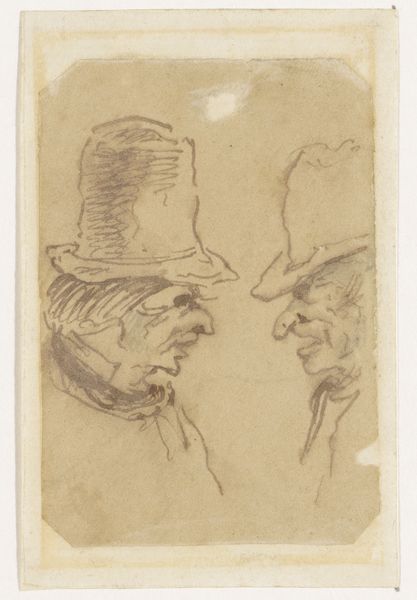
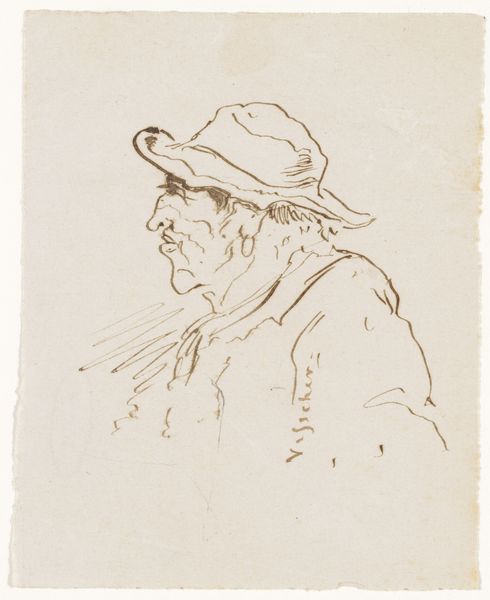
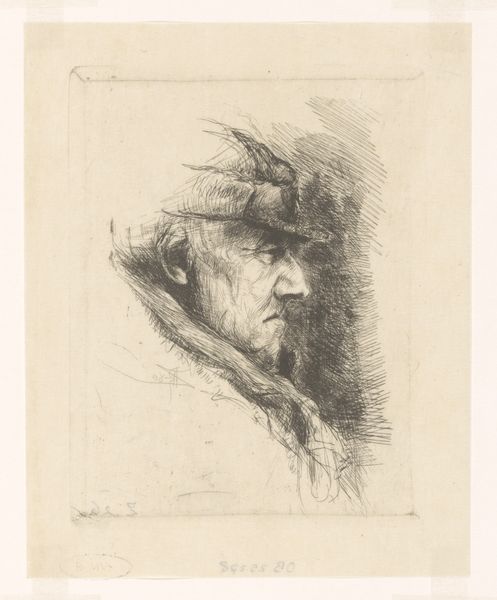
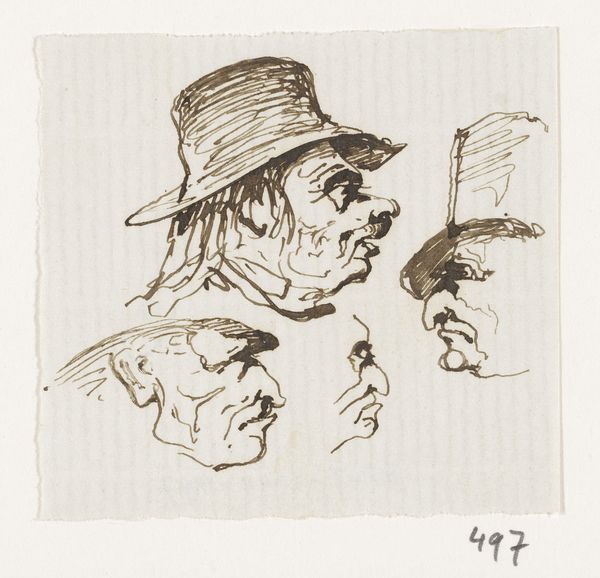
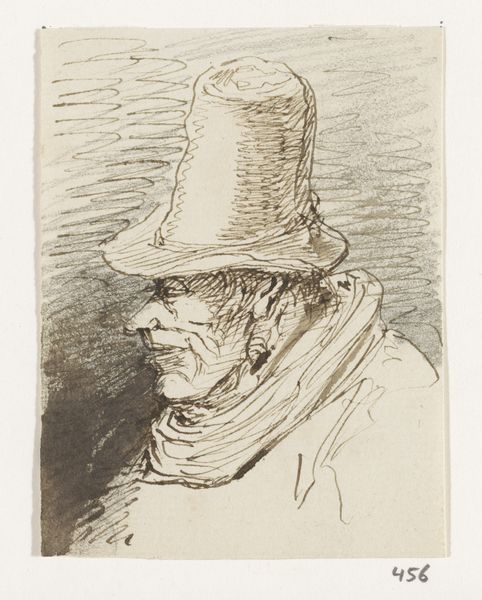
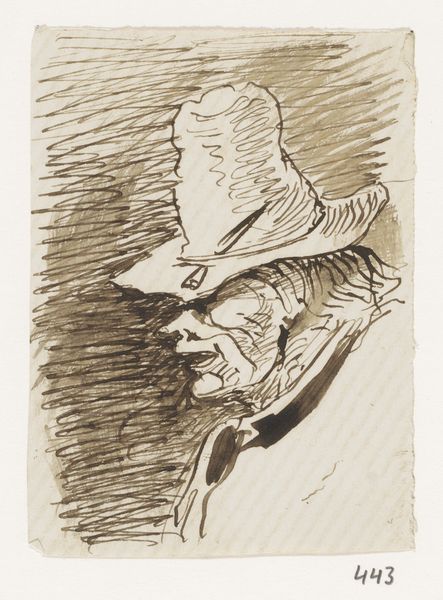
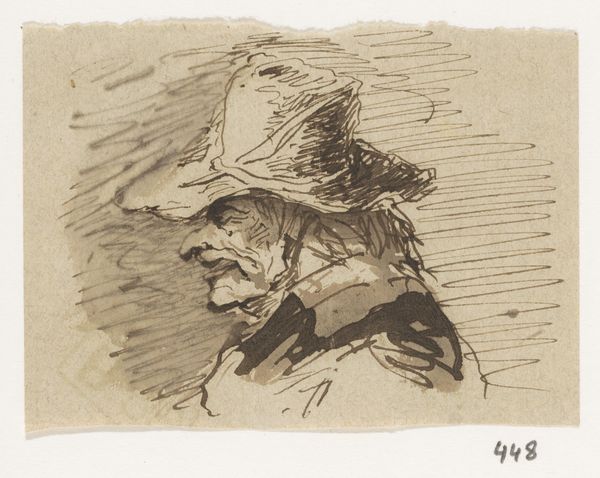
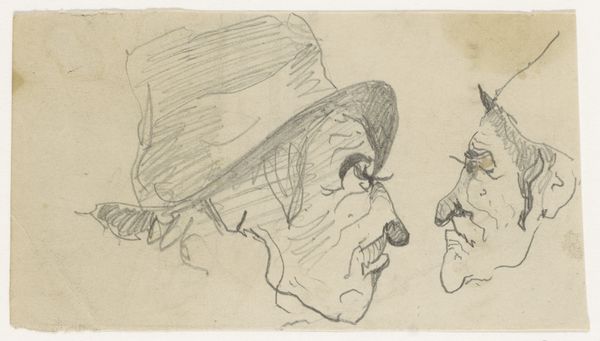
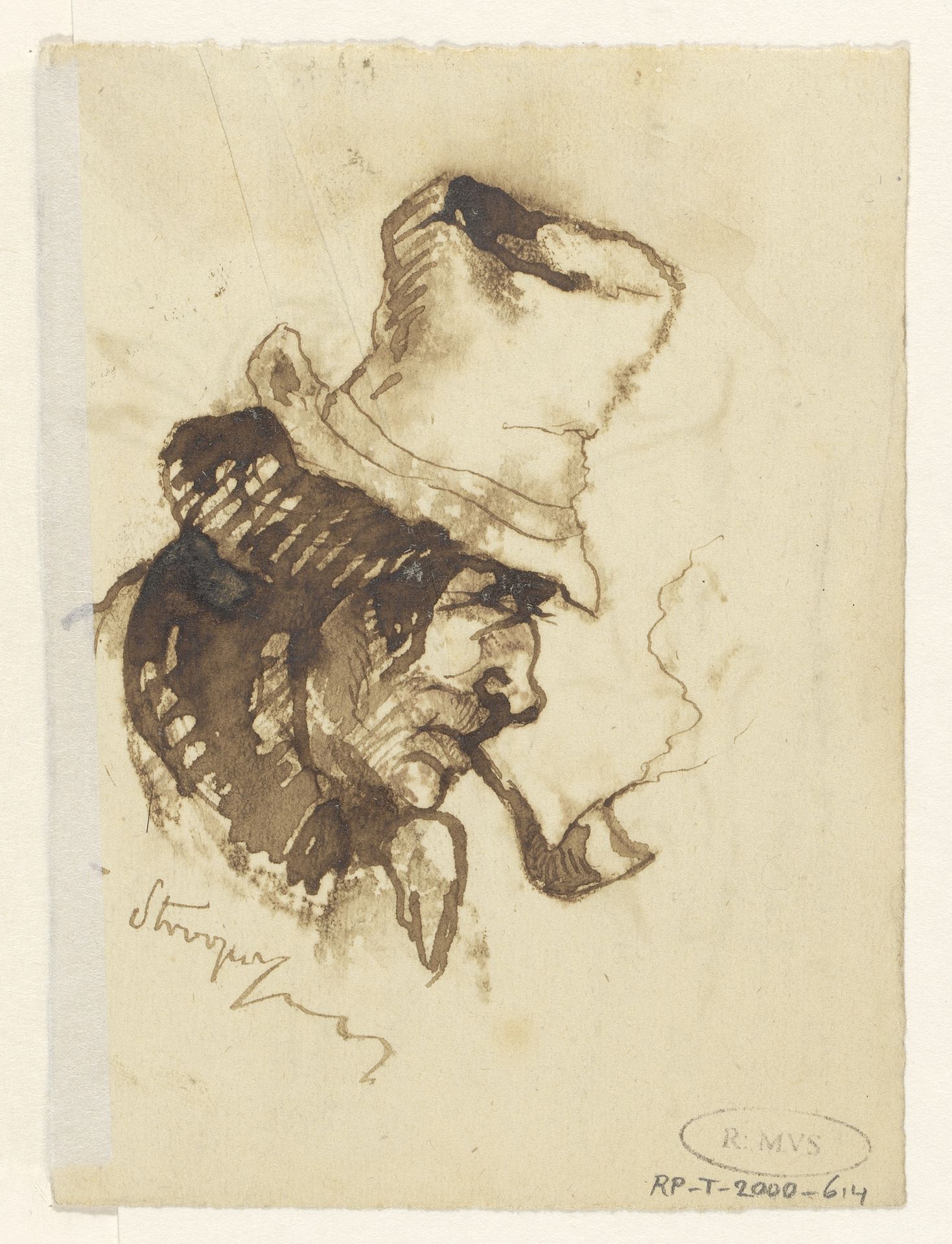
Editor: We're looking at "Strooper" by Johannes Tavenraat, created sometime between 1840 and 1880. It’s an ink and pencil drawing held at the Rijksmuseum. It looks like a quick sketch of a man smoking a pipe. The lines are so expressive, but it also feels unfinished. What do you see in this piece? Curator: I see a layering of archetypes, don't you? The pipe itself is potent, historically signaling contemplation, even wisdom – think of portraits of philosophers. But it was also a common daily item, linking it to working class, everyman narratives. The "Strooper," perhaps his trade? We see a rough, immediate quality which lends an authenticity. Editor: I didn’t even think about the name connecting to a trade! The authenticity you mentioned… is that romanticized? Curator: In a way, yes. Romanticism often idealized the common man, the peasant, as untouched by the corrupting influences of industrial society. Look at the rapid lines—this wasn't about perfect realism; it's capturing an *impression* of this individual. His face in profile, a familiar and timeless posture, evokes something primordial, perhaps? Editor: So, he is using those recognizable symbols, the pipe, the hat, to speak about something bigger, a cultural memory of sorts. Curator: Precisely. Each detail connects to a broader cultural understanding and visual history. How does that inform your understanding now? Editor: It definitely deepens it. I was seeing it as just a simple sketch, but now I see how Tavenraat is actively using visual shorthands to evoke ideas about class and a perhaps a simpler, pre-industrial life. Curator: Wonderful! These sketches speak to the artist’s desire to engage with those lasting cultural concepts, communicated through enduring symbols.