

1880 - 1915
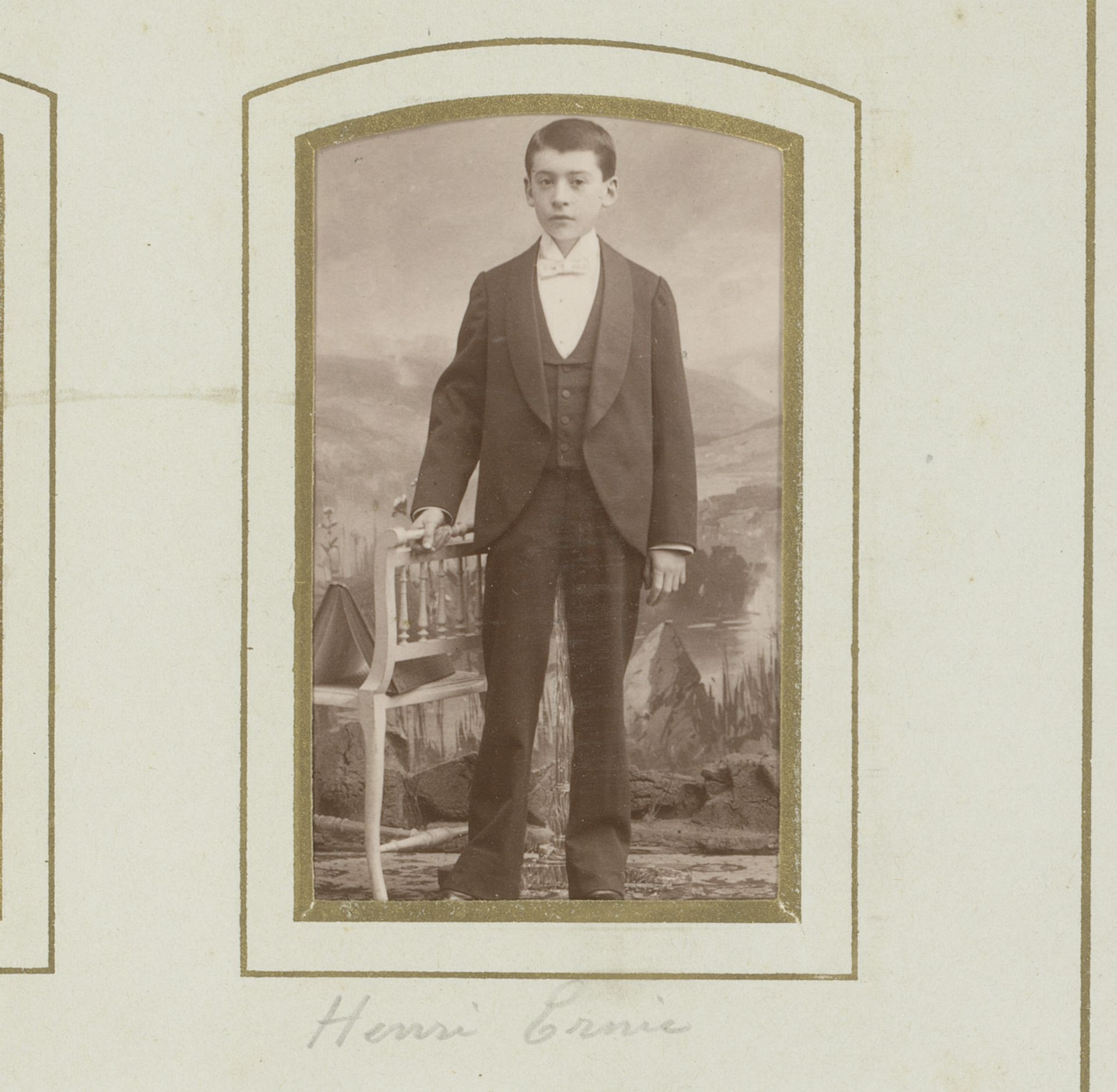
Portret van Henri Ernie als kind

Listen to curator's interpretation
Curatorial notes
Editor: We're looking at "Portret van Henri Ernie als kind," a photograph dating between 1880 and 1915 by L. Larger. There’s a formality and stillness to it that I find interesting. It feels like a constructed image, especially with that backdrop. How do you interpret this work? Curator: It’s fascinating to consider how portrait photography in this period functioned within social rituals. Look at Henri's attire – formal wear even for a child. This wasn’t just about capturing a likeness, but about presenting a particular social identity, one of respectability and perhaps aspiration. Notice the studio backdrop as well. Why do you think they chose that imagery? Editor: Possibly to add some grandeur or sophistication that their everyday environment lacked? It almost feels theatrical. Curator: Exactly. Photography became a tool for social mobility, allowing people to project a desired image of themselves. These portraits would have been displayed, shared within family networks, reinforcing social status. Think about the power dynamic implicit in portraiture, the photographer as author and the sitter as subject to certain norms. Does that change how you view it? Editor: Yes, it definitely adds another layer. It’s not just a picture of a child, but a statement about who his family wanted him to be, or to be seen as. I hadn't considered the performative aspect so much. Curator: And consider how the widespread adoption of photography democratized portraiture, while also standardizing it. How did that shape artistic expectations, and our understanding of individuality? Editor: I guess I saw it as just an old photo, but I now realize that photography in the 19th century offered tools for social shaping and personal branding, whether intentionally or not.