About this artwork
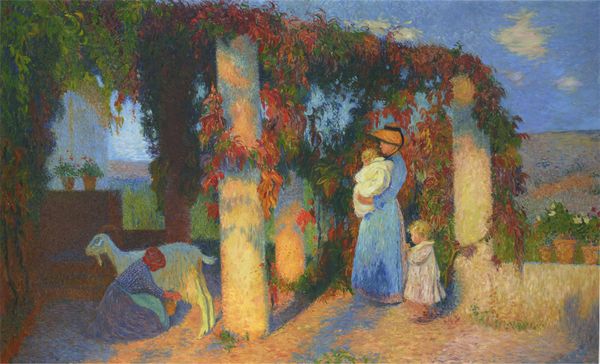
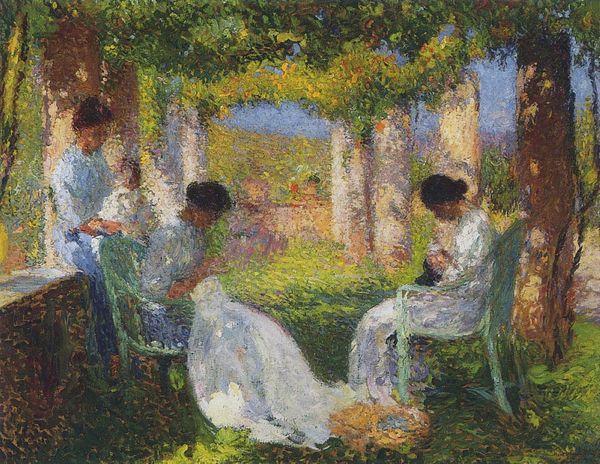
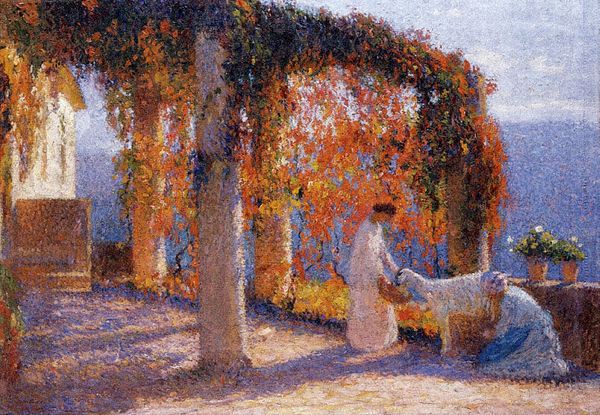
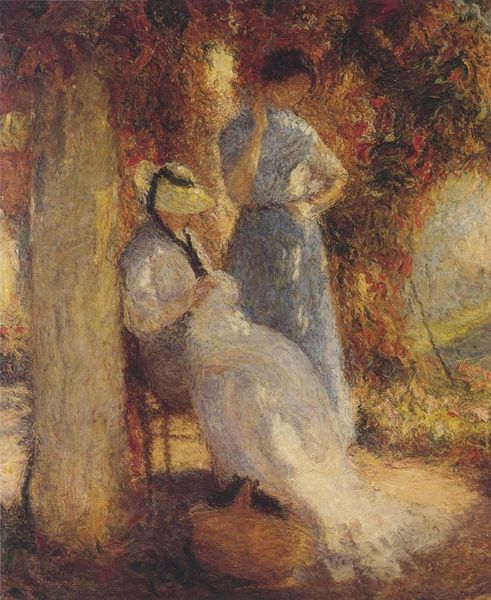
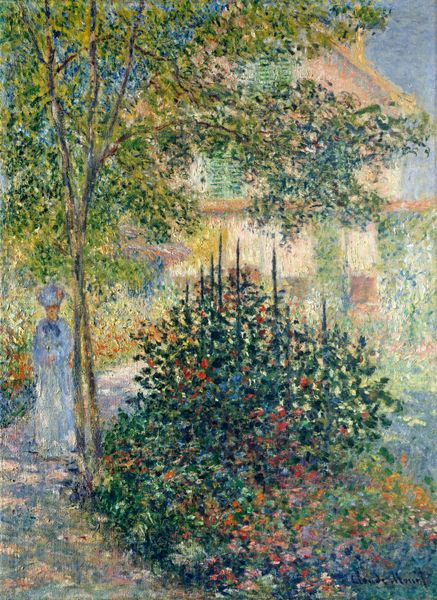
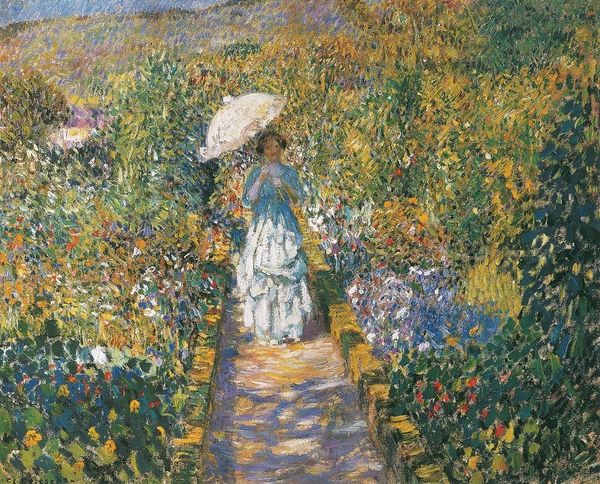
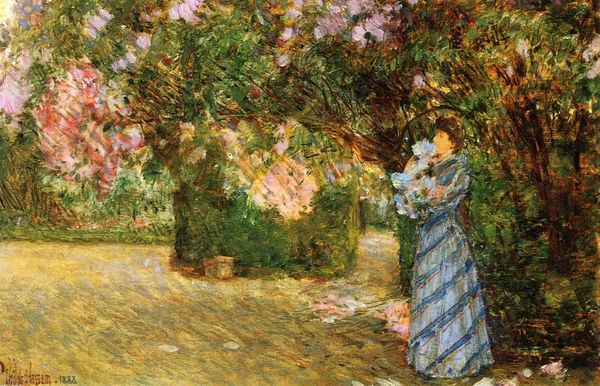
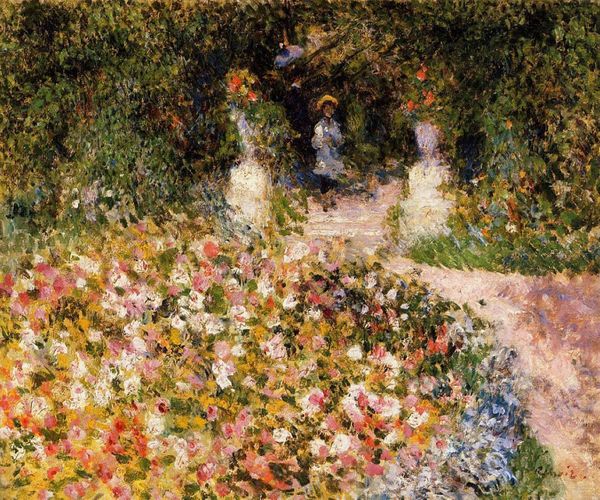
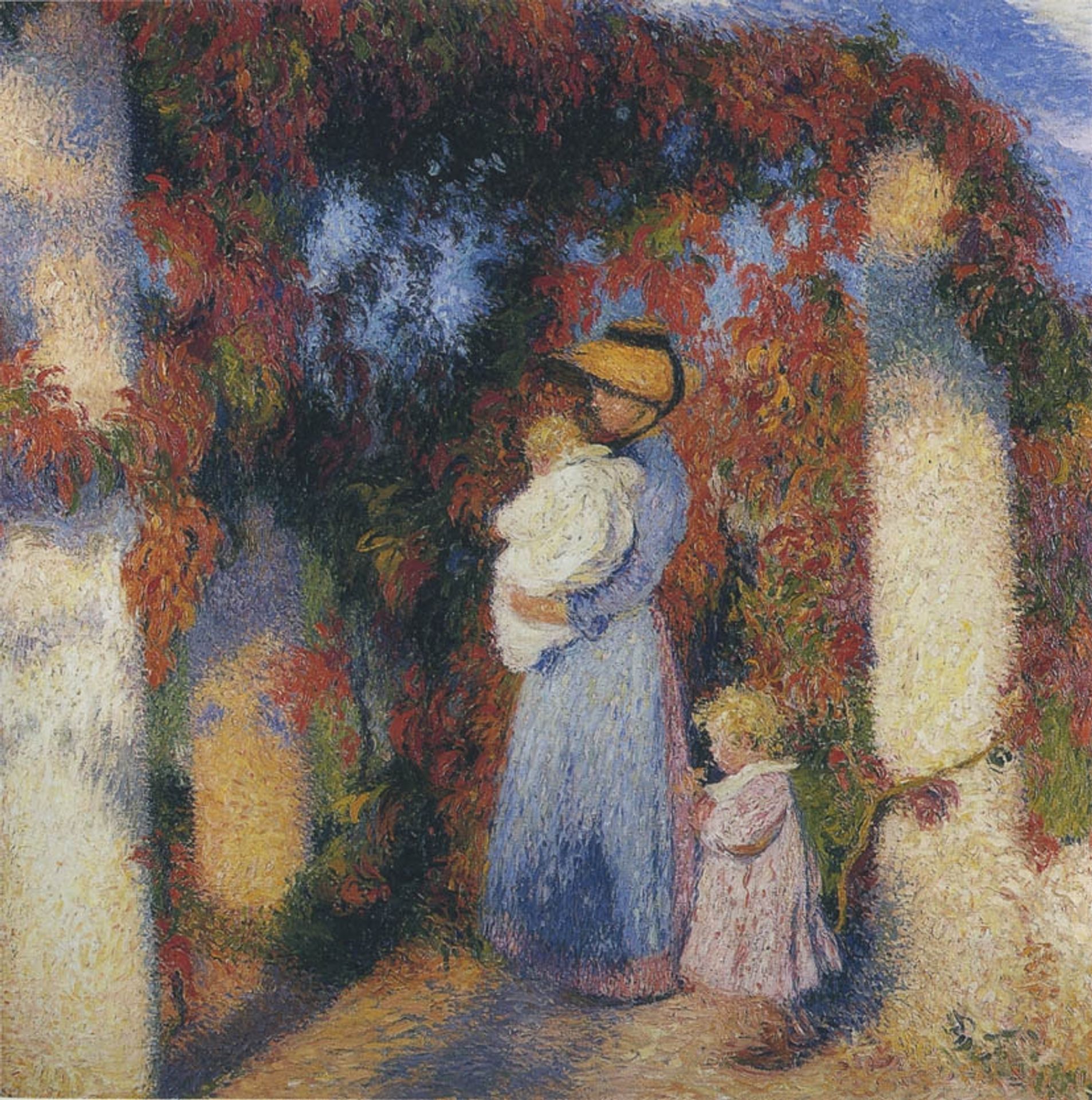
Editor: "Mother and Child in Pergola at Marquayrol" by Henri Martin… It’s just lovely, like a memory shimmering in the sunlight. There is the distinct impressionist brushwork but with that divisionist touch. What social or artistic narratives do you think this piece is speaking to? Curator: I see it as deeply intertwined with the late 19th-century rise of leisure culture and ideas surrounding domesticity. Henri Martin’s choice to depict a mother and her children in a garden suggests a celebration of private life and family values that became increasingly prominent. How does the location - the pergola, and what we can see of the larger setting – inform the narrative, do you think? Editor: Well, it looks like they're situated in a private garden, or perhaps a carefully cultivated natural space. It feels intentionally secluded, almost idyllic…far removed from the social unrest that must have been around at that time. Curator: Exactly! The post-impressionists moved outside Paris and to private spaces to express the social landscape of their artwork. Consider the visual language – the soft brushstrokes and vibrant colors. They are tools here to create a sentimental feeling which certainly spoke to middle-class audiences yearning for stability. Do you notice how the image might participate in shaping cultural ideals of motherhood? Editor: Yes, actually! The mother seems serene and protected, surrounded by nature's beauty, an angel in the house of sorts! It seems like it promotes a very particular kind of safe motherhood narrative. This has me questioning the societal implications and the artistic intention behind the work… Curator: Precisely! That’s how we move beyond mere aesthetic appreciation to a critical understanding of its role in reflecting and shaping its era. Now, seeing how you see it, let's dive deeper…

Artwork details
- Medium
- plein-air, oil-paint, impasto
- Copyright
- Public domain
Tags
portrait
gouache
plein-air
oil-paint
landscape
figuration
oil painting
impasto
child
genre-painting
post-impressionism
Comments
No comments
About this artwork
Editor: "Mother and Child in Pergola at Marquayrol" by Henri Martin… It’s just lovely, like a memory shimmering in the sunlight. There is the distinct impressionist brushwork but with that divisionist touch. What social or artistic narratives do you think this piece is speaking to? Curator: I see it as deeply intertwined with the late 19th-century rise of leisure culture and ideas surrounding domesticity. Henri Martin’s choice to depict a mother and her children in a garden suggests a celebration of private life and family values that became increasingly prominent. How does the location - the pergola, and what we can see of the larger setting – inform the narrative, do you think? Editor: Well, it looks like they're situated in a private garden, or perhaps a carefully cultivated natural space. It feels intentionally secluded, almost idyllic…far removed from the social unrest that must have been around at that time. Curator: Exactly! The post-impressionists moved outside Paris and to private spaces to express the social landscape of their artwork. Consider the visual language – the soft brushstrokes and vibrant colors. They are tools here to create a sentimental feeling which certainly spoke to middle-class audiences yearning for stability. Do you notice how the image might participate in shaping cultural ideals of motherhood? Editor: Yes, actually! The mother seems serene and protected, surrounded by nature's beauty, an angel in the house of sorts! It seems like it promotes a very particular kind of safe motherhood narrative. This has me questioning the societal implications and the artistic intention behind the work… Curator: Precisely! That’s how we move beyond mere aesthetic appreciation to a critical understanding of its role in reflecting and shaping its era. Now, seeing how you see it, let's dive deeper…
Comments
No comments