About this artwork
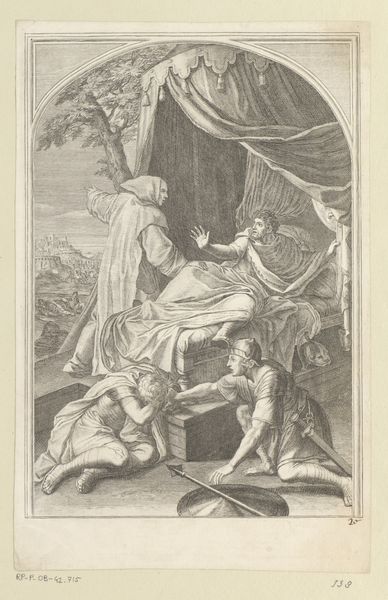
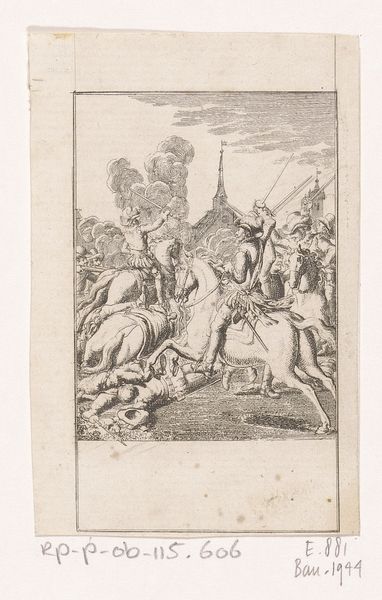
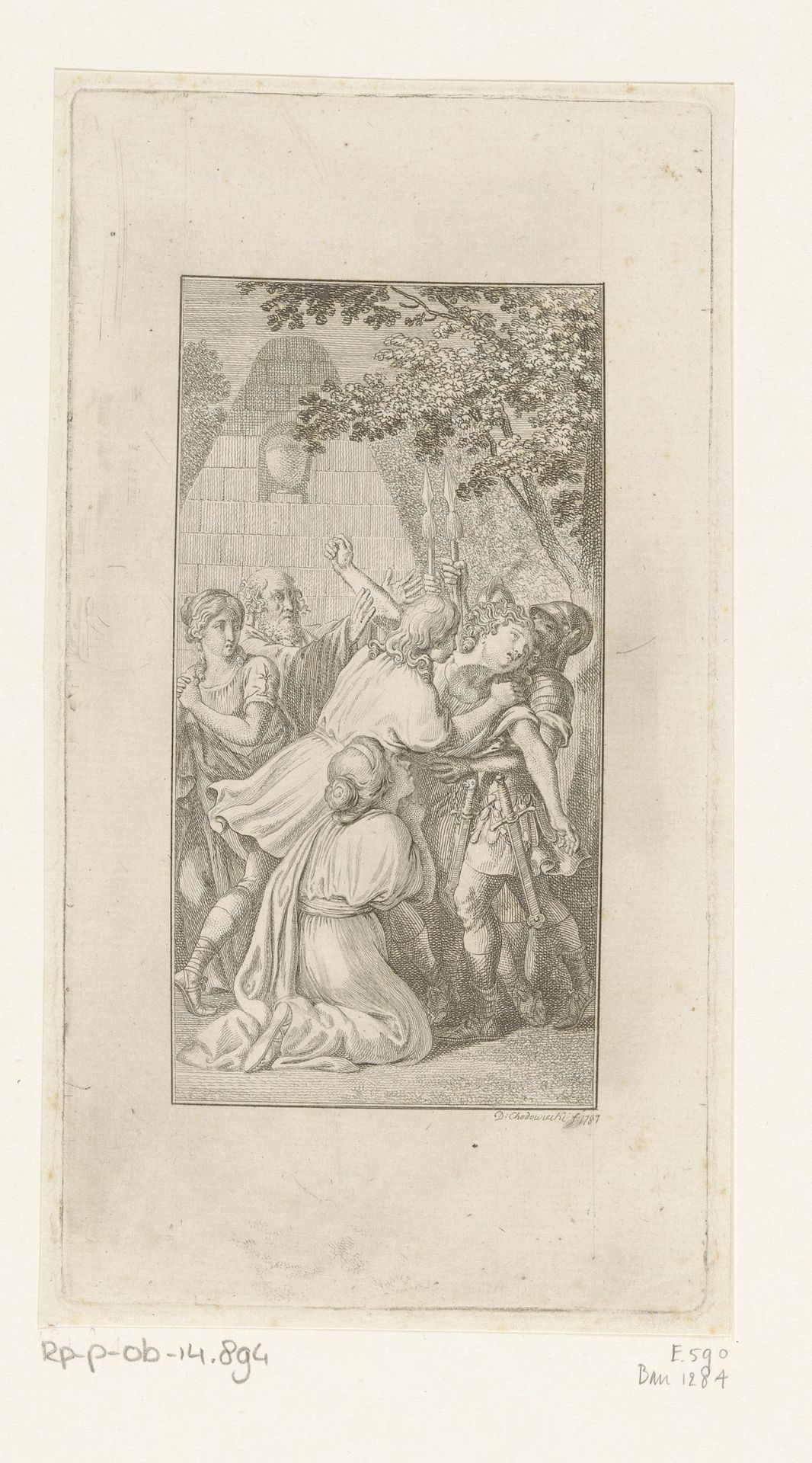
Daniel Nikolaus Chodowiecki made this etching, "Orest valt in de handen van een soldaat als Pylades hem arresteert. Elektra zit smekend naast hen" at an unknown date. The print illustrates a scene from Greek mythology, but it also reflects artistic and social currents of its time. Made in Germany, Chodowiecki was a prominent figure in the 18th century art world. As an artist, he negotiated between the expectations of the establishment and the emerging Enlightenment ideals. The image references classical literature and serves as a commentary on justice, revenge, and familial duty. Figures like Orestes and Electra would have been well known to an educated audience in the 1700s. The print invites viewers to contemplate universal themes through a classical lens. Understanding such imagery requires careful historical research, including a close examination of the print’s cultural context, and the artist's influences. Through this research, we can gain a deeper appreciation for the artwork’s message.
Orest valt in de handen van een soldaat als Pylades hem arresteert. Elektra zit smekend naast hen
1787

Daniel Nikolaus Chodowiecki
1726 - 1801Location
RijksmuseumArtwork details
- Dimensions
- height 183 mm, width mm
- Location
- Rijksmuseum
- Copyright
- Rijks Museum: Open Domain
Comments
Be the first to share your thoughts about this work.
About this artwork
Daniel Nikolaus Chodowiecki made this etching, "Orest valt in de handen van een soldaat als Pylades hem arresteert. Elektra zit smekend naast hen" at an unknown date. The print illustrates a scene from Greek mythology, but it also reflects artistic and social currents of its time. Made in Germany, Chodowiecki was a prominent figure in the 18th century art world. As an artist, he negotiated between the expectations of the establishment and the emerging Enlightenment ideals. The image references classical literature and serves as a commentary on justice, revenge, and familial duty. Figures like Orestes and Electra would have been well known to an educated audience in the 1700s. The print invites viewers to contemplate universal themes through a classical lens. Understanding such imagery requires careful historical research, including a close examination of the print’s cultural context, and the artist's influences. Through this research, we can gain a deeper appreciation for the artwork’s message.
Comments
Be the first to share your thoughts about this work.