About this artwork
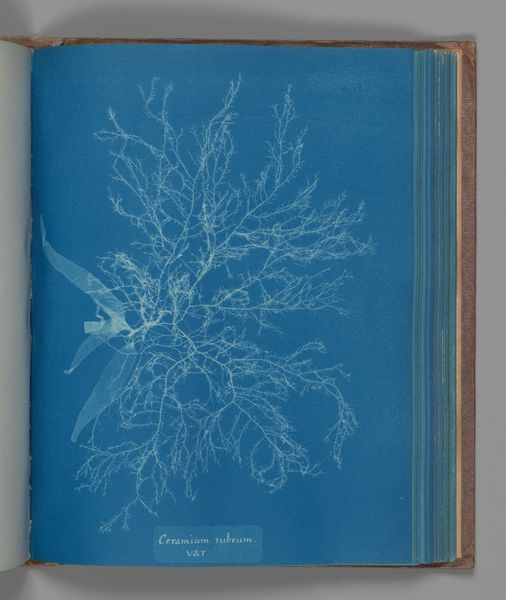
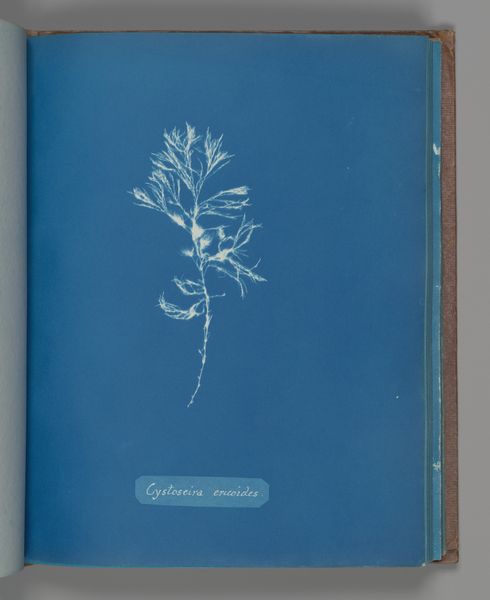
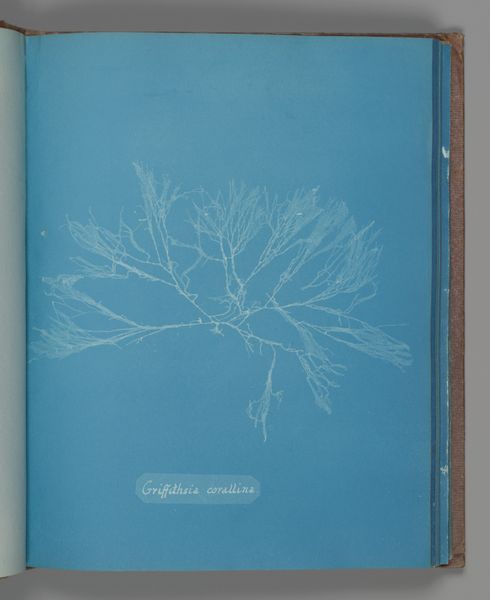
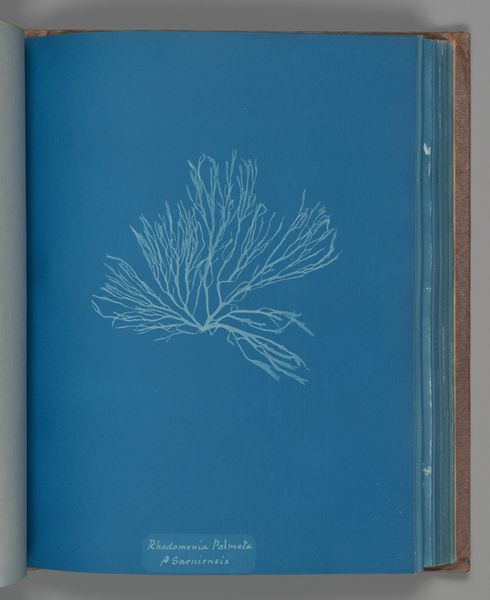
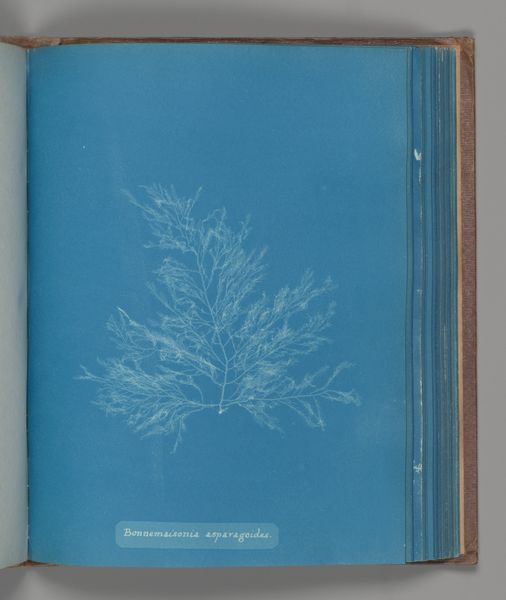
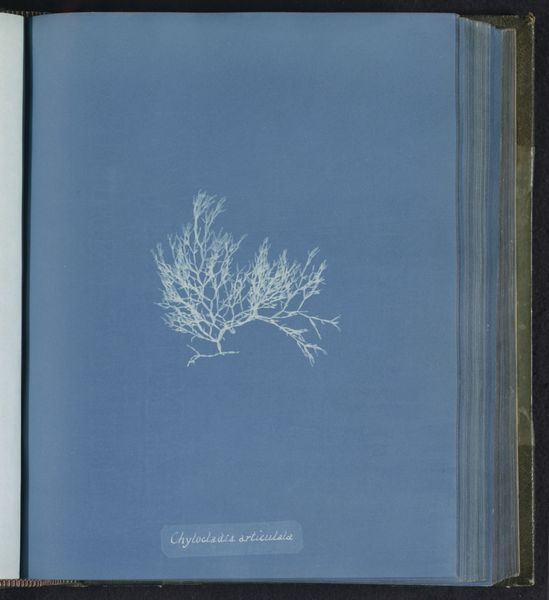
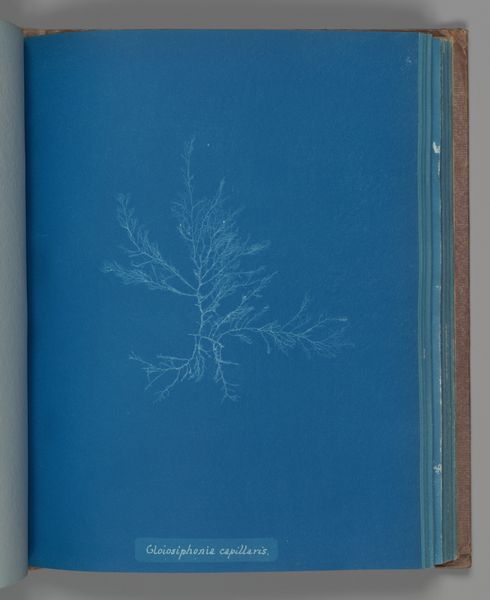
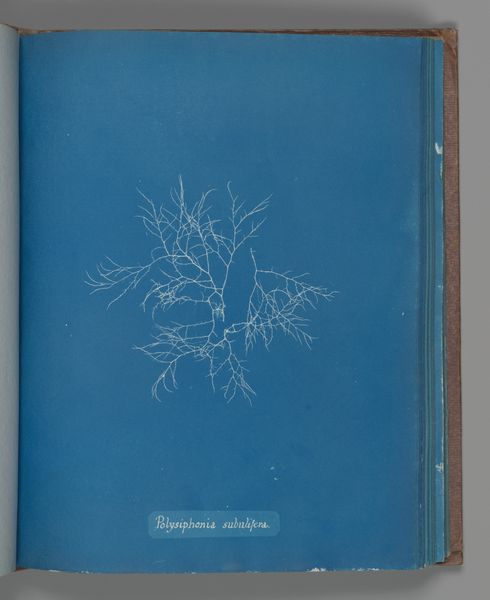
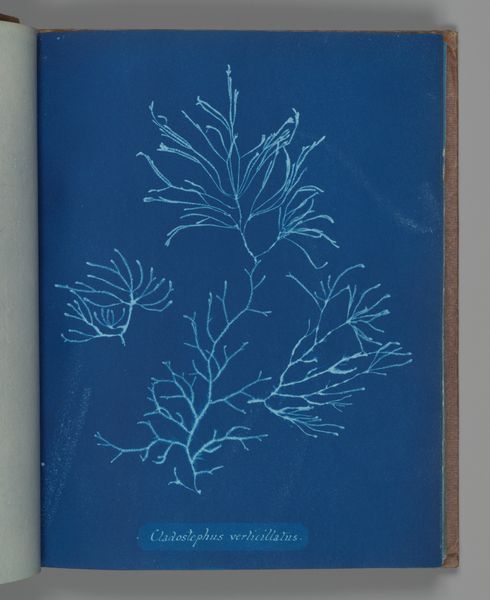
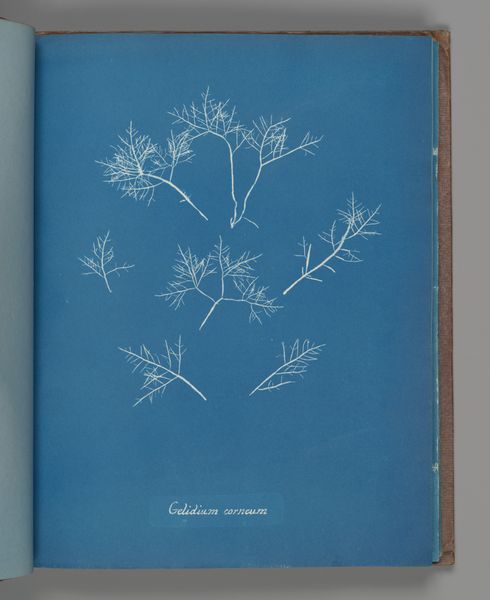
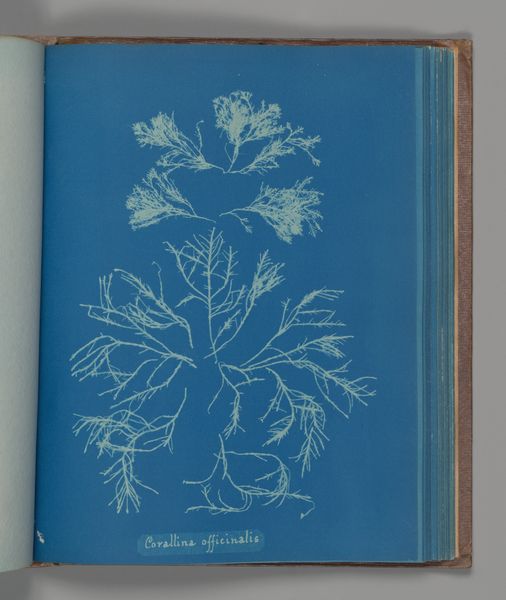
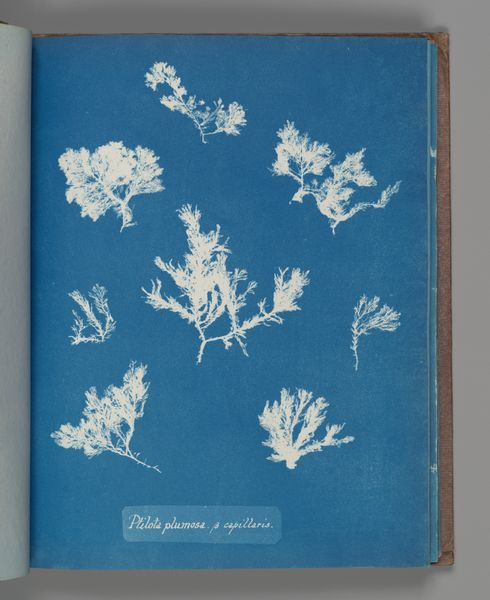
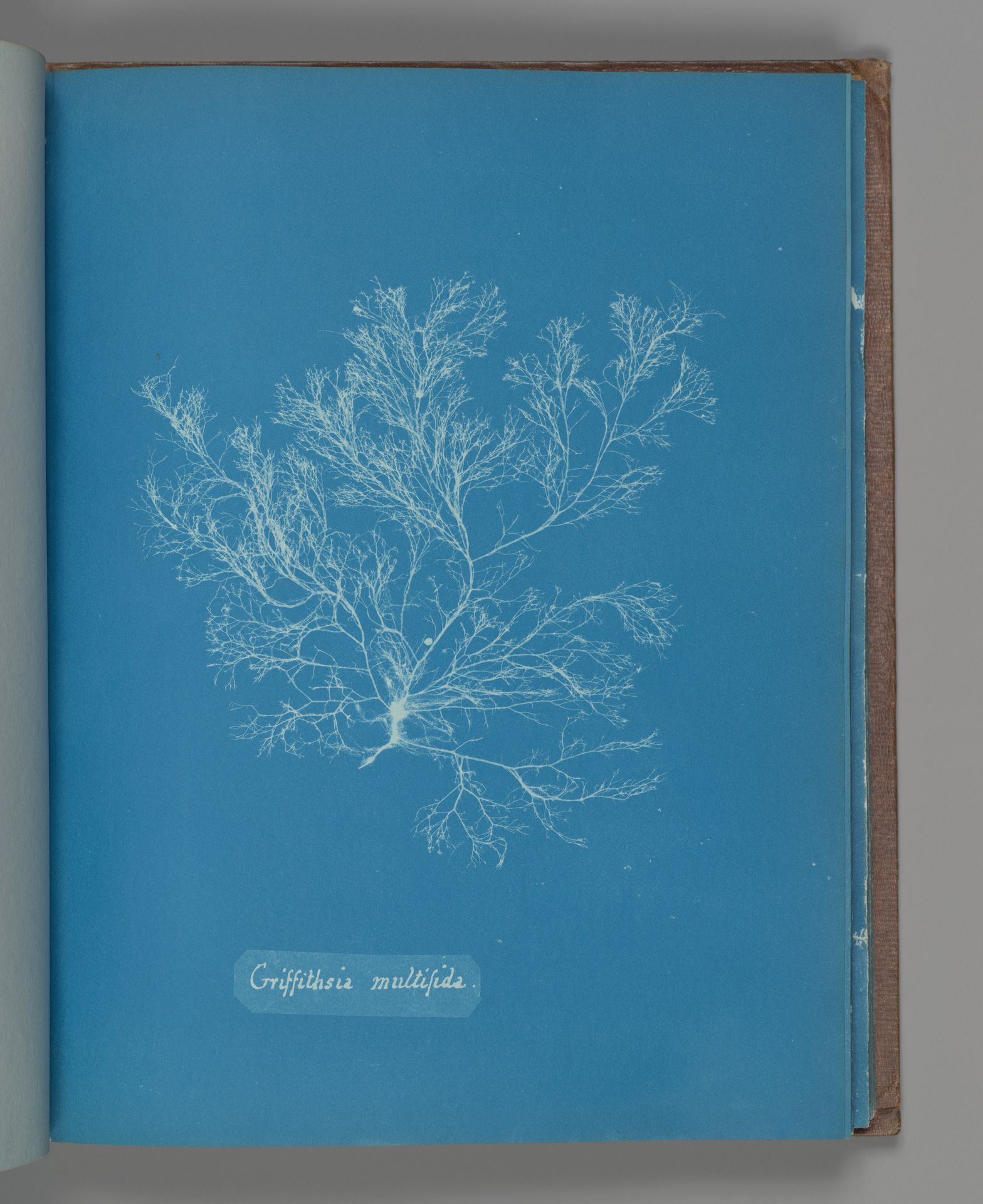
Anna Atkins made this cyanotype of Griffithsia multifida in the 19th century. The stark contrast between the cyan-blue background and the ghostly white seaweed creates a mesmerizing visual effect. The delicate, branching structure of the algae is rendered with stunning clarity. Atkins' work invites us to consider the intersection of art and science, and the power of photography to reveal the hidden structures of the natural world. The cyanotype process itself—a simple chemical reaction to light—highlights the fundamental elements of visibility and representation. It embodies a direct, indexical relationship between the object and its image. By focusing on form and structure, Atkins pushes us to see beyond mere representation. She challenges us to contemplate the underlying order and beauty inherent in the natural world. Her work serves as a reminder that even the simplest of forms can contain a wealth of complexity and meaning.
Griffithsia multifida
1851 - 1855


Artwork details
- Medium
- print, cyanotype, photography
- Dimensions
- Image: 25.3 x 20 cm (9 15/16 x 7 7/8 in.)
- Location
- Metropolitan Museum of Art, New York, NY
- Copyright
- Public Domain
Tags
Comments
Share your thoughts
About this artwork
Anna Atkins made this cyanotype of Griffithsia multifida in the 19th century. The stark contrast between the cyan-blue background and the ghostly white seaweed creates a mesmerizing visual effect. The delicate, branching structure of the algae is rendered with stunning clarity. Atkins' work invites us to consider the intersection of art and science, and the power of photography to reveal the hidden structures of the natural world. The cyanotype process itself—a simple chemical reaction to light—highlights the fundamental elements of visibility and representation. It embodies a direct, indexical relationship between the object and its image. By focusing on form and structure, Atkins pushes us to see beyond mere representation. She challenges us to contemplate the underlying order and beauty inherent in the natural world. Her work serves as a reminder that even the simplest of forms can contain a wealth of complexity and meaning.
Comments
Share your thoughts