

1828
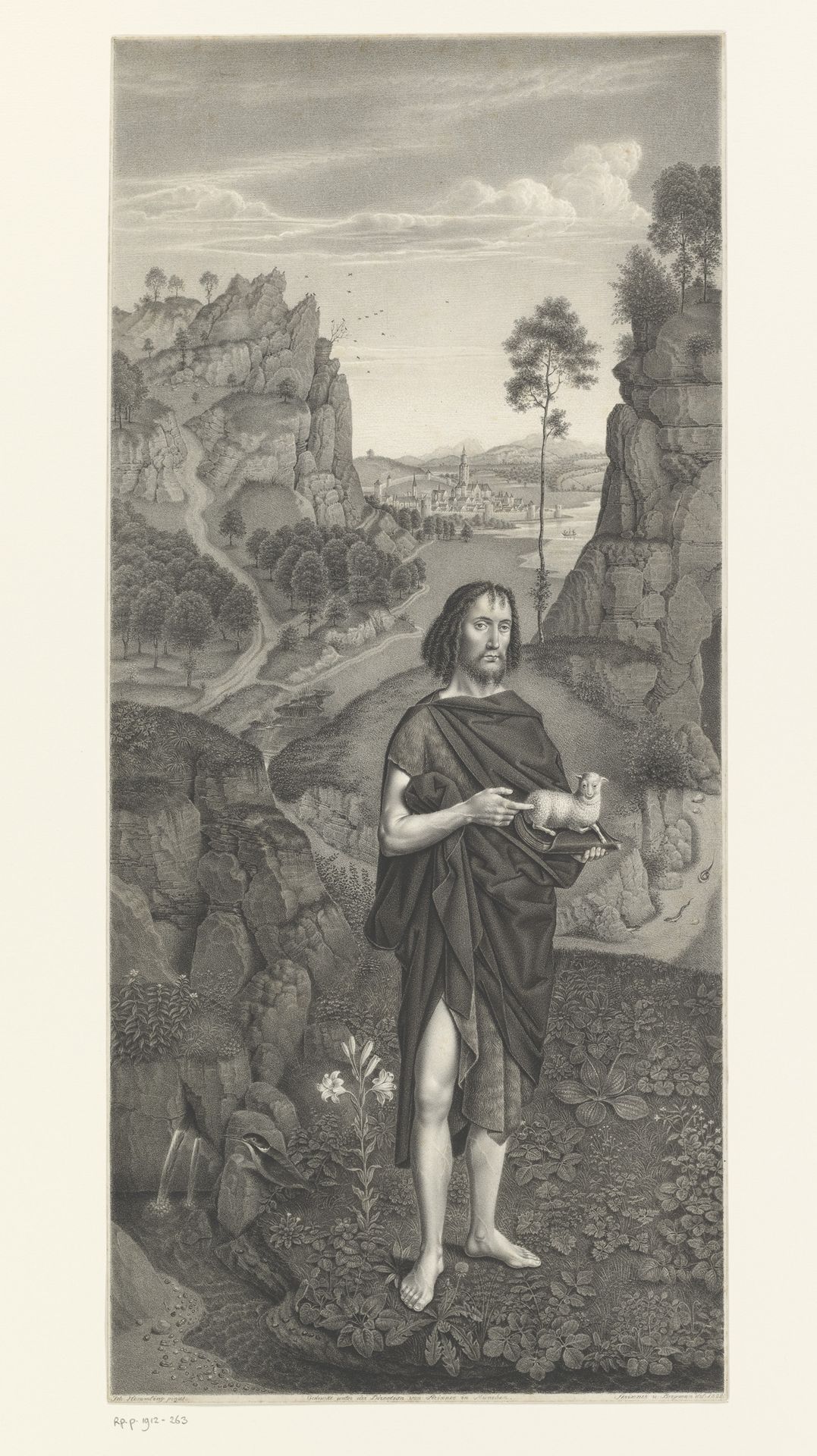
Johannes de Doper met lam in een landschap

Listen to curator's interpretation
Curatorial notes
Johann Nepomuk Strixner made this print of John the Baptist with a lamb in a landscape sometime in the first half of the 19th century. This religious artwork speaks to the long shadow of the church in early 19th century Europe, a time of great political upheaval and revolutions. Here, John the Baptist is holding a lamb, an animal symbolizing innocence and sacrifice, which is a reference to Christ's sacrifice for humanity. But consider the wider social context. Throughout the 19th century, as traditional religious authority waned, the figure of Christ and John the Baptist became a symbol of moral authority for some. Strixner’s print is therefore a commentary on the place of religion in a rapidly changing world. To understand this artwork better, we might look at its wider reception, including the popular religious imagery circulating at the time, and the writings of prominent religious figures. It reminds us that art is always made in response to specific social conditions and institutional frameworks.