About this artwork
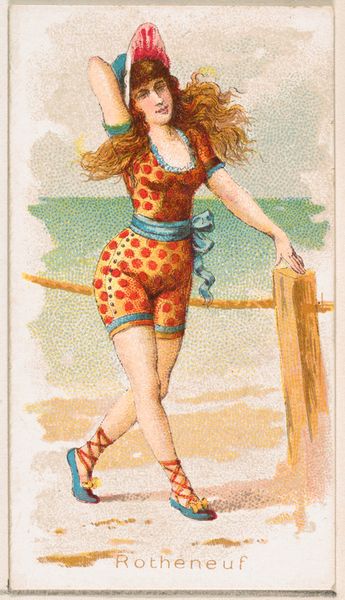
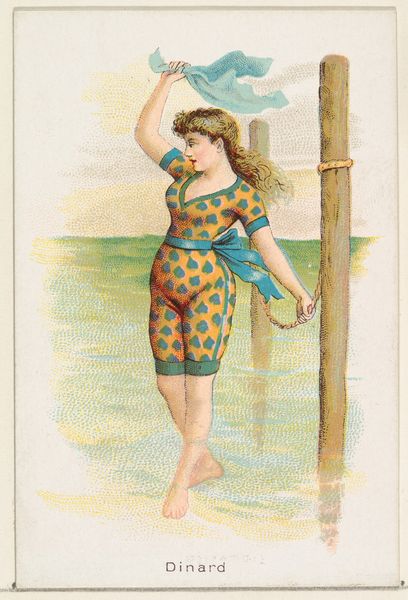
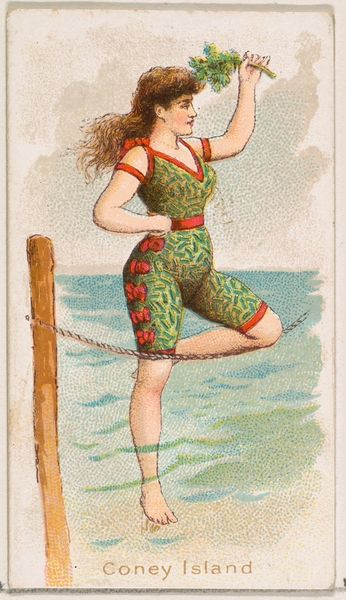
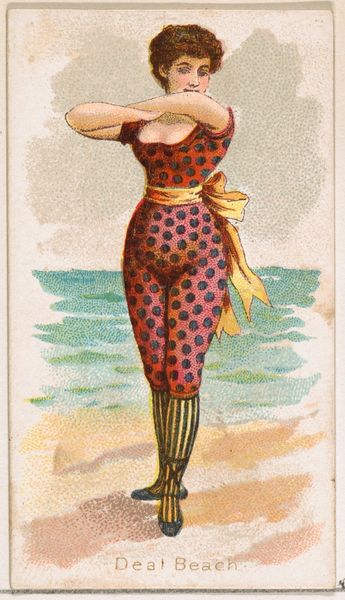
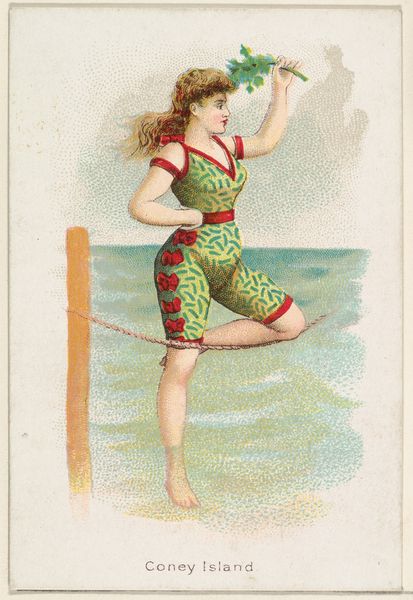
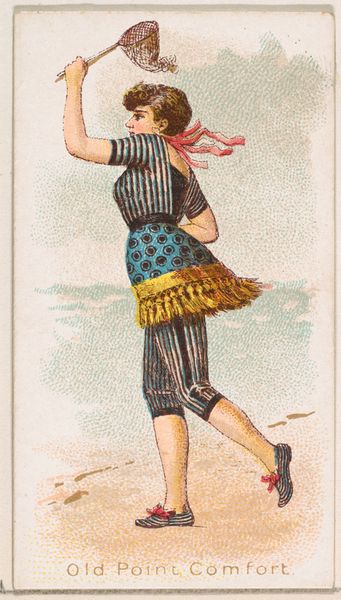
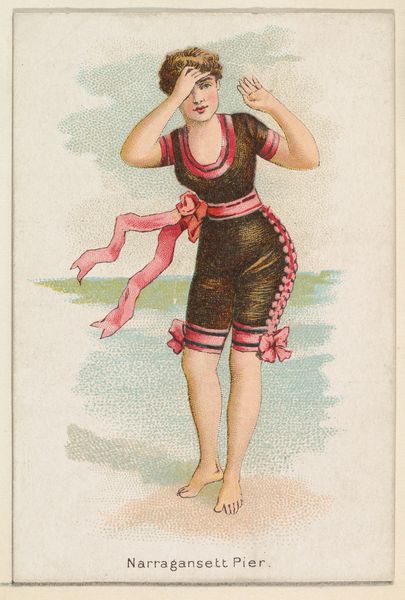
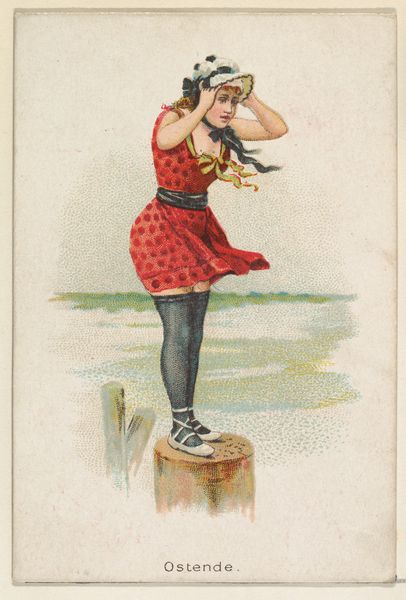
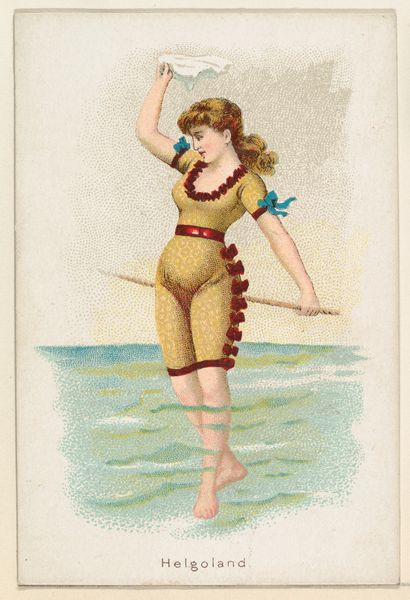
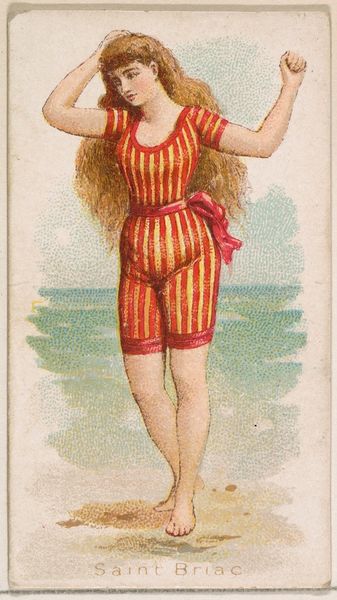
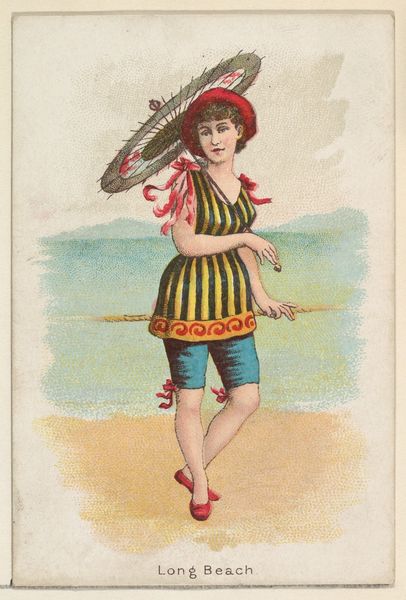
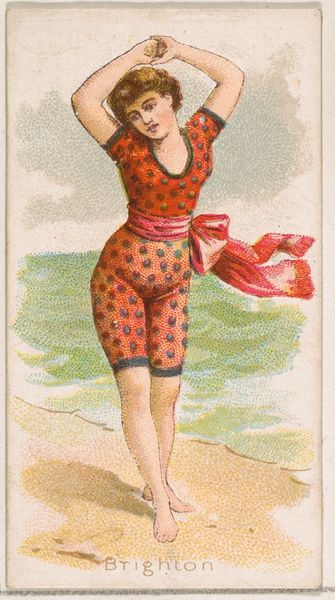
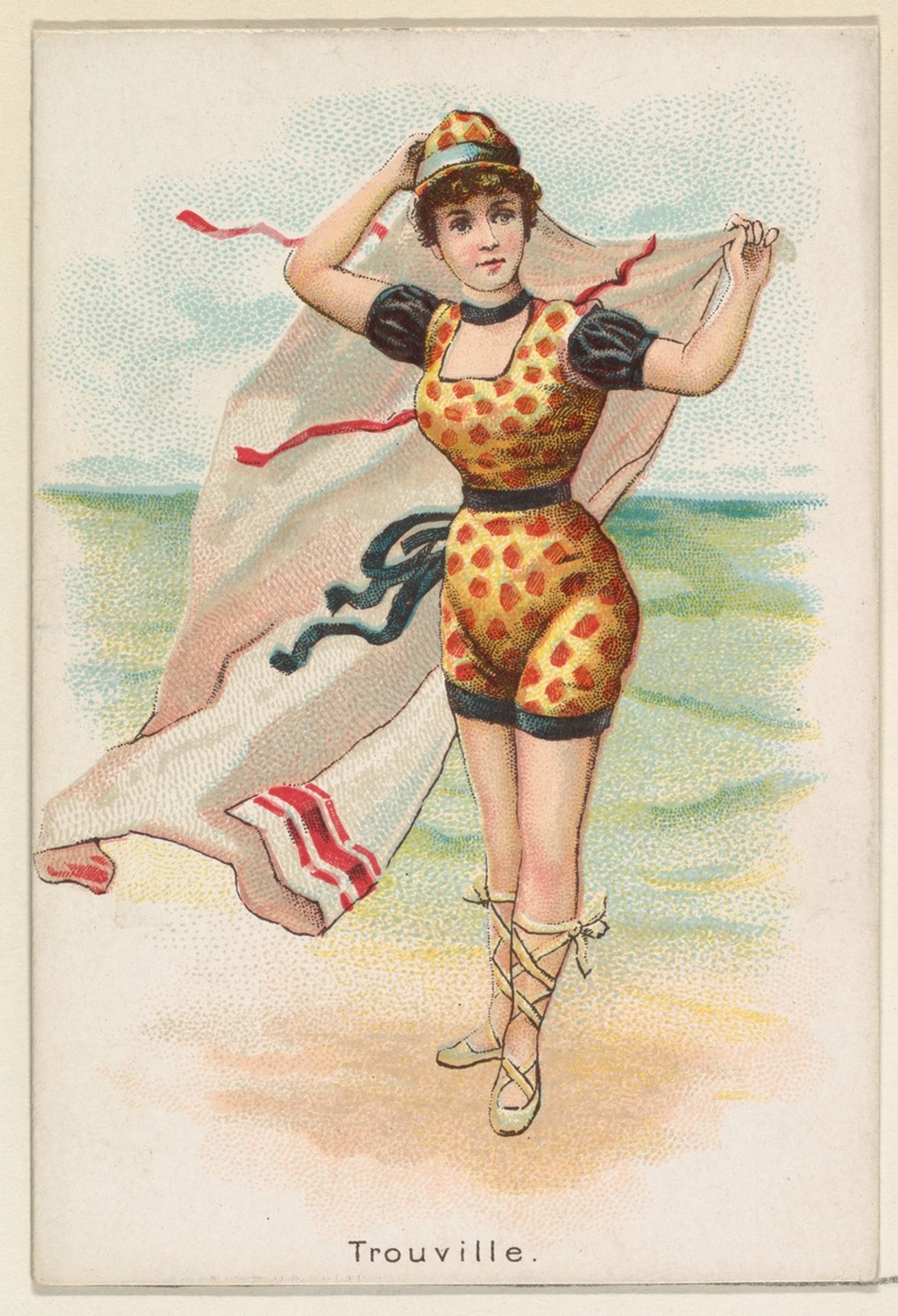
This small card, "Trouville, from the Beautiful Bathers series," was printed by the Wm. S. Kimball & Co., using chromolithography. This was a color printing technique that used multiple lithographic stones, each applying a different color to create a finished image. Looking closely, you can see the slight misalignments of the colors, a telltale sign of this painstaking process. Chromolithography allowed for mass production of colorful images, making them accessible to a wider audience. In the late 19th century, these cards were often included in cigarette packs as collectibles. The subject matter, a woman in swimwear, speaks to emerging social trends around leisure and the commodification of the female image. The card itself, a mass-produced object distributed with tobacco products, reflects the growing consumer culture of the time. It blurs the lines between art, advertising, and everyday life, reminding us that even the most ephemeral objects can offer valuable insights into the past.
Trouville, from the Beautiful Bathers series (N192) issued by Wm. S. Kimball & Co.
1889

William S. Kimball & Company
@williamskimballcompany
The Metropolitan Museum of Art
Metropolitan Museum of Art, New York, NYArtwork details
- Dimensions
- Sheet: 3 3/4 × 2 1/2 in. (9.5 × 6.4 cm)
- Location
- Metropolitan Museum of Art, New York, NY
- Copyright
- Public Domain
Comments
Share your thoughts
About this artwork
This small card, "Trouville, from the Beautiful Bathers series," was printed by the Wm. S. Kimball & Co., using chromolithography. This was a color printing technique that used multiple lithographic stones, each applying a different color to create a finished image. Looking closely, you can see the slight misalignments of the colors, a telltale sign of this painstaking process. Chromolithography allowed for mass production of colorful images, making them accessible to a wider audience. In the late 19th century, these cards were often included in cigarette packs as collectibles. The subject matter, a woman in swimwear, speaks to emerging social trends around leisure and the commodification of the female image. The card itself, a mass-produced object distributed with tobacco products, reflects the growing consumer culture of the time. It blurs the lines between art, advertising, and everyday life, reminding us that even the most ephemeral objects can offer valuable insights into the past.
Comments
Share your thoughts