c. 1850 - 1880
Cradleboard


Listen to curator's interpretation
Curatorial notes
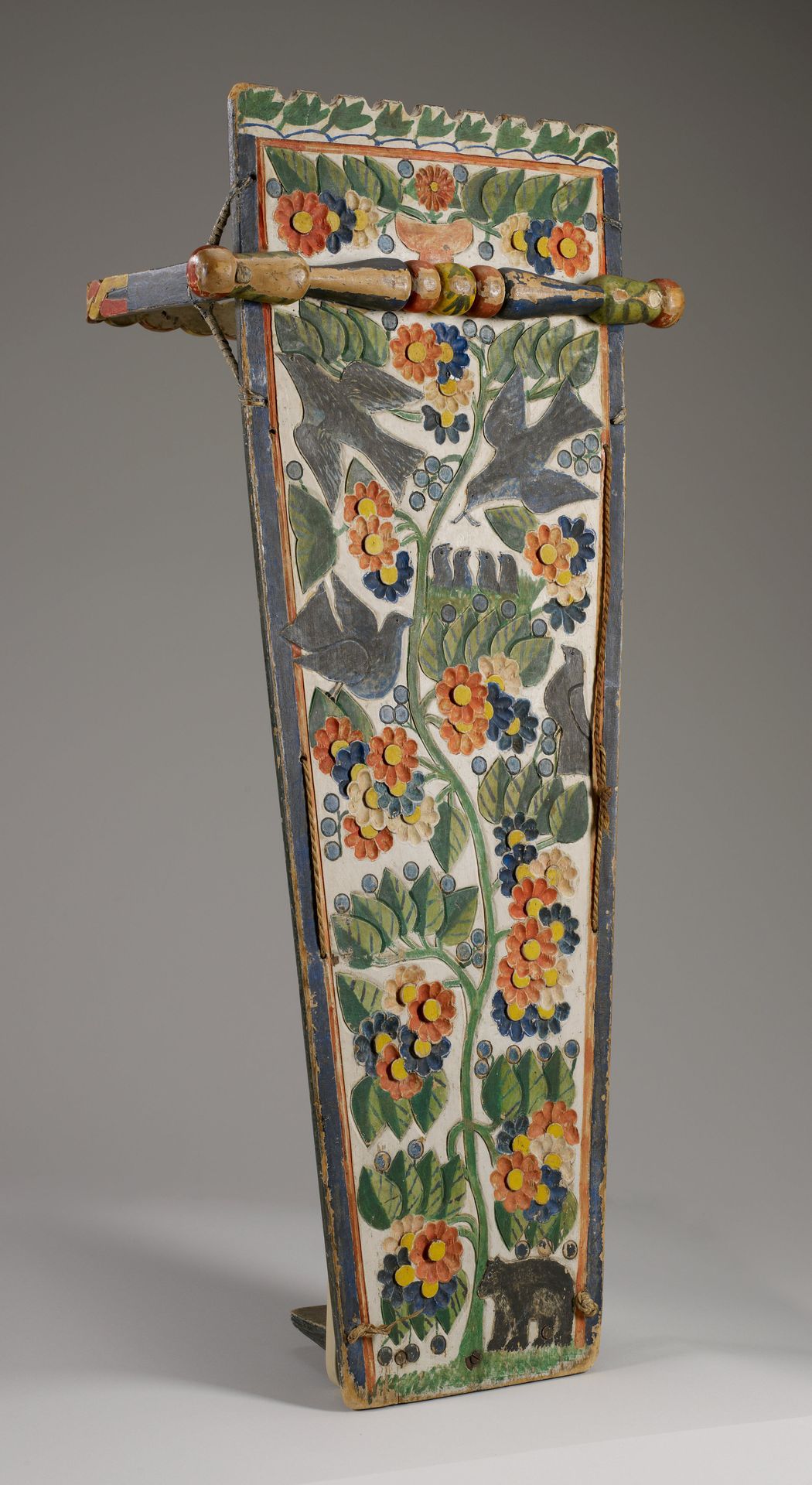
Editor: This lovely Cradleboard, crafted by an unknown Kahnawake Mohawk artist sometime between 1850 and 1880, is made of carved and relief-worked wood. The colours are so vibrant. The flowers and birds give it a cheerful feel. I’m curious, what symbolic meanings might be embedded in these images? Curator: A beautiful object, isn't it? Cradleboards such as this transcend mere utility; they're powerful visual texts. The birds, the flowering tree… consider how these natural images might resonate within Mohawk cosmology. Birds, often messengers, bridge the earthly and spiritual realms. The tree, with its life-giving fruit and flowers, stands as a symbol of continuity, growth, and nourishment. The inclusion of the bears is important: can you see them near the base? Editor: Yes, I see them. How might they figure into it? Curator: Bear symbolism connects the board to concepts of strength, protection, and healing. Think of the emotional reassurance these symbols offered a child secured within, and to their caregivers too. Does knowing these iconographic interpretations shift your initial sense of the cradleboard’s ‘cheerful’ feel at all? Editor: It does add a layer. It's not just decoration, but a deliberate arrangement of symbols meant to give strength to the baby and hope to the parents. It makes it feel so intentional and important. Curator: Precisely! Cultural memory and hope made visible through the intentional selection of potent, culturally relevant imagery. It’s a remarkable example of visual communication across generations, wouldn't you say? Editor: I would. I initially saw just pretty pictures, but now I understand that each element carries meaning that connects to their culture and values. Thank you for that deeper look.