1710s
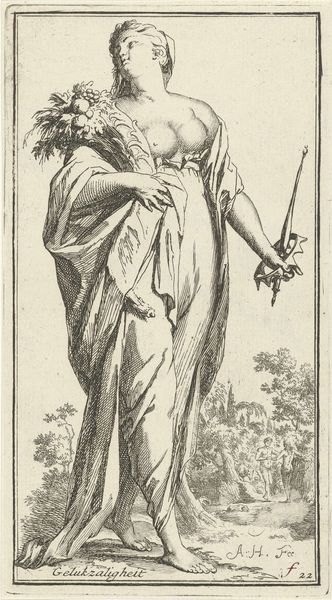
Gepersonifieerde Bevalligheid

Arnold Houbraken
1660 - 1719Location
RijksmuseumListen to curator's interpretation
Curatorial notes
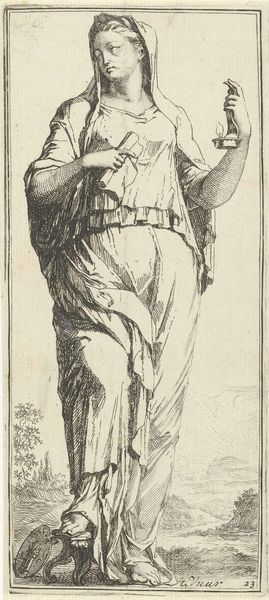
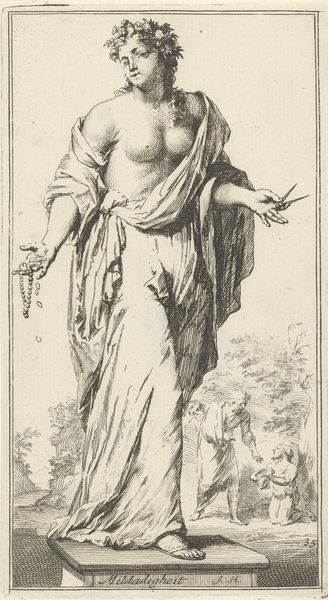
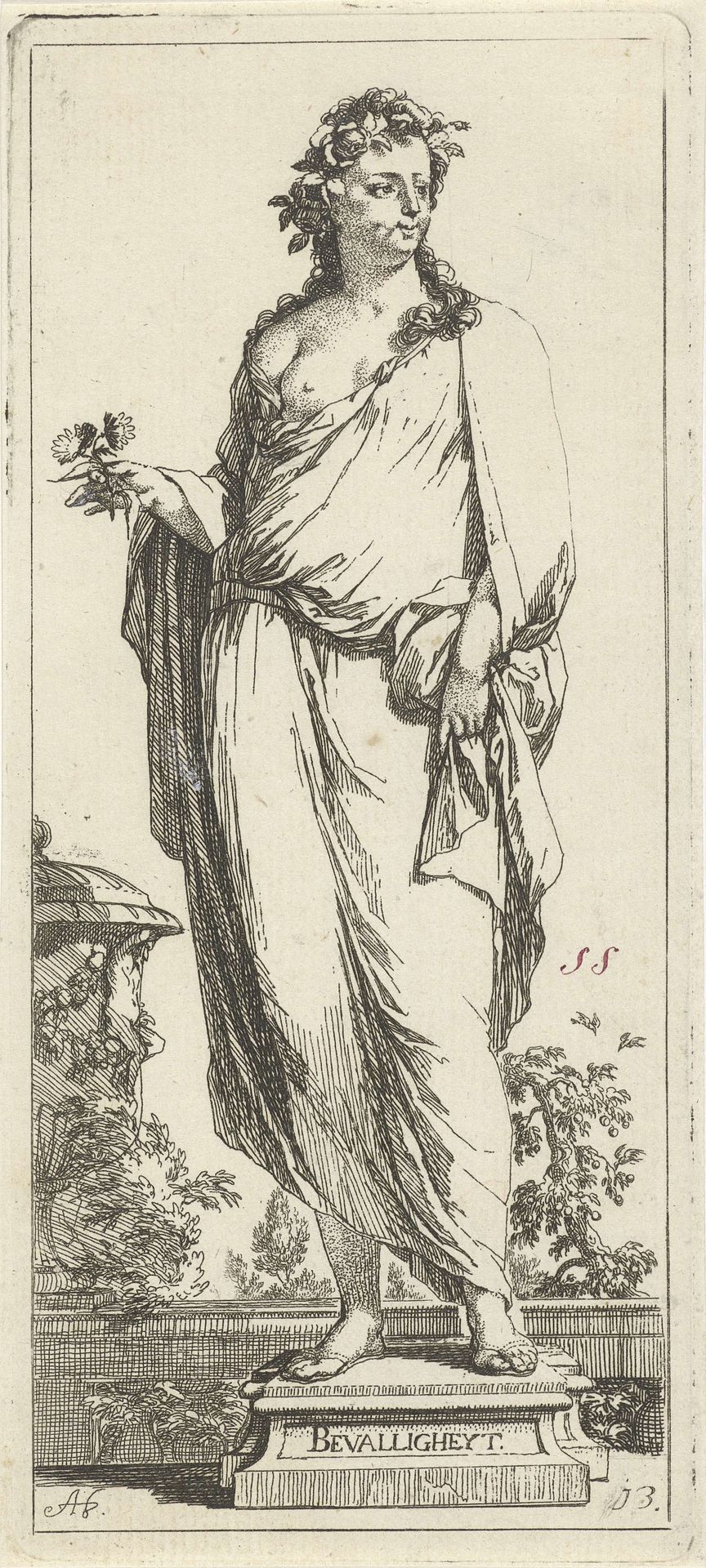
Arnold Houbraken created this print, Gepersonifieerde Bevalligheid, which translates to "Personified Grace," sometime between 1660 and 1719. Notice the figure's elegant contrapposto stance, balanced with a slight turn of the head, set against the clean linear framework of the architectural backdrop. This creates a visual harmony. Houbraken uses line and form to embody the concept of grace, translated through classical motifs: the laurel wreath, flowing drapery, and idealized anatomy. The linear quality and precision offer a study in classical ideals and their visual representation. The figure stands on a plinth inscribed with the word "Bevalligheyt," reinforcing a direct symbolic link between the visual form and its intended concept. The semiotic structure of the artwork invites viewers to decode how aesthetic ideals, rendered through line and composition, communicate cultural values. The clean lines and calculated composition are not merely aesthetic; they function as cultural signs that reflect and reinforce classical ideals.