About this artwork
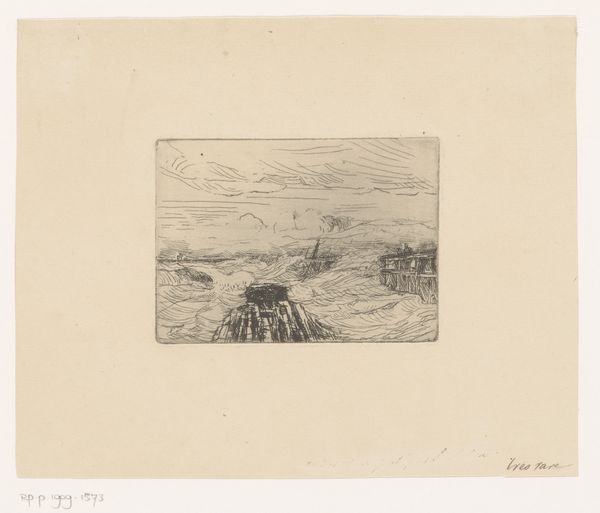
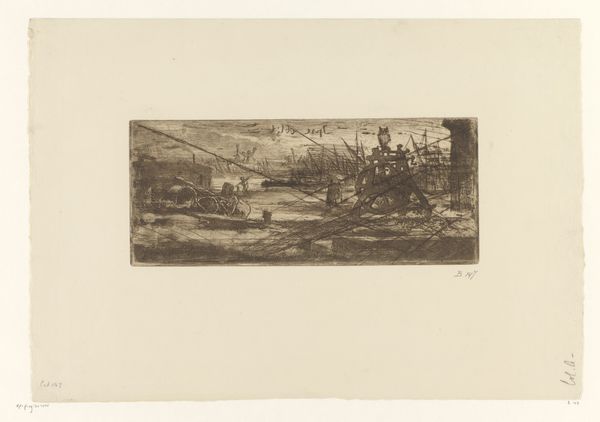
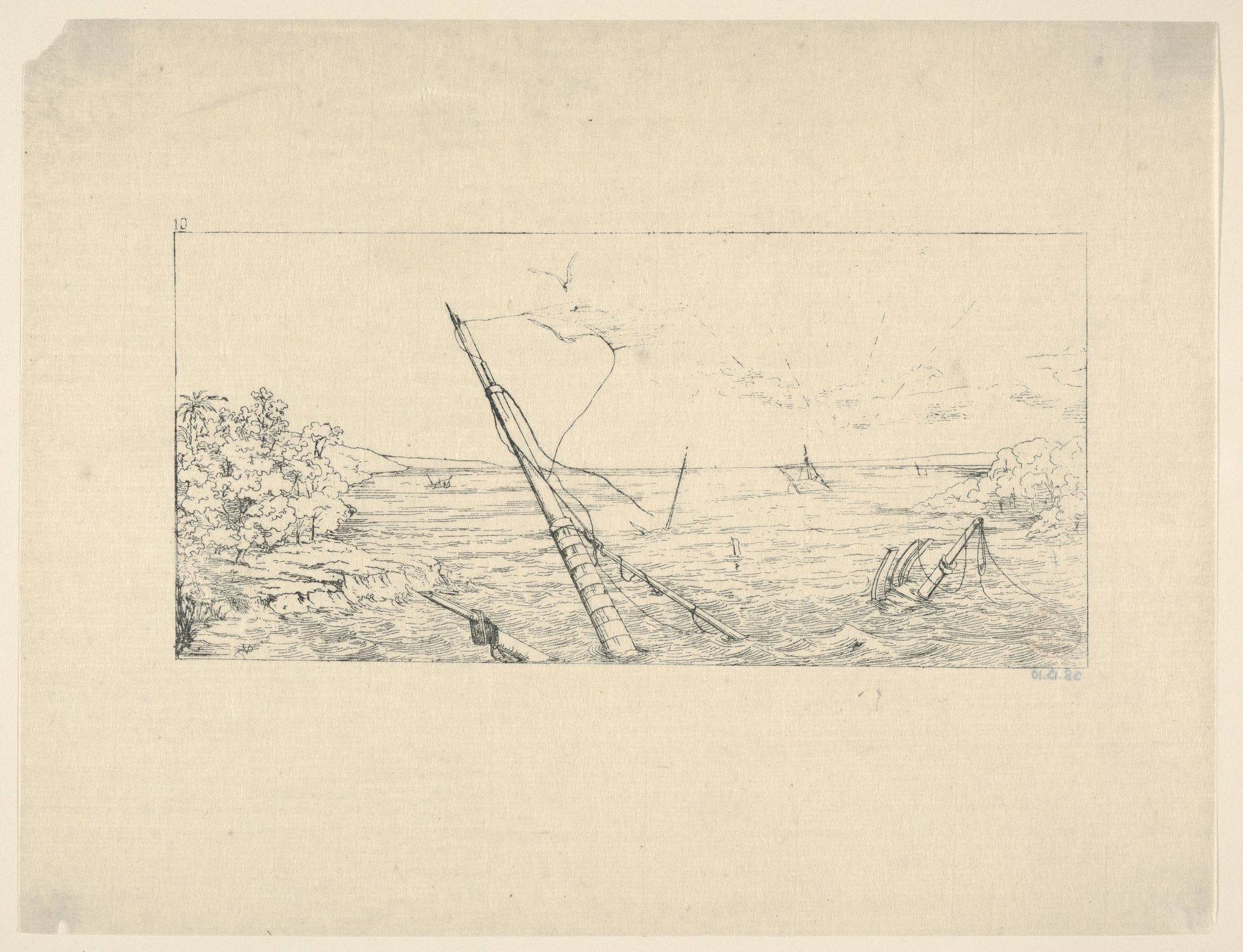
Adalbert John Volck etched this vision of the Stone Blockade off Charleston during the American Civil War. Dominating the scene are the skeletal remains of ships, their masts askew, jutting from the water like broken bones. These are potent symbols of obstruction and ruin, representing the Union's strategy to strangle the Confederacy's vital ports. The image evokes a sense of desolation, mirroring the broader conflict's devastating impact. This motif of maritime wreckage has appeared throughout history, from ancient Greek tragedies depicting naval disasters to Romantic-era paintings of shipwrecks symbolizing humanity's struggle against nature's forces. Think of the "The Raft of the Medusa," where wreckage and despair similarly capture a moment of profound crisis. These images serve as a reminder of the ever-present threat of chaos and the fragility of human endeavor, reflecting our collective anxieties about loss and destruction. The wreckage speaks to the subconscious, reminding us that even the most ambitious projects can succumb to the relentless forces of history.
Stone Blockade off Charleston, South Carolina (from Confederate War Etchings)
1861 - 1863

Adalbert John Volck
1828 - 1912
The Metropolitan Museum of Art
Metropolitan Museum of Art, New York, NYArtwork details
- Dimensions
- Image: 3 3/4 x 7 15/16 in. (9.5 x 20.1 cm) Sheet: 7 15/16 x 10 3/8 in. (20.2 x 26.4 cm)
- Location
- Metropolitan Museum of Art, New York, NY
- Copyright
- Public Domain
Comments
Share your thoughts
About this artwork
Adalbert John Volck etched this vision of the Stone Blockade off Charleston during the American Civil War. Dominating the scene are the skeletal remains of ships, their masts askew, jutting from the water like broken bones. These are potent symbols of obstruction and ruin, representing the Union's strategy to strangle the Confederacy's vital ports. The image evokes a sense of desolation, mirroring the broader conflict's devastating impact. This motif of maritime wreckage has appeared throughout history, from ancient Greek tragedies depicting naval disasters to Romantic-era paintings of shipwrecks symbolizing humanity's struggle against nature's forces. Think of the "The Raft of the Medusa," where wreckage and despair similarly capture a moment of profound crisis. These images serve as a reminder of the ever-present threat of chaos and the fragility of human endeavor, reflecting our collective anxieties about loss and destruction. The wreckage speaks to the subconscious, reminding us that even the most ambitious projects can succumb to the relentless forces of history.
Comments
Share your thoughts