1665
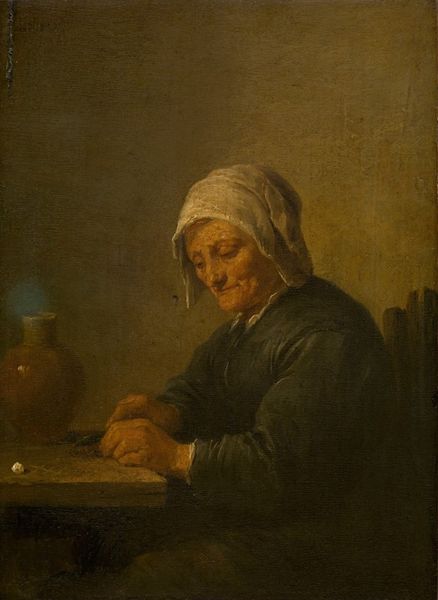
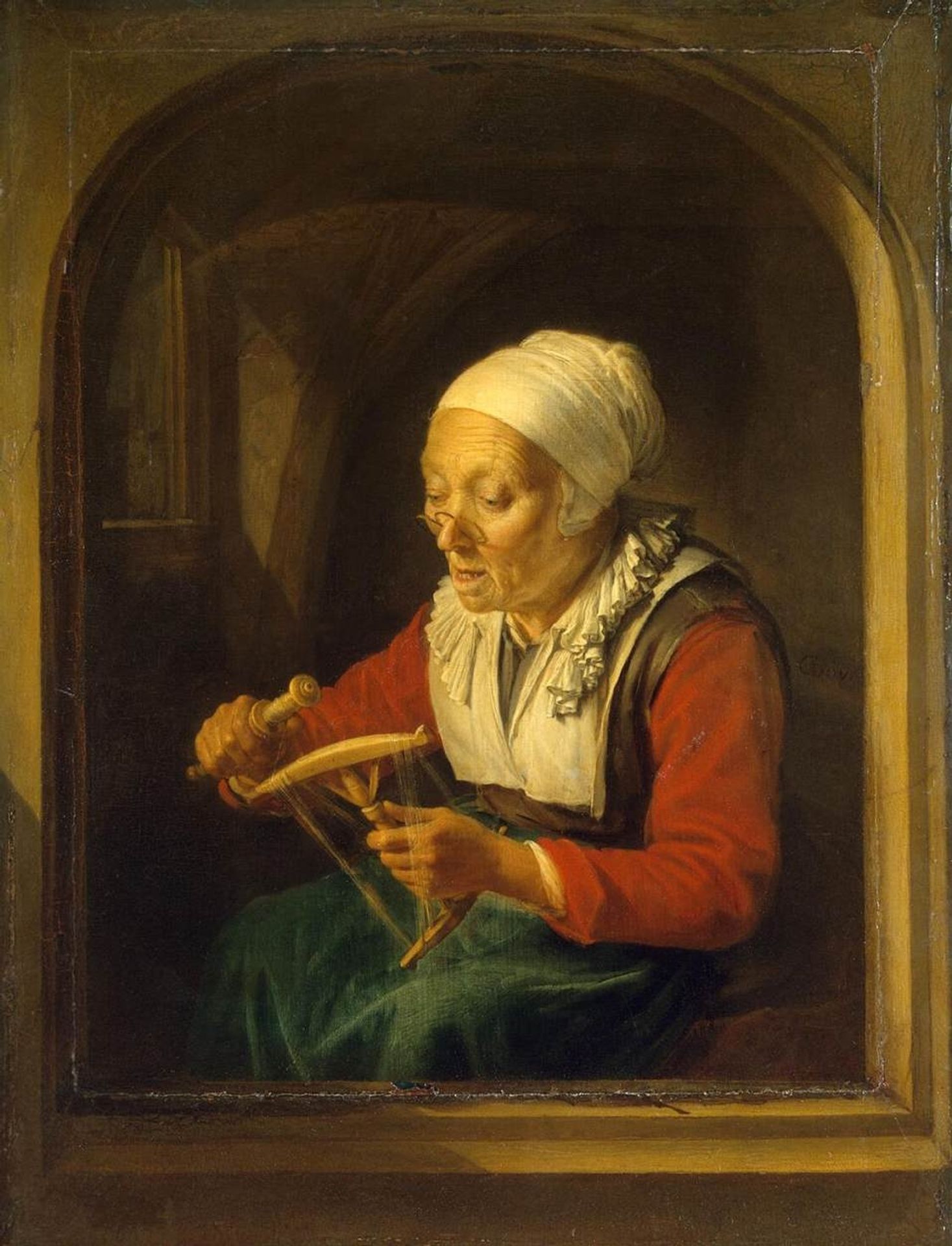
Old Woman Unreeling Threads


Listen to curator's interpretation
Curatorial notes
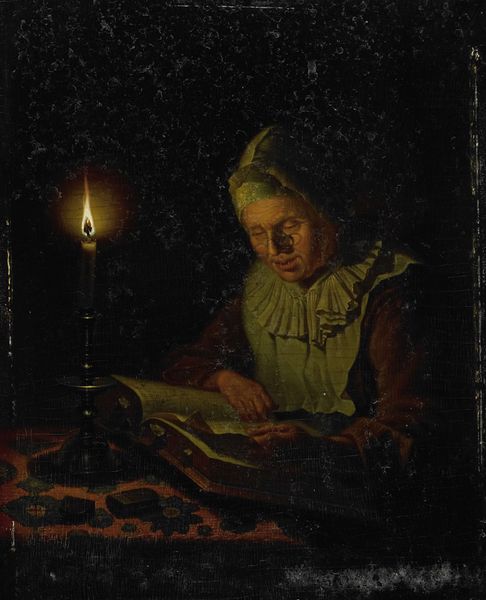
Editor: So, this is Gerrit Dou's "Old Woman Unreeling Threads," painted around 1665. The way she's framed in that window gives it such an intimate feeling, almost like a secret glimpse into her life. What strikes you most about it? Curator: For me, it’s the way Dou uses this seemingly simple domestic scene to speak volumes about the social fabric of 17th-century Netherlands. Think about the economic role of women during the Dutch Golden Age; spinning and weaving were essential labor. This woman isn’t just unreeling threads; she’s participating in a vital economic activity, albeit one often unseen and undervalued. Editor: That's fascinating. I hadn't really considered the economic aspect. I was more focused on the intimacy of the portrait. Do you think it’s a commentary, perhaps, on the contributions of elderly women? Curator: Precisely. Consider how aging and womanhood intersect in this image. In a society that often overlooks or dismisses older women, Dou gives her a central position, almost enshrining her labor. What does her posture and gaze convey to you? Is it one of quiet dignity, resilience, perhaps even resistance against societal marginalization? Editor: It feels like quiet determination, like she knows her worth even if society doesn't fully acknowledge it. Curator: And her dress? Simple, functional, but not without detail. Every element, carefully rendered, signifies not just realism but a pointed awareness of social context. By grounding this woman in a specific time and place, Dou elevates her individual experience into a broader statement about labor, gender, and aging. Editor: This has totally changed how I see the painting! I was drawn in by the realism, but now I'm seeing a complex story of a woman and her place in society. Curator: Exactly. And that is the power of art. To provoke, to reveal the unseen threads connecting individual lives to the broader tapestry of history and social dynamics.