
Curatorial notes
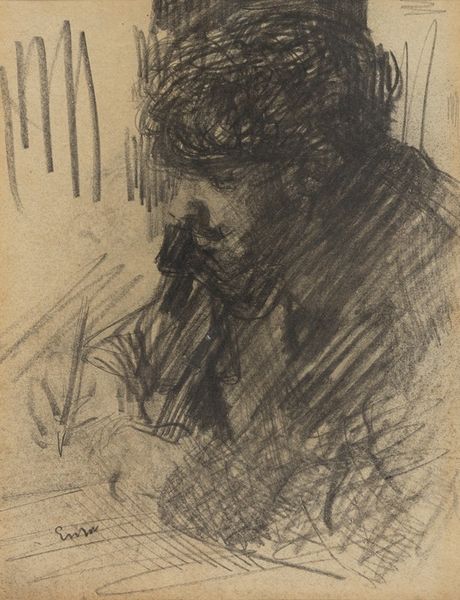
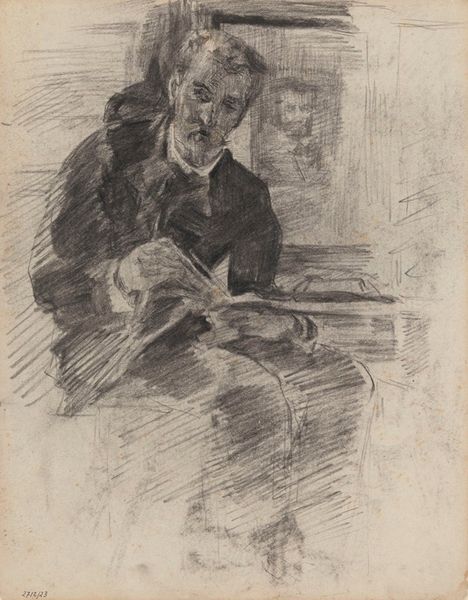
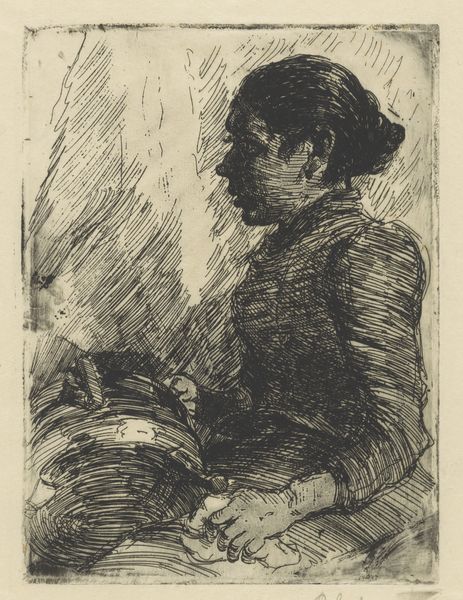
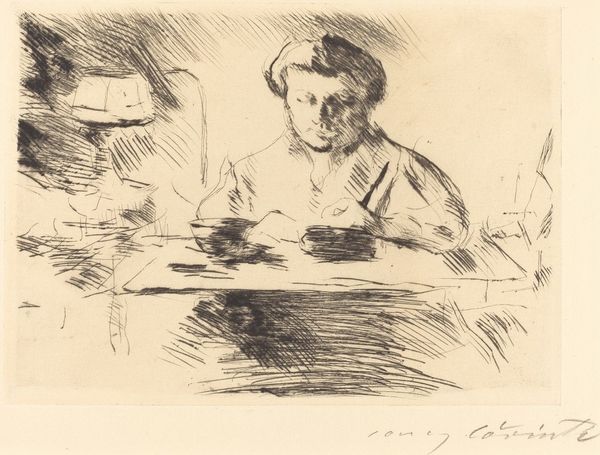
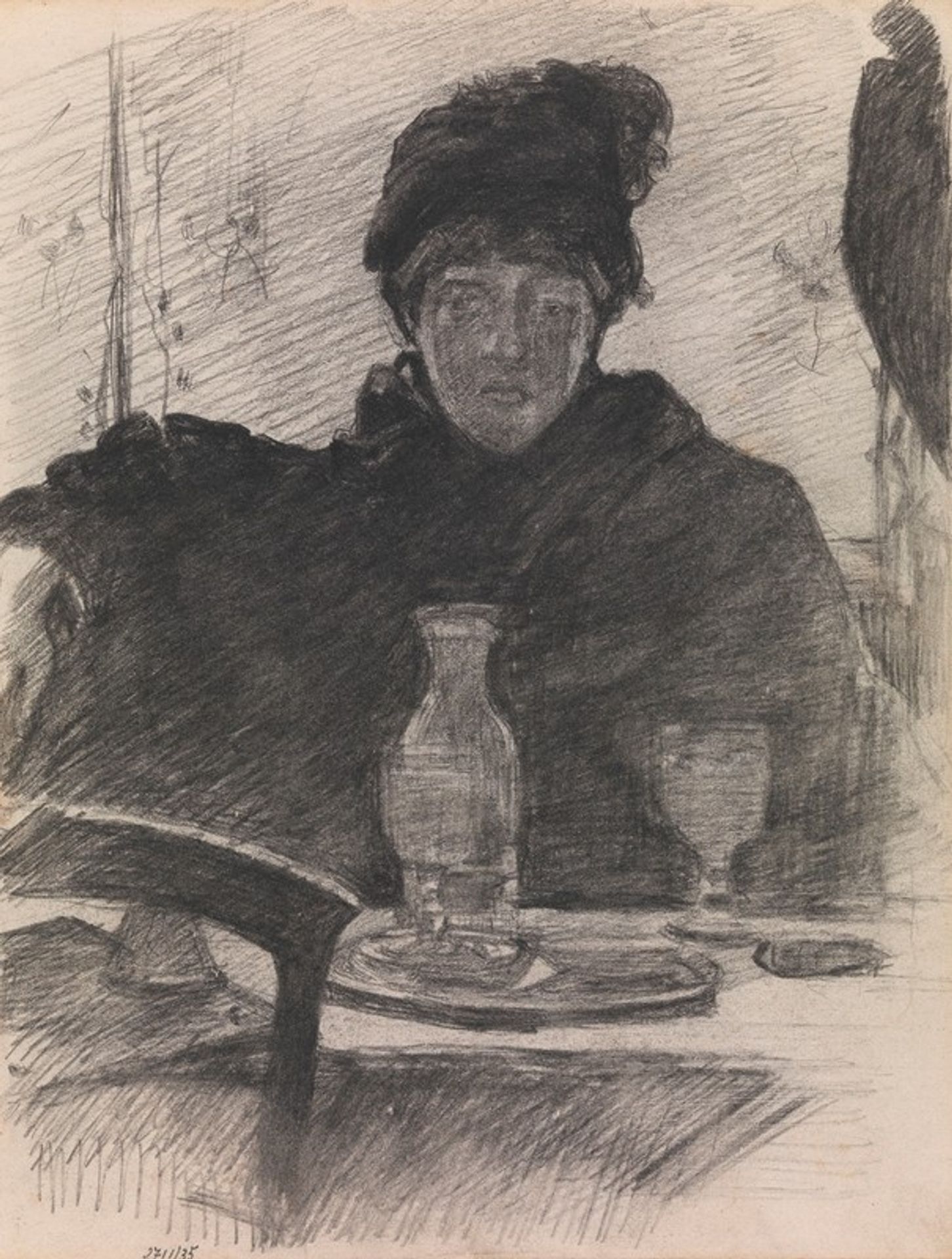
Editor: Today we're looking at James Ensor’s "The Absinth Drinker," a drawing made between 1880 and 1886. It’s rendered in pencil, giving it a wonderfully soft, almost blurry quality. There's a distinct melancholy in the sitter’s eyes that really draws me in. How do you interpret this work through a formalist lens? Curator: Formally, the drawing exhibits a tension between realism and something more expressive. Notice the clear attention paid to the textures - the sitter's dark hat versus the reflective glass of the absinth service. Then consider the composition. The placement of the sitter slightly off-center disrupts a perfectly balanced portrait, hinting at an underlying psychological disturbance, would you agree? Editor: That's interesting! I hadn't considered the off-center placement as a deliberate disruption. So you see the visual imbalance as key to understanding the emotional state of the subject? Curator: Precisely. The dense hatching creates areas of strong tonal contrast. See how the shadows coalesce, creating a flattened, almost claustrophobic space? This isn’t simply about representing a scene, it’s about conveying the weight of the sitter’s experience. And, of course, let's acknowledge the medium - drawing. Editor: So, by analyzing the drawing style, we see Ensor communicating mood and meaning without any need for historical context. I've definitely got a better understanding of what I'm seeing here, thank you. Curator: Indeed. And in the delicate lines capturing light on the glassware, one finds a glimmer of hope within the gloom. Studying structure, tone, and even line weight, we arrive at deeper appreciations.