1650 - 1672
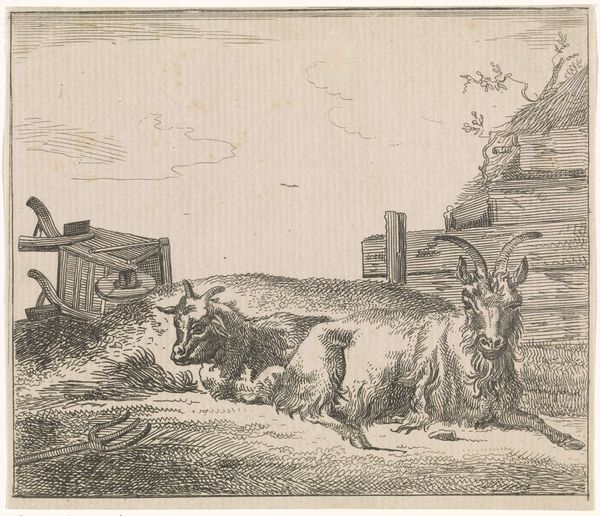
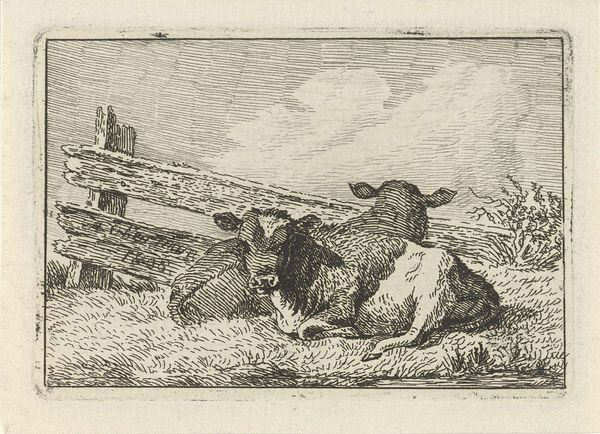
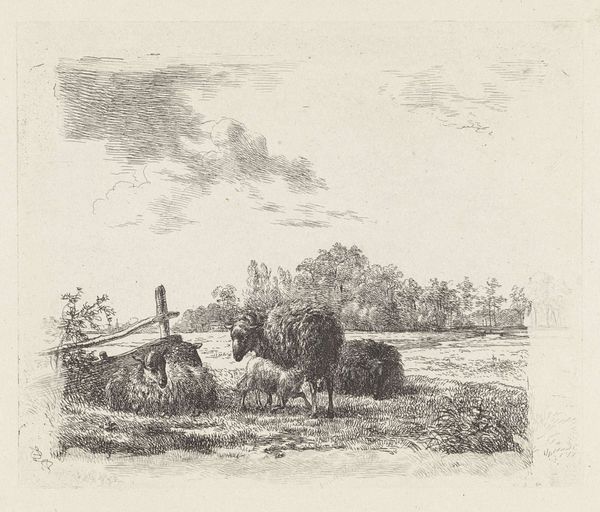
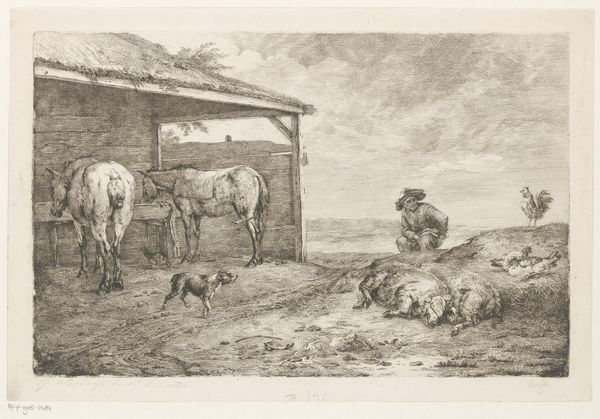
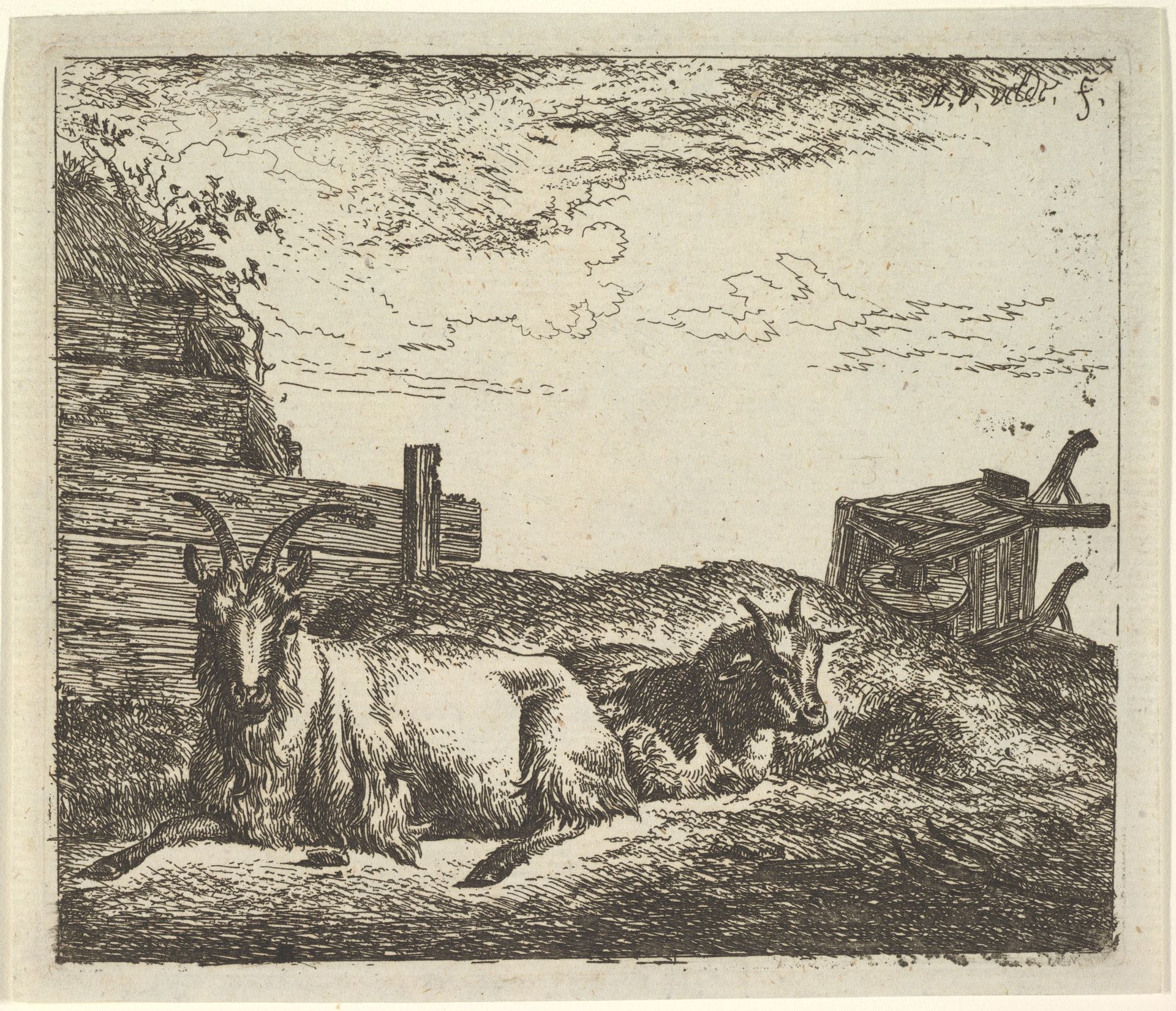
Recumbent Goats, from Different Animals

Adriaen van de Velde
1636 - 1672
The Metropolitan Museum of Art
Metropolitan Museum of Art, New York, NYListen to curator's interpretation
Curatorial notes
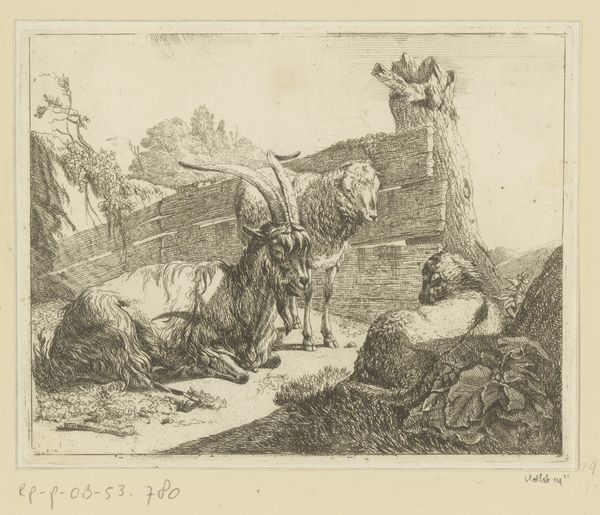
Adriaen van de Velde etched "Recumbent Goats" in the Dutch Golden Age, a period that saw an upsurge in pastoral imagery. The goats themselves, especially with their prominent horns, carry a rich symbolic load. Throughout history, horns have signified power, virility, and even divinity, echoing through ancient pagan rituals to their association with figures like Moses in art, owing to a mistranslation. We find this potency in earlier depictions of Pan, the goat-legged god of the wild, whose image evokes the raw, untamed aspects of nature and human instinct. The act of the goats reclining invites contemplation and perhaps a primal connection to the pastoral idyll, tapping into a collective memory of simpler, agrarian roots. These beasts become vehicles, unconsciously stirring a deep-seated yearning for harmony with nature, where instinct and the sacred intertwine. The motifs of goats, like the winding paths of human thought, resurface, adapt, and acquire new shades of meaning across epochs.