About this artwork
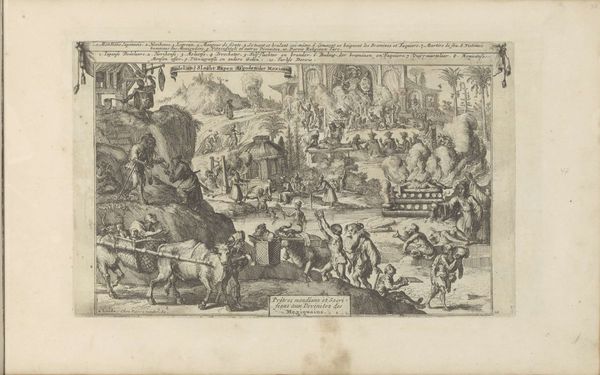
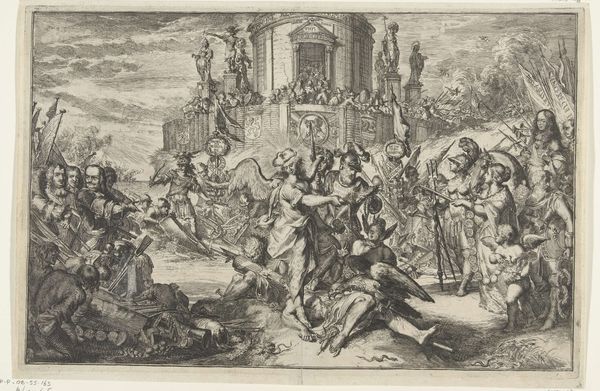
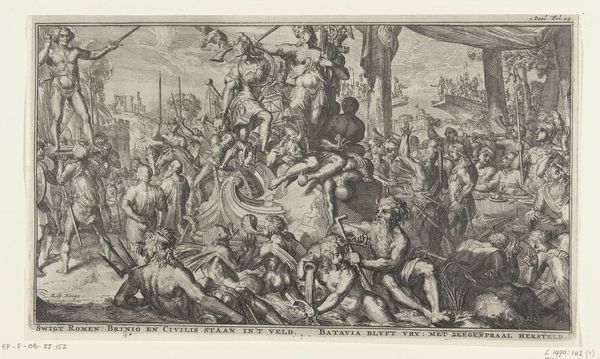
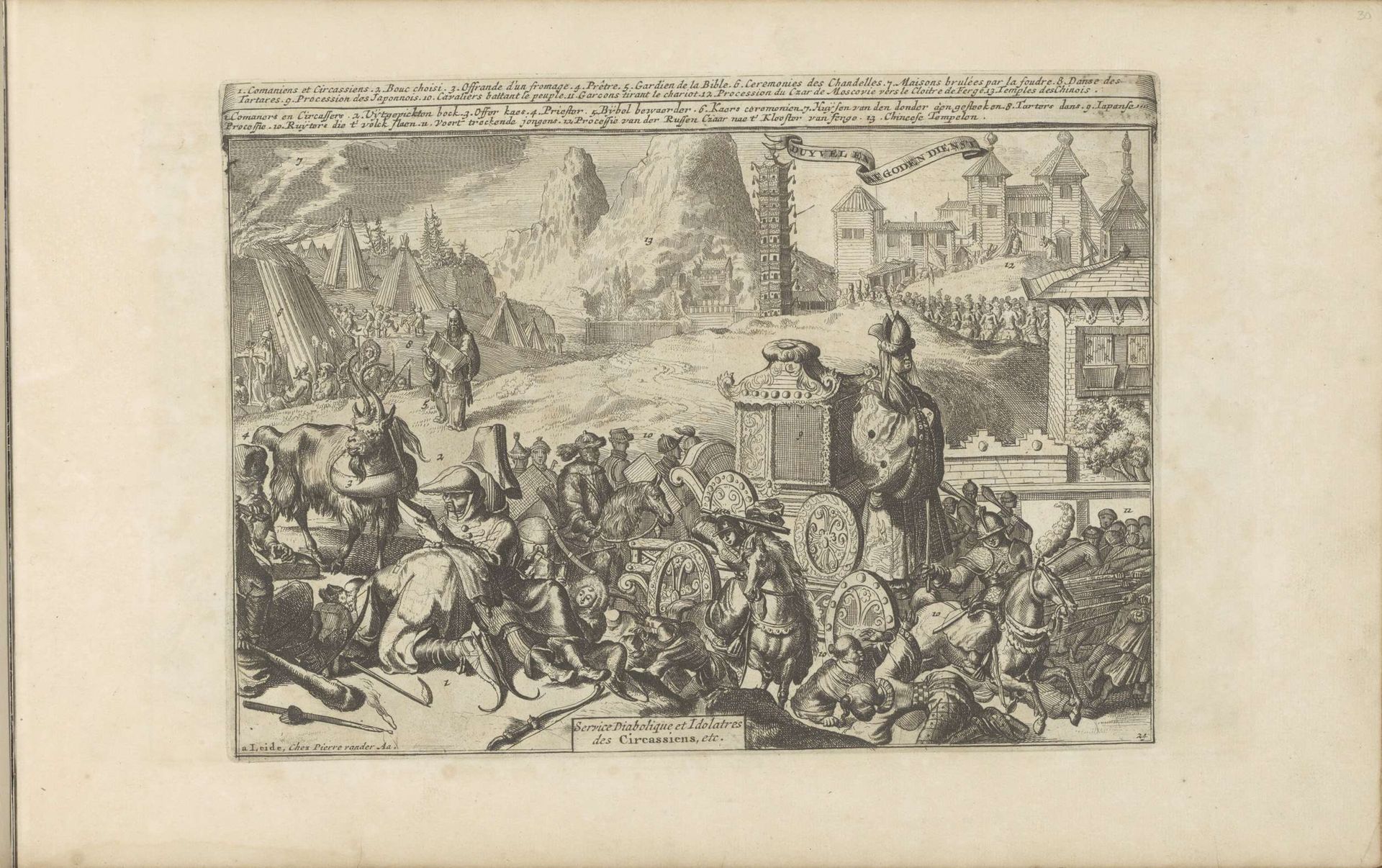
Romeyn de Hooghe created this print, "Godsdienstige handelingen en ceremoniën in Indië," sometime between 1645 and 1708 using etching techniques. It offers us a window into the Dutch perception and representation of religious practices in India during the colonial era. Here, de Hooghe constructs a scene teeming with exoticized details of religious ceremonies, architecture, and people. The image reflects the cultural biases and power dynamics inherent in the colonial encounter. It presents a view of Indian society filtered through a European lens, one that often misunderstood or misrepresented complex cultural traditions. Notice how the artist emphasizes the spectacle of the religious rites, perhaps to cater to the European audience’s fascination with the “exotic” East. This print isn't just a record; it's a statement about cultural difference, crafted during a time of increasing Dutch presence in India. De Hooghe’s work invites us to reflect on the complex interplay of power, perception, and representation in the colonial context.
Godsdienstige handelingen en ceremoniën in Indië
1682 - 1733

Romeyn de Hooghe
1645 - 1708Location
RijksmuseumArtwork details
- Medium
- print, engraving
- Dimensions
- height 210 mm, width 289 mm
- Location
- Rijksmuseum
- Copyright
- Rijks Museum: Open Domain
Tags
Comments
Share your thoughts
About this artwork
Romeyn de Hooghe created this print, "Godsdienstige handelingen en ceremoniën in Indië," sometime between 1645 and 1708 using etching techniques. It offers us a window into the Dutch perception and representation of religious practices in India during the colonial era. Here, de Hooghe constructs a scene teeming with exoticized details of religious ceremonies, architecture, and people. The image reflects the cultural biases and power dynamics inherent in the colonial encounter. It presents a view of Indian society filtered through a European lens, one that often misunderstood or misrepresented complex cultural traditions. Notice how the artist emphasizes the spectacle of the religious rites, perhaps to cater to the European audience’s fascination with the “exotic” East. This print isn't just a record; it's a statement about cultural difference, crafted during a time of increasing Dutch presence in India. De Hooghe’s work invites us to reflect on the complex interplay of power, perception, and representation in the colonial context.
Comments
Share your thoughts