engraving
#
portrait
#
baroque
#
old engraving style
#
engraving
Dimensions: height 168 mm, width 135 mm
Copyright: Rijks Museum: Open Domain
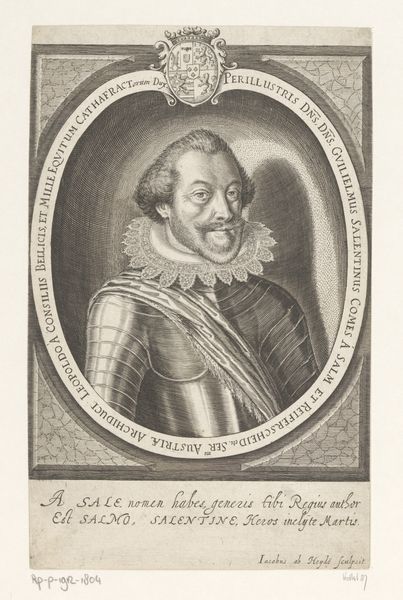
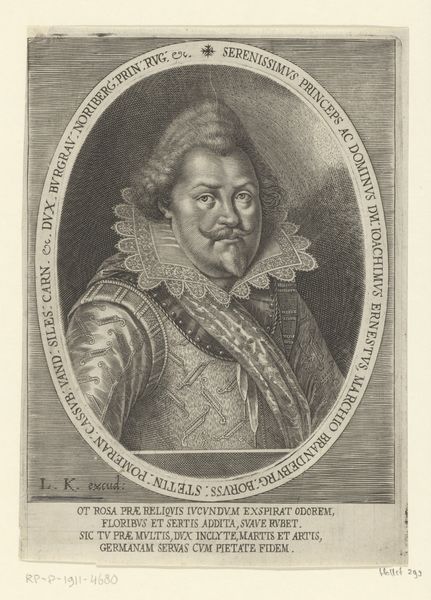
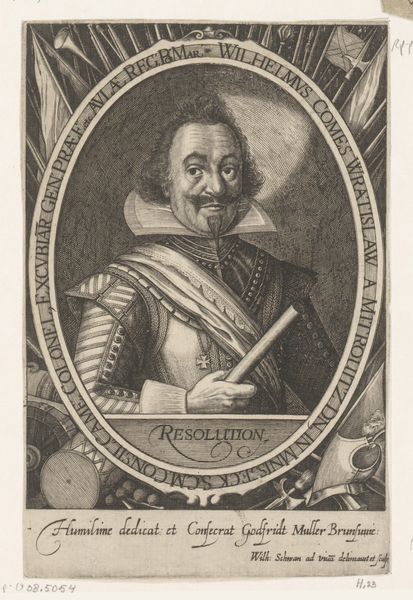
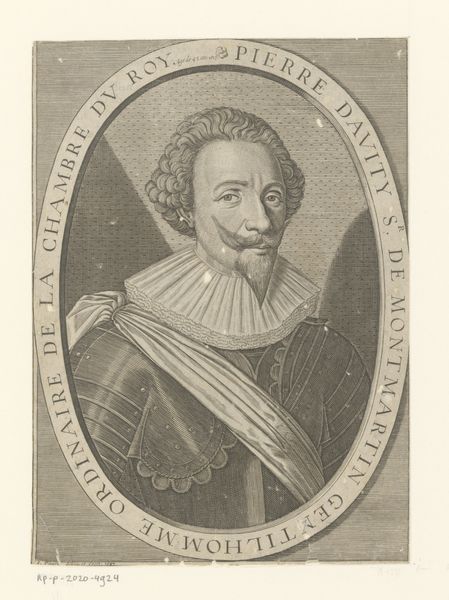
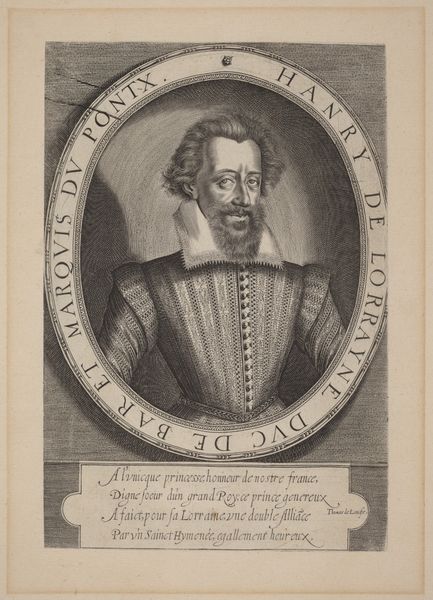
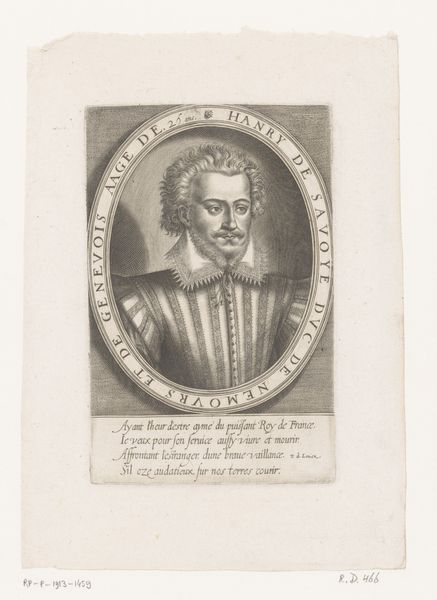
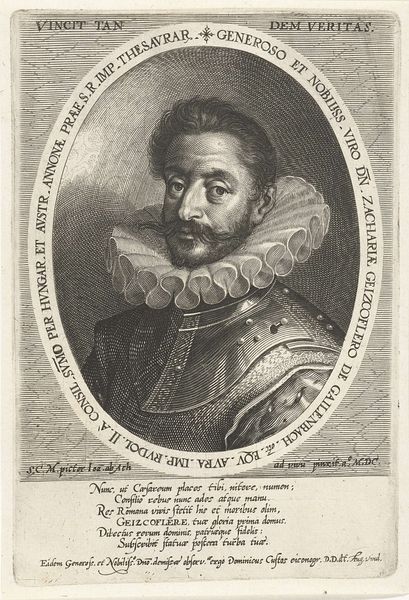
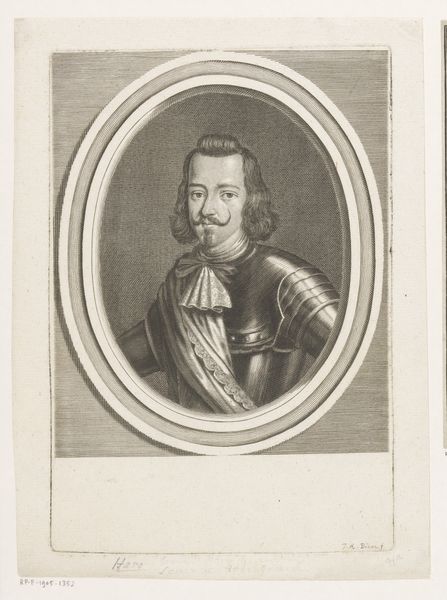
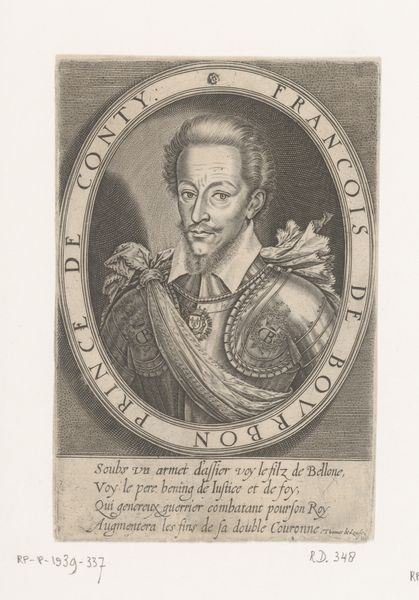
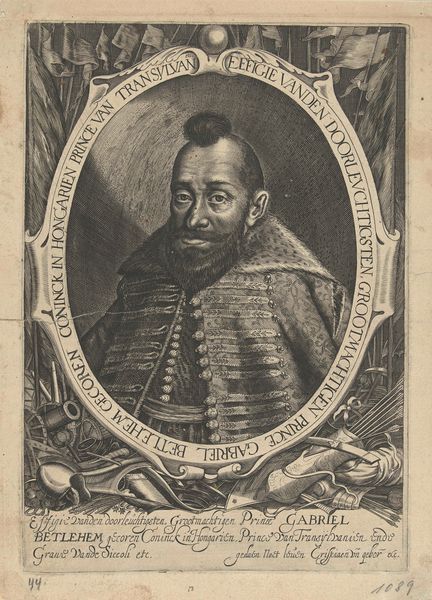
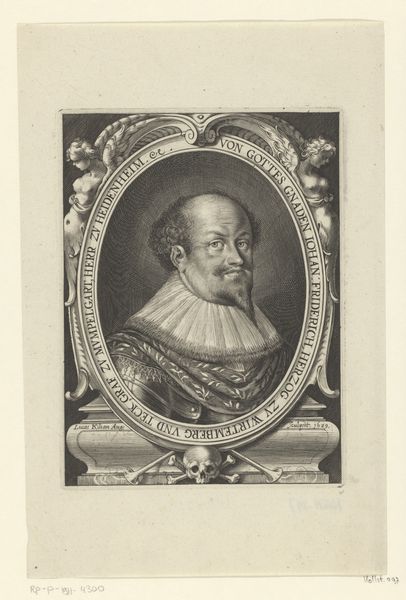
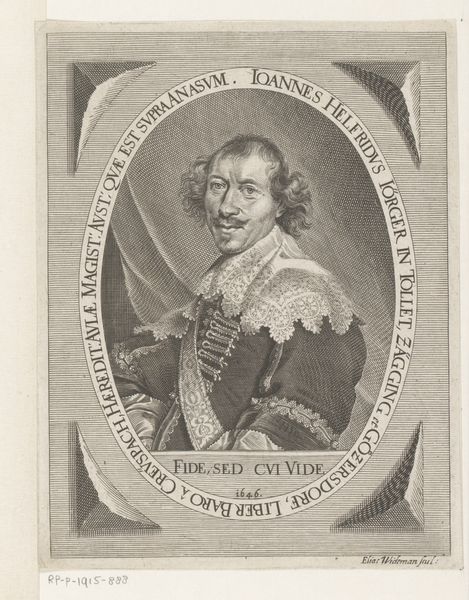
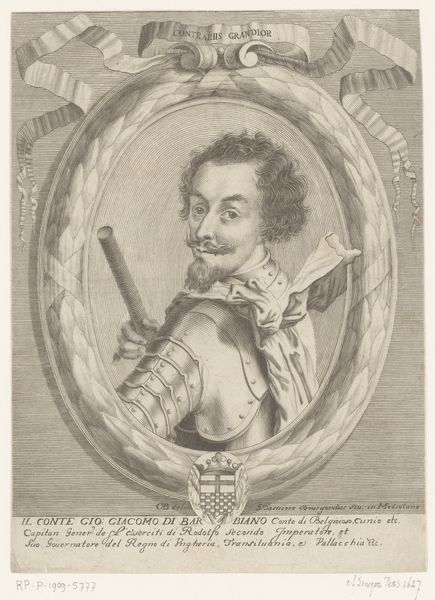
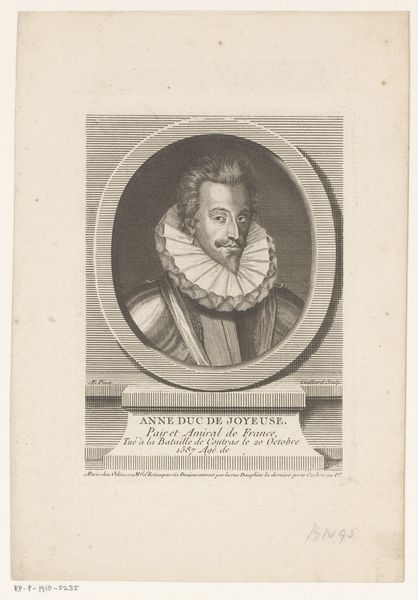
Curator: Looking at this image, I am struck by the incredibly fine lines that bring texture to everything, especially in the rendering of the armour. You can almost feel the coolness of the metal, the heavy material that speaks of war. Editor: Indeed. The piece before us is a portrait of Frederik Hendrik, Prince of Orange, created around 1620 by Lucas Kilian. It’s an engraving, which makes that detail you’re admiring all the more impressive. The choice of engraving speaks volumes about access, consumption, and circulation in early modern Europe. Curator: Absolutely. Engravings such as this were not just artistic expressions, but also tools of communication, mass production really. Kilian's skill allowed for widespread dissemination of Frederik Hendrik’s image. That crisp line is doing the labor of distributing a very carefully constructed likeness across Europe. Editor: Precisely. And Frederik Hendrik's persona was strategically deployed, reflecting the socio-political climate of the time. The Prince appears adorned in elaborate armor, embodying power and leadership—while that lace collar hints at the performative masculinity of court culture. Consider how images of powerful men reinforce patriarchal systems of power, solidifying his rule. Curator: The repetitive etching, the labor of reproducing an image over and over. Did Kilian perhaps have apprentices? What does his workshop look like? The sheer scale of production asks us to reconsider the role of the "artist" during this era, blurring the boundaries between fine art and industry. Editor: And that standardization leads to interesting questions. How does reproducibility flatten identity, but simultaneously reinforce cultural norms and values? The material process here – the repetitive engraving – translates into repetitive social structures as well. Think about how portraits are disseminated among the noble classes—visual markers that underscore dynastic privilege and political alliances. Curator: I think the beauty in his work comes from how these little almost industrial marks add up to a portrait—labor turning into an elegant artifact that could function at court. The fact that Kilian managed to take such a mechanized medium and wring something human and intricate from it… Editor: Indeed. By viewing art as enmeshed within wider historical power dynamics, we open avenues to deconstruct how these systems affect identities and power relations that echo through time. Curator: Seeing the details of the craft is important to my understanding. Thank you. Editor: It has been enriching to reconsider it as more than just aesthetics but as an agent in culture.
Comments
No comments
Be the first to comment and join the conversation on the ultimate creative platform.
 Collect
 React
React Comment
More like this