before 1667
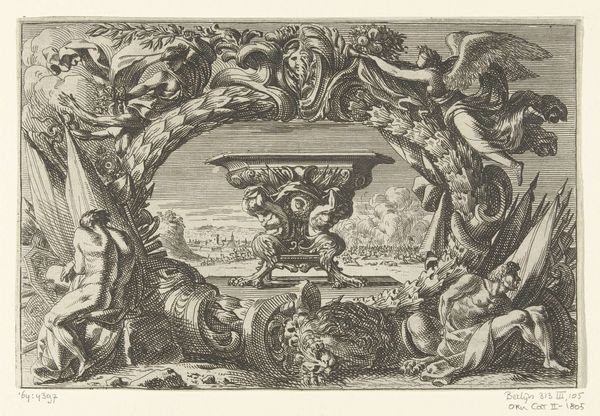
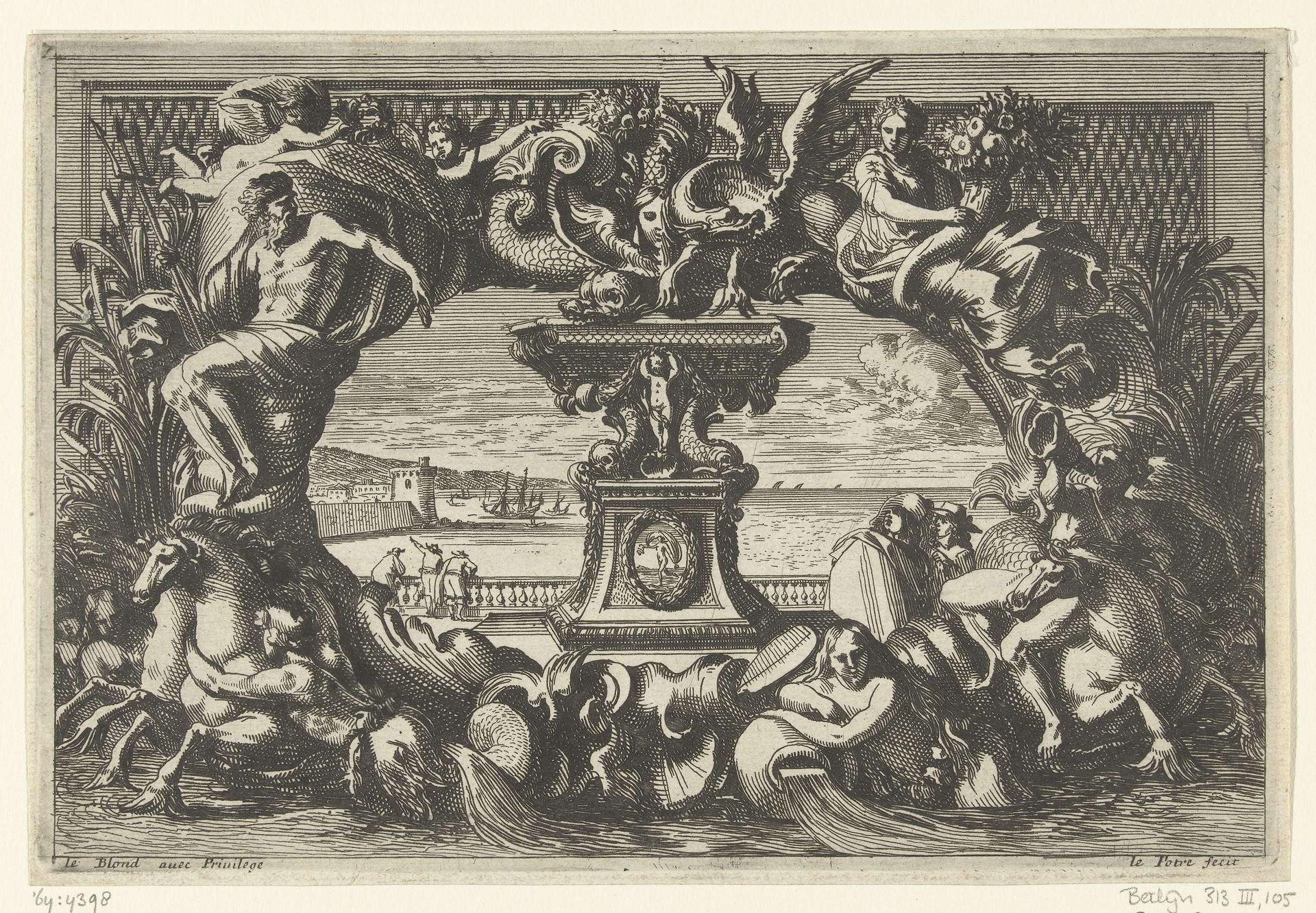
Zoutvat met zeshoekig bassin in cartouche

Jean Lepautre
1618 - 1682Location
RijksmuseumListen to curator's interpretation
Curatorial notes
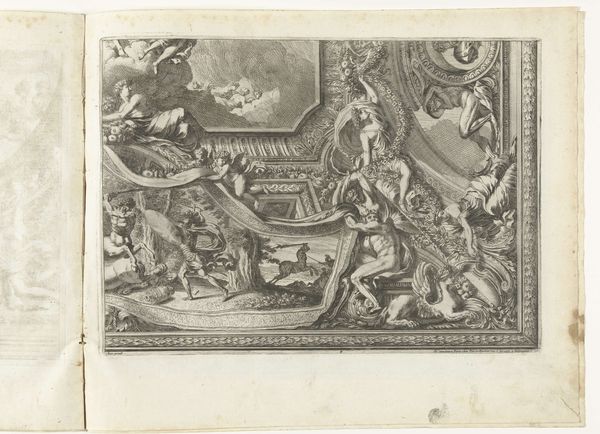
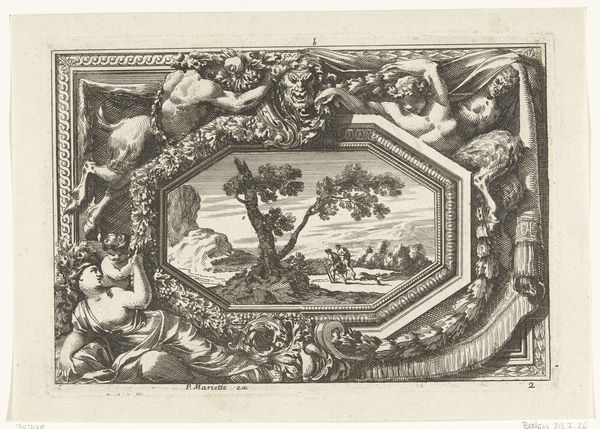
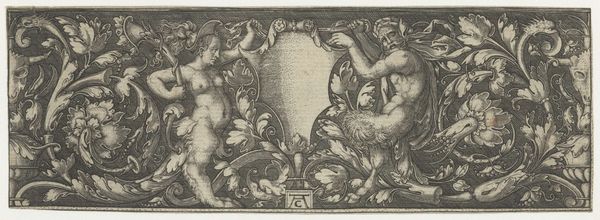
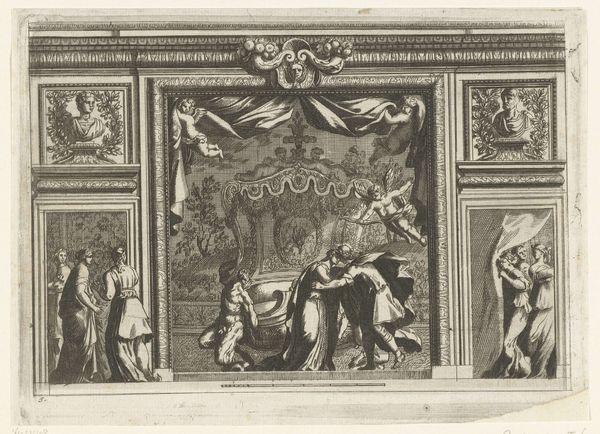
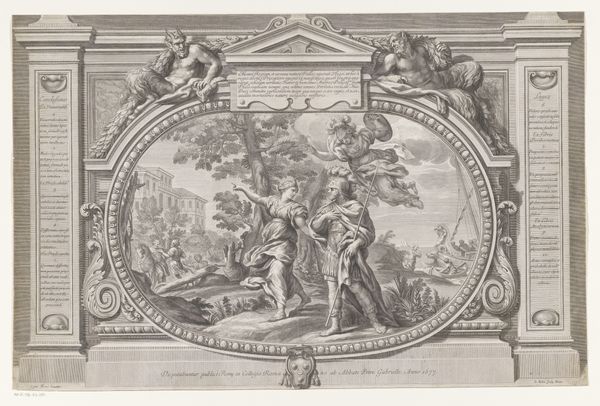
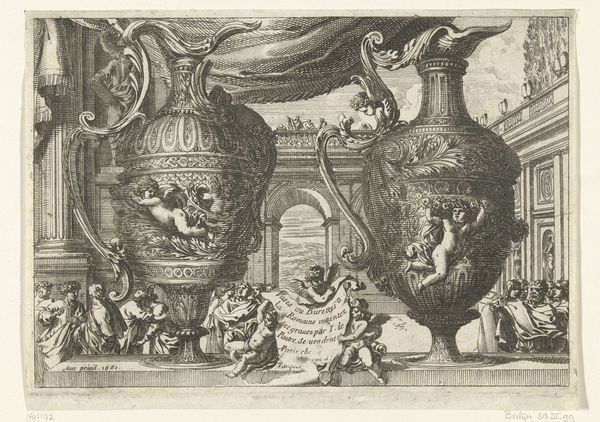
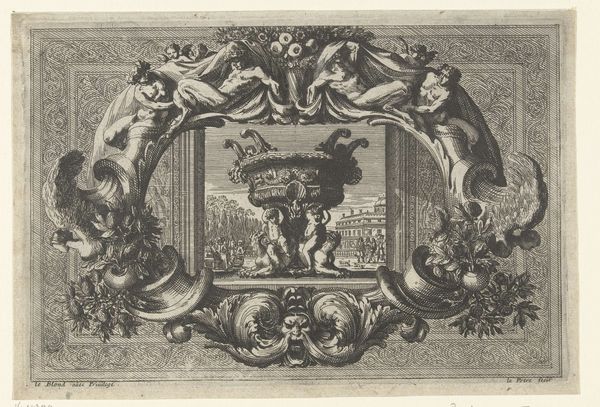
Jean Lepautre made this print of a salt cellar design sometime in the mid-17th century. It's made using an engraving technique, which means the design was incised into a metal plate, likely copper, with a tool called a burin, and then printed. The print's dense network of lines creates areas of dark and light to give the object form. The design is elaborate, teeming with allegorical figures, flora and fauna, and perspectival views. Salt cellars like this would have been luxury items, symbols of wealth and refinement in aristocratic households. The making of such an object would involve many skilled hands, from the silversmiths who hammered and chased the metal, to the designers who conceived the elaborate forms. Lepautre's print gives us a glimpse into this world of skilled labor and material luxury. By focusing on the processes of design and making, we can appreciate the cultural values embedded in such objects, challenging the traditional hierarchies between art, design, and craft.