c. 1867 - 1895
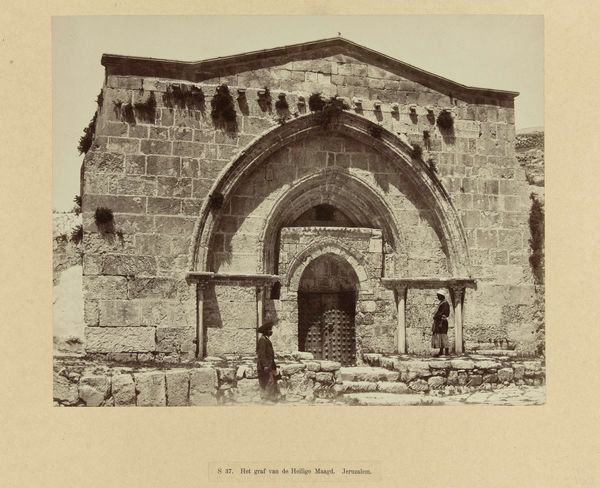
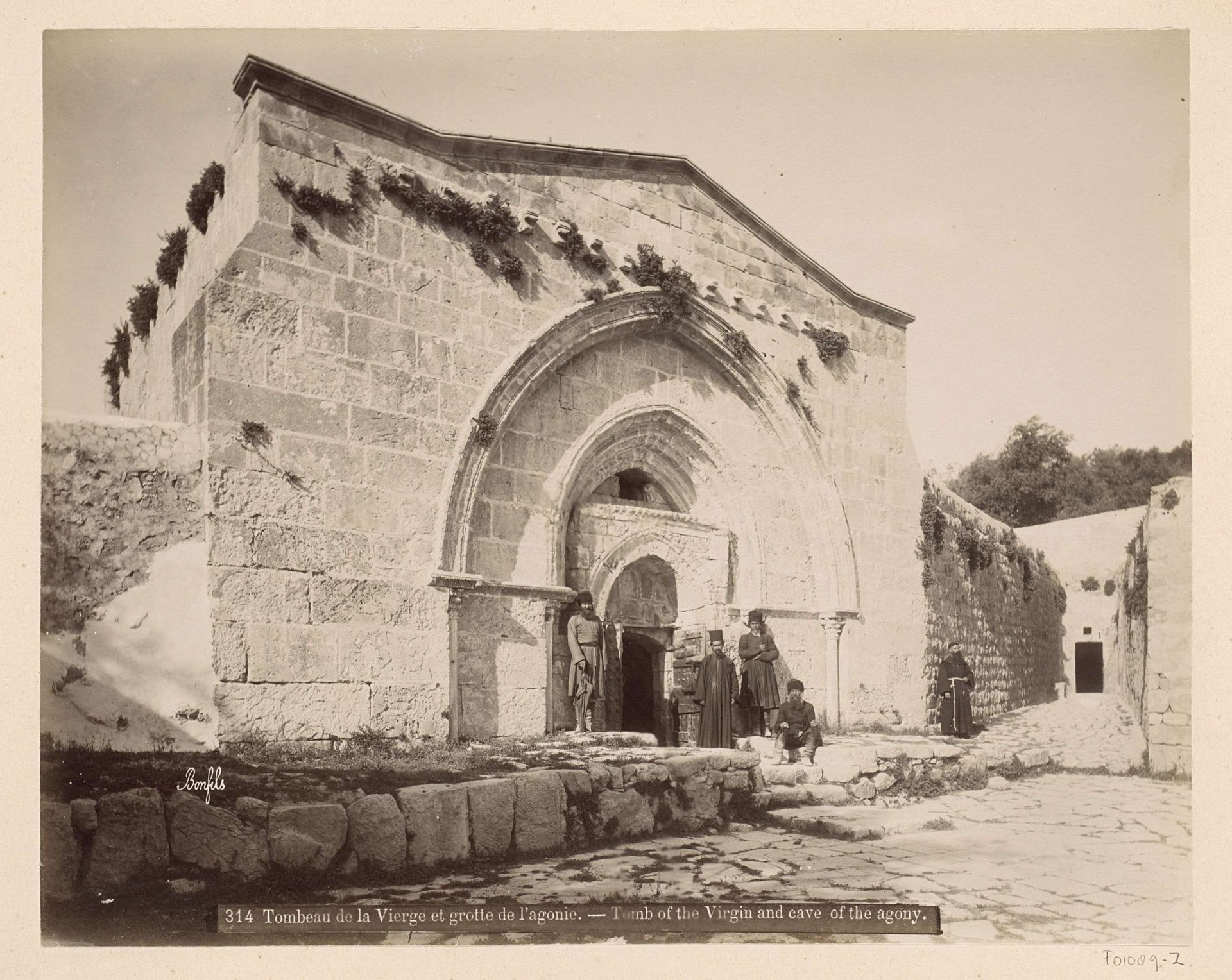
Graf van de Maagd Maria en de Grot van de Doodsangst in Jeruzalem

Maison Bonfils
@maisonbonfilsLocation
RijksmuseumListen to curator's interpretation
Curatorial notes
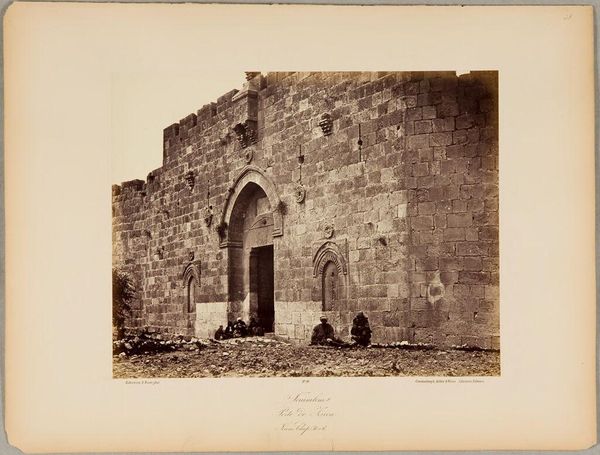
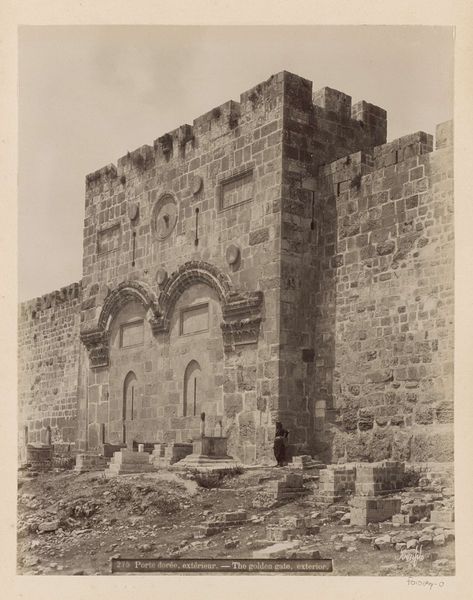
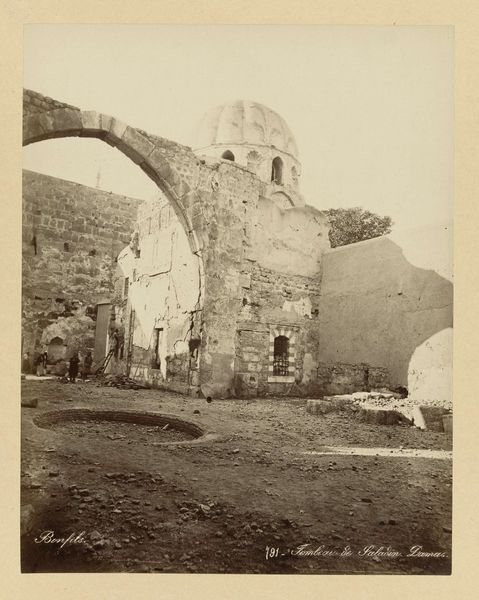
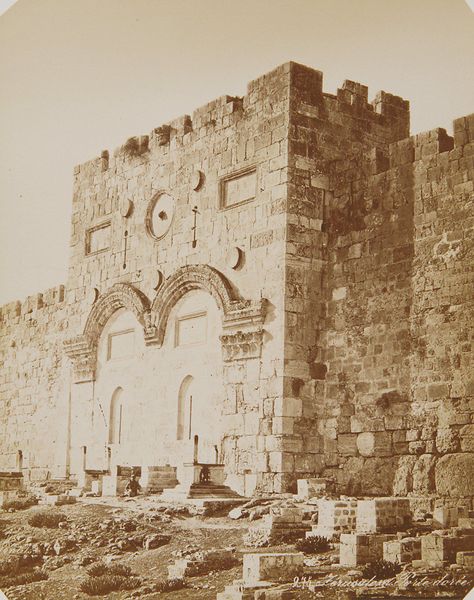
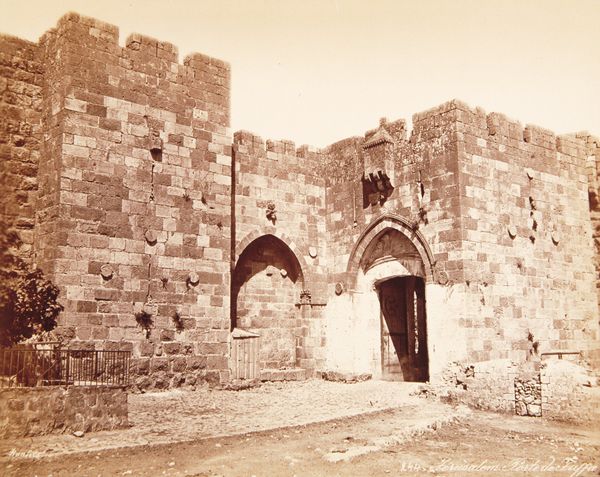
Editor: Here we have "Grave of the Virgin Mary and the Grotto of Agony in Jerusalem," a photograph from sometime between 1867 and 1895, by Maison Bonfils. It feels so austere. The stone architecture is monumental but stark. What do you see in this piece from a formalist perspective? Curator: I see a fascinating study in architectural form and light. Observe the geometric clarity: the severe rectangles of the main structure contrasting with the rounded archway, which repeats on a smaller scale inside the entry. Note how Bonfils uses light and shadow to articulate the textures of the stone. Where does your eye lead? Editor: My eye is drawn to the entrance, specifically that darker, smaller archway within the larger one. It creates a sense of depth and mystery, beckoning the viewer inward. Curator: Precisely. The play of light and shadow also structures our perception of depth. Notice how Bonfils positions the figures? How do they affect the geometry of the scene? Editor: The figures, though small, punctuate the composition, don't they? Their vertical lines break up the horizontality of the architecture, adding a human element. The tonal range, especially the darker robes, seem to reiterate the darker, receding arch. Curator: Indeed. Bonfils has a keen sense of visual weight and balance. I'm also curious about the surface of the print. What can it tell us? Editor: The slightly faded, sepia tone gives it a feeling of antiquity, doesn’t it? Makes the scene look even more historical and…distant. Curator: Precisely. These are the intrinsic elements that make this work compelling regardless of subject matter. A fascinating confluence of light, form, and material. Editor: It’s interesting to see how focusing on form reveals so much. Thanks for your insights.